
Rapid Deployment Energy Storage Container Cost for Industrial Parks: A Real-World Breakdown
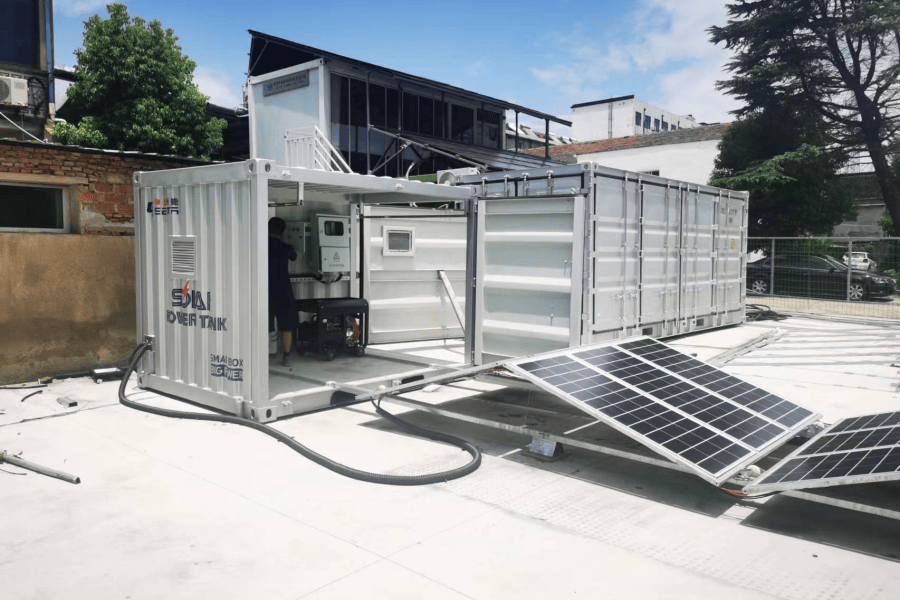
Let's Talk Real Numbers: The True Cost of a Rapid-Deployment BESS for Your Industrial Park
Honestly, when an operations manager or plant director asks me "How much does it cost for a rapid deployment energy storage container for my industrial park?", I get it. You're looking for a number, a neat line item for the budget. But after two decades on sites from California to North Rhine-Westphalia, I've learned that the most expensive container is the one you bought on price alone, without understanding what's behind that sticker.
The real question isn't just about purchase price. It's about the total cost of solving your problem: managing demand charges, providing backup power, integrating solar, or meeting sustainability goals. Let's grab a (virtual) coffee and walk through what you're really investing in.
Quick Navigation
- The Real Problem: It's Not Just a Box, It's a Commitment
- The Cost Breakdown: From Hardware to "Hidden" Line Items
- A Real-World Case: How a German Auto Parts Plant Got It Right
- Expert Insight: The Three Levers That Actually Drive Your Long-Term Cost
- Making the Decision: The Right Questions to Ask
The Real Problem: It's Not Just a Box, It's a Commitment
The market is flooded with "containerized solutions." You see a sleek image and a tempting $/kWh figure. The pain point I see firsthand? Decision-makers get locked into a capital expenditure mindset, only to be blindsided by integration complexity, permitting delays, or safety systems that don't meet local fire codes. In the U.S., that means UL 9540 and UL 9540A. In Europe, it's IEC 62933. These aren't optional - they're your license to operate, and they fundamentally shape cost.
The agitation? A "low-cost" unit that fails local utility interconnection studies can sit idle for months. A thermal management system that's undersized for Arizona heat or Canadian seasonal shifts will degrade your battery 30% faster, obliterating your ROI. I've been called to sites where the container was the cheap part; the real cost was in the custom engineering to make it safe and compliant after the fact.
So, the solution is a shift in perspective. View the cost as an equation: CapEx + Integration + Compliance + Lifetime Performance (LCOE). The rapid-deployment container is the vessel, but what's inside and how it's deployed is everything.
The Cost Breakdown: From Hardware to "Hidden" Line Items
Let's demystify the quote. For a typical 1-5 MW / 2-10 MWh rapid-deployment container system for an industrial park in North America or Europe, costs can range broadly, from around $400 to $800 per kWh of energy capacity for the fully integrated system. Why the range? Here's what's in the mix:
- The Core Container (20-35% of system cost): The actual enclosure, HVAC, fire suppression (often NOVEC 1230 or equivalent), and physical safety systems. This is where UL/IEC certification is non-negotiable.
- Battery Racks & Modules (30-50%): Lithium-ion (NMC, LFP). LFP (Lithium Iron Phosphate) is becoming the industrial standard for its safety and longer cycle life, though sometimes at a slight premium. The C-rate (charge/discharge speed) matters. A 1C system (full discharge in 1 hour) for heavy demand-charge management may cost more than a 0.5C system for solar shifting.
- Power Conversion System - PCS (15-25%): The inverters that talk to the grid. This needs to match your grid voltage and have the right grid-forming capabilities if you're looking at microgrid functionality.
- Balance of Plant & Integration (15-30% - the "hidden" part): This is the make-or-break. Site civil work (the concrete pad), medium-voltage transformer, utility interconnection switchgear, cabling, and most importantly, the energy management system (EMS) software. The EMS is the brain that maximizes your savings.
According to a National Renewable Energy Laboratory (NREL) report, soft costs - permitting, interconnection, engineering - can still account for a significant portion of total project cost, especially for first-time deployments. This is where a provider with local experience saves you money.

A Real-World Case: How a German Auto Parts Plant Got It Right
Let me share a project from last year. A mid-sized manufacturer in Germany's industrial heartland was facing steep B?rsenstrompreis (spot market prices) and wanted to stabilize costs. They needed to shift their onsite solar generation and provide brief backup for critical processes.
Challenge: Tight space, strict German VDE/FNN grid codes, and a need for deployment within one quarter to capture summer solar. The initial "low-cost" offers lacked detailed grid compliance studies.
Our Solution: We provided a 2.5 MW / 5 MWh LFP-based container, pre-certified to IEC standards. The "rapid" part wasn't just the container delivery; it was our pre-packaged grid connection study and a customized EMS that automated trading against the spot market. The container was on their pad in 6 weeks. The real win? The system paid for the integration work within 14 months through energy arbitrage and peak shaving, and it future-proofed them for upcoming carbon regulations.
The lesson? The upfront cost was middle-of-the-road, but the Levelized Cost of Storage (LCOS) - the total lifetime cost per kWh cycled - became the winning metric. It's a concept we at Highjoule Technologies obsess over for our clients.
Expert Insight: The Three Levers That Actually Drive Your Long-Term Cost
Forget the sticker price for a minute. Focus on these three technical levers that your supplier controls, which determine your true cost:
- Thermal Management: This is the unsung hero. A passively cooled system is cheaper upfront but can struggle in an industrial setting with dust and high ambient temperatures. An actively liquid-cooled system maintains optimal cell temperature, extending cycle life by thousands of cycles. I've seen a 10C reduction in average cell temperature translate to a 15-20% longer system life. That's a massive LCOE win.
- Cycle Life & Depth of Discharge (DoD): A battery rated for 6,000 cycles at 90% DoD is far more valuable than one rated for 3,000 cycles at 80% DoD. Ask for the cycle life curve at your intended DoD. A cheaper battery that degrades faster is a false economy.
- System Availability & O&M: What's the guaranteed uptime? What does the O&M contract cost? A system with a robust, remote-monitoring platform (like our Highjoule Horizon platform) can predict issues and reduce truck rolls. That's a direct operational savings for your team.
Making the Decision: The Right Questions to Ask
So, when you're evaluating, move beyond "how much per kWh?". Ask your potential provider:
- "Can you show me a completed UL 9540A test report for this exact configuration?"
- "What is the projected LCOS over 10 years for my specific load profile?"
- "How do you handle utility interconnection studies, and can you share an example timeline from a similar project in my region?"
- "What's included in your commissioning, and what's the structure of your long-term service agreement?"
The goal is to partner with someone who sees the total cost picture with you. At Highjoule, we've built our rapid-deployment platforms around this philosophy - pre-engineered for compliance, transparent on lifetime economics, and backed by local field engineers who speak your language, both technically and literally.
What's the biggest cost uncertainty you're facing in your own feasibility study? Let's talk it through.
Tags: UL Standard BESS LCOE Europe US Market Industrial Energy Storage Renewable Energy
Author
James Zhang
20+ years agricultural energy storage engineer / Highjoule CTO