
IP54 Outdoor Mobile Power Container for Mining Operations in Mauritania Case Study
When the Grid Ends: A Real-World Look at Mobile Power for Demanding Sites
Hey there. Let's grab a virtual coffee. I've spent the last two decades in the field, from wind-swept plains in Texas to remote industrial sites in Australia. And if there's one conversation I keep having with operations managers and energy directors, it's this: "We need reliable power where the grid can't - or won't - reach." This isn't just about backup; it's about primary power, operational continuity, and doing it all safely and cost-effectively. Today, I want to walk you through a project that perfectly captures this challenge and the modern solution: a mobile, ruggedized battery energy storage system (BESS) for a mining operation in the harsh desert of Mauritania. The lessons? They apply directly to remote industrial sites, construction projects, and microgrids right here in North America and Europe.
Quick Navigation
- The Real Problem: More Than Just "No Grid"
- Why It Hurts: The Cost of Unreliable Power
- The Mobile Answer: A Containerized Solution
- Case in Point: Mauritania Mining Site
- Expert Lens: Breaking Down the Tech That Matters
- Your Next Move: Questions to Ask
The Real Problem: More Than Just "No Grid"
When we think "off-grid" in the US or Europe, we might picture a remote cabin. In industry, it's different. It's a new mine in Nevada, a temporary data center for a film shoot in Alberta, or a coastal construction site in Scotland. The core pain point isn't simply the absence of a grid connection - it's the staggering cost and complexity of bringing one in, or the crippling unreliability of an existing weak one. I've seen this firsthand on site: operations running on a patchwork of diesel generators, facing fuel logistics nightmares, noise complaints, emissions caps, and wild fluctuations in power quality that hammer sensitive equipment. The IEA reports that grid delays and connections are a major bottleneck for new industrial projects globally. Honestly, waiting years for a transmission upgrade isn't a business plan.
Why It Hurts: The Cost of Unreliable Power
Let's agitate that pain a bit. It's not just an inconvenience. Unplanned downtime in heavy industry can cost tens of thousands of dollars per hour. Diesel fuel is volatile in price and a logistical chain that's vulnerable to disruption. Furthermore, environmental regulations, like the EU's Fit for 55 package or local air quality rules in California, are making the "diesel-only" model a non-starter. There's also the human element: operating and maintaining a bank of generators in extreme cold or heat is tough, skilled work. The real cost is in operational risk, stranded assets, and missed sustainability targets.
The Mobile Answer: A Containerized Solution
So, what's the solution that's emerging from the field? It's the mobile, all-in-one power container. Think of it as a "power plant on a skid." But not just any container. We're talking about a system engineered from the ground up for tough environments. This is where standards like UL 9540 for energy storage systems and IEC 62933 for safety become non-negotiable, and an ingress protection rating of IP54 (dust and water protected) is the bare minimum. This solution brings plug-and-play grid-forming capability, silent operation, and the ability to pair seamlessly with on-site solar or wind, slashing fuel use. It's an asset you can deploy in weeks, not years, and relocate as needs change.
Case in Point: Mauritania Mining Site
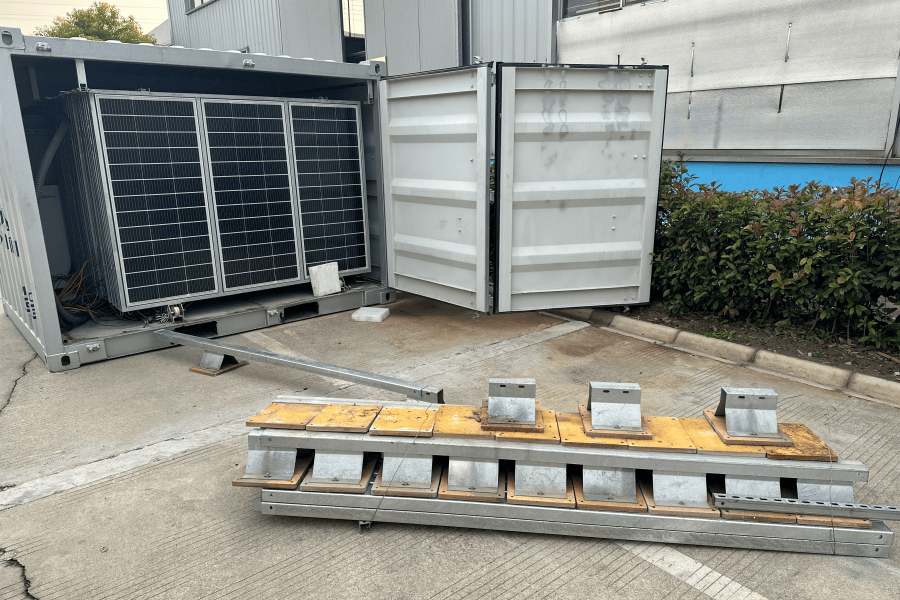
Let me give you a real example. We deployed an IP54-rated outdoor mobile power container for a critical mining operation in the deserts of Mauritania. The challenges were textbook: Extreme Environment: 50C+ heat, abrasive sandstorms, and vast daily temperature swings. Grid Instability: The site's connection was weak and prone to outages, risking equipment damage and halting extraction. Fuel Dependency: They were running generators 24/7, with all the associated cost and carbon burden.
The solution was a 1.5 MWh mobile BESS container, pre-integrated with our thermal management and power conversion systems. It was shipped, dropped on a prepared pad, and connected. Its job? Provide instantaneous backup during grid faults, stabilize voltage and frequency ("grid-forming" is a game-changer here), and allow the generators to run at their most efficient, steady state - or shut off entirely when paired with their planned solar array. The IP54 rating meant the electronics were completely protected from blowing sand. The ruggedized HVAC system maintained optimal cell temperature even in that brutal heat, which is absolutely critical for lifespan and safety.

The outcome? Fuel consumption dropped by over 35% from day one. Power quality issues vanished, protecting million-dollar crushers and conveyors. And the entire system was monitored remotely from our operations center, with local staff trained for basic oversight. This isn't a one-off. The principles are the same for a forestry operation in British Columbia or a municipal water pump station in a flood-prone area of the Midwest.
Expert Lens: Breaking Down the Tech That Matters
As an engineer, I look past the specs sheet. Here's what actually matters on the ground:
- Thermal Management: This is the unsung hero. Batteries degrade fast if they're too hot or too cold. In Mauritania, we used a liquid-cooled system with independent climate control for the battery compartment and the power electronics. It's more complex, but it ensures uniform temperature and extends system life dramatically. For a CFO, this means a lower Levelized Cost of Storage (LCOS) - the total cost of ownership per MWh stored.
- C-rate & Grid-Forming: The C-rate tells you how fast you can charge or discharge the battery. A 1C rate means a full discharge in one hour. For industrial applications, you often need a high C-rate (like 1C or more) to support large motor starts or bridge grid outages. But the real magic is "grid-forming" inverters. Unlike traditional "grid-following" systems that need a stable grid to sync to, these can create a stable grid from scratch - essential for off-grid or weak-grid sites.
- Safety by Design: It's not just about a UL sticker. It's about system architecture. We design with passive fire suppression, continuous gas detection, and physical segregation of modules to prevent thermal runaway propagation. This layered safety approach is what gives peace of mind to site managers and insurance underwriters alike.

Your Next Move: Questions to Ask
If you're evaluating power for a remote or challenging site, start with these questions I often ask my clients:
| Question | Why It Matters |
|---|---|
| What is the true IP rating (not just "outdoor-rated") of the entire container? | IP54 is a minimum for dust/moisture. IP55 or higher may be needed for direct water exposure. |
| How does the thermal management system handle both peak summer heat and winter lows? | Guarantees performance and longevity in seasonal extremes. |
| Can the system provide black-start and grid-forming capability without external support? | Critical for true off-grid resilience and seamless transition during outages. |
| What is the local service and maintenance footprint of the provider? | Ensures rapid response, even in remote locations, minimizing downtime risk. |
The shift from temporary, noisy, carbon-intensive power to permanent, silent, and clean mobile assets is already underway. The Mauritania case isn't an outlier; it's a blueprint. What's the one operational constraint on your site that a mobile, resilient power asset could unlock?
Tags: Renewable Energy Integration BESS Industrial Energy Storage Mining Operations IP54 Outdoor Mobile Power Container
Author
James Zhang
20+ years agricultural energy storage engineer / Highjoule CTO