
Cost of Scalable Modular Off-Grid Solar Generators for EV Charging Stations
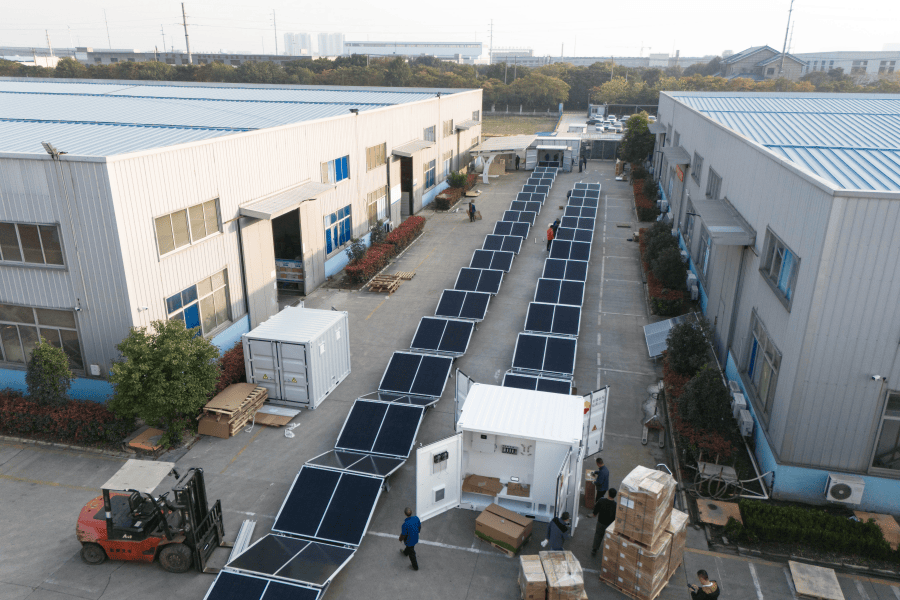
Table of Contents
- The Real Question Behind the Cost
- The Hidden Costs of "Just Making It Work"
- The Modular Advantage: Pay-As-You-Grow
- Breaking Down the Cost: A Realistic Framework
- A Case Study from California: From Grid Anxiety to Energy Independence
- Looking Beyond the Price Tag: What Really Matters
The Real Question Behind the Cost
Honestly, when a business owner or a site developer asks me, "How much does a scalable modular off-grid solar generator for an EV charging station cost?", I know they're asking the wrong question first. What they're really feeling is the pressure. The pressure from customers demanding fast, reliable charging, the pressure from local governments pushing for greener infrastructure, and the pressure from their own balance sheet trying to make the numbers work without getting hit by unpredictable grid upgrade costs or demand charges. I've sat at these kitchen-table meetings from Texas to Bavaria. The initial price tag is just the entry point to a much deeper conversation about resilience, scalability, and total cost of ownership.
The Hidden Costs of "Just Making It Work"
The traditional approach often involves oversizing a static system upfront for future growth, or worse, trying to cobble together components that weren't designed to talk to each other. I've seen this firsthand on site: a beautiful solar carport with a battery system that throttles charging because its thermal management can't keep up on a hot day, or an installation that needed a last-minute, $50k transformer upgrade because the local utility interconnection studies weren't factored in early. According to the National Renewable Energy Laboratory (NREL), soft costs - like permitting, interconnection, and design engineering - can account for over 50% of a residential solar+storage system's price. For commercial and EV charging applications, that percentage shifts, but the risk of budget blowouts remains very real.
These aren't just line items; they're project killers. A non-modular, fixed system locks you into today's capacity. If EV adoption at your location doubles in two years - which, let's be honest, it often does - you're looking at a costly, disruptive retrofit. That's the pain we need to agitate: the cost of inflexibility.
The Modular Advantage: Pay-As-You-Grow
This is where the "scalable modular" part of your question becomes the entire answer. Think of it less as buying a single, massive generator and more like investing in a building block system for energy. At Highjoule, our approach is centered on containerized or skid-mounted Battery Energy Storage Systems (BESS) that are pre-engineered, pre-tested, and certified to standards like UL 9540 and IEC 62619 right out of the gate. You start with what you need for your Phase 1 - say, four 150kW DC fast chargers. The solar canopy goes up, and you plug in one or two BESS modules to manage the peak demand and provide overnight charging.
When traffic increases, you don't rip anything out. You simply add another identical BESS module alongside the first. The system recognizes it, integrates it, and scales up seamlessly. This "pay-as-you-grow" model transforms a large capital expenditure into a manageable, phased investment aligned with your revenue. It directly attacks that pain of inflexibility.
Breaking Down the Cost: A Realistic Framework
So, let's talk numbers. A scalable modular off-grid solar generator for EV charging isn't a single product; it's a system. The cost pyramid looks something like this:
- The Core: Battery Storage (BESS): This is your biggest single line item, typically 40-50% of the hardware cost. We're talking $400 to $700 per usable kWh, depending on chemistry (like LFP for safety and longevity), cycle life, and the sophistication of the battery management system (BMS). The "modular" part here means each incremental unit cost stays predictable.
- The Fuel: Solar PV Array: The solar canopy or ground-mount system. Costs have dropped dramatically, but for EV charging, you're often building for high energy output, so think in terms of total system kW. This includes the panels, inverters, and mounting.
- The Brain: Power Conversion & Control System: This is the unsung hero. The bi-directional inverters, the switchgear, and the energy management software (EMS) that decides when to pull from solar, store in batteries, or dispatch to chargers. It's what makes the system "smart" and is critical for safety and efficiency.
- The Foundation: Balance of System (BoS): Wiring, conduit, safety disconnects, HVAC for the BESS container (thermal management is non-negotiable - I've seen more performance issues from poor cooling than anything else), and the physical foundation.
- The Invisible 30-40%: Soft Costs: This is where projects stumble. Engineering design, site planning, permitting (especially meeting local fire codes with UL 9540 systems), utility interconnection studies (even for off-grid, you often need approval if there's a backup connection), and installation labor.
For a ballpark figure? A robust, truly off-grid capable system to support a cluster of fast chargers can start in the range of $250,000 to $500,000 for a initial, scalable setup. But quoting a number without a site assessment is, honestly, a disservice. The terrain, local climate, electrical standards, and sun exposure change everything.
A Case Study from California: From Grid Anxiety to Energy Independence
Let me give you a real example. We worked with a resort operator in a scenic but grid-constrained part of Northern California. They wanted to offer premium EV charging to their guests but were quoted a 2-year wait and $1.2 million for a grid upgrade. Their challenge was peak summer demand and the need for 100% reliability.
The solution was a modular off-grid solar generator. We deployed a 500kW solar canopy over the parking lot and started with two of our 372 kWh UL 9540-certified BESS containers. The system was designed from day one to accept two more containers. The EMS was programmed to prioritize solar charging, use the batteries to shave the resort's own peak loads (an added benefit), and guarantee charger availability.

The result? Phase 1 was operational in 9 months, at a cost significantly lower than the grid upgrade. They're now adding the third BESS module as their guest EV traffic has grown 40% year-over-year. No service disruption, no redesign. The Levelized Cost of Energy (LCOE) - the total lifetime cost divided by energy produced - for their charging operation is now locked in and predictable, immune to utility rate hikes.
Looking Beyond the Price Tag: What Really Matters
As a technical expert who's been on the hook for system performance for two decades, I tell clients to judge a solution on three things beyond the invoice:
- Safety & Compliance: Is every component, especially the BESS, certified to UL 9540 (the US safety standard) or IEC 62619 (the international equivalent)? This isn't just paperwork; it's about risk mitigation for your property and insurance.
- Thermal Management & C-Rate: Ask about the cooling system. A passive-cooled battery in Arizona will degrade fast. Active liquid cooling is often worth the premium for EV charging, where high C-rates (the speed of charge/discharge) are common. A 1C rate means fully charging or discharging in 1 hour; fast charging demands batteries comfortable with high C-rates.
- Software & Service: The hardware is a commodity. The intelligence and support are not. Can the EMS receive software updates? Does the provider offer remote monitoring and have local service technicians? When something goes down at 8 PM on a Saturday, you need a partner, not just a supplier.
At Highjoule, we bake this into our designs. Our modules are built for the high C-rates of EV charging, with a thermal management system that works from -30C to 50C. More importantly, our local project teams handle the entire soft cost labyrinth - from the initial interconnection paperwork to the final commissioning sign-off - because we've learned that's what actually gets a project across the finish line, on time and on budget.
So, what's the cost? It's the cost of choosing a path that gives you control, scales with your success, and turns a cost center into a resilient, future-proof asset. The better question to start with might be, "What's the cost of not being scalable?"
What's the one site constraint you're dealing with that makes a standard grid connection challenging?
Tags: UL Standard BESS Modular Energy Storage Off-grid EV Charging Solar Generator Cost
Author
James Zhang
20+ years agricultural energy storage engineer / Highjoule CTO