
How much does it cost for Tier 1 Battery Cell Energy Storage Container for Construction Site Power?
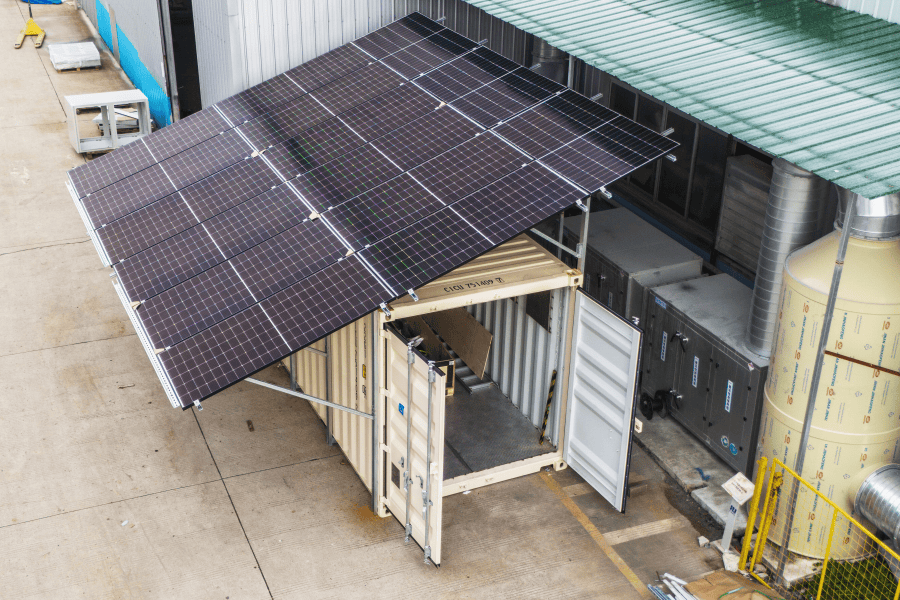
Table of Contents
- The Real Question Behind "How Much Does It Cost?"
- The High-Cost, High-Risk Reality of Construction Site Power
- The BESS Solution: More Than Just a Battery in a Box
- Breaking Down the Cost of a Tier 1 BESS Container
- A Real-World Case: From Diesel Generators to a Silent, Clean Site
- Expert Insight: What Truly Drives Value (and Lowers Your Real Cost)
- Making the Decision: It's About Total Cost of Ownership
The Real Question Behind "How Much Does It Cost?"
Honestly, when a project manager or site director asks me, "How much does it cost for a Tier 1 Battery Cell Energy Storage Container for Construction Site Power?", I know they're not just looking for a number. What they're really asking is, "Can this solve my noise complaints, my fuel logistics nightmare, and my carbon footprint targets, and still make financial sense compared to my diesel gensets?" I've had this conversation over coffee on more than one dusty site trailer desk. The sticker price is just the starting point. The real answer lies in total cost of ownership, risk mitigation, and operational flexibility. Let's dive in.
The High-Cost, High-Risk Reality of Construction Site Power
The traditional model is broken. Relying solely on diesel generators for remote or grid-constrained sites is a triple-threat problem. First, the fuel cost volatility is a budgeting nightmare. Second, the noise and emissions are increasingly triggering local ordinance violations and community pushback, especially here in Europe and in regulated US states like California. I've seen projects get delayed for days because of noise compliance issues. Third, and this is a big one often overlooked, is the sheer operational drag of fuel logistics - security, refueling schedules, spill risks.
According to the National Renewable Energy Laboratory (NREL), fuel and maintenance can constitute up to 70-80% of the lifetime cost of a diesel generator set in continuous operation. You're not paying for power; you're paying for a complex, noisy, polluting logistics chain.
The BESS Solution: More Than Just a Battery in a Box
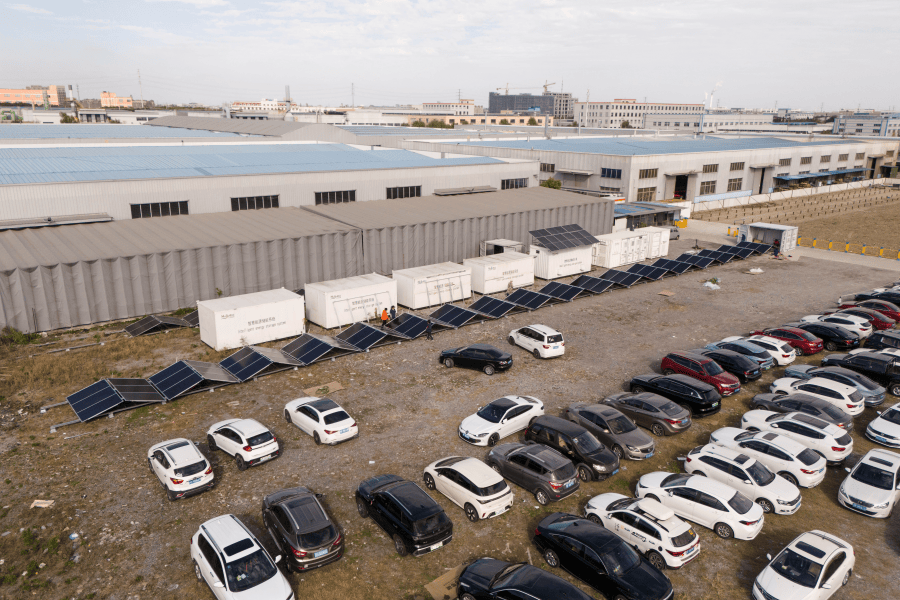
This is where a purpose-built Battery Energy Storage System (BESS) container changes the game. It's not just a bunch of cells thrown into a shipping container. For a construction site, we're talking about a fully integrated, plug-and-play power station. It can be paired with a silent, efficient natural gas genset (for hybrid setups) or solar panels to form a microgrid, drastically cutting runtime on any thermal generation. The core value? Predictable, silent, instant power with zero on-site emissions.

Breaking Down the Cost of a Tier 1 BESS Container
So, let's talk numbers. A "Tier 1" designation is crucial - it refers to cells from manufacturers like CATL, LG Energy Solution, or Samsung SDI, known for proven longevity and safety. For a typical construction site needing 500kW / 1000kWh of capacity (enough to power site offices, lighting, and some equipment), the all-in capex for a fully integrated, UL 9540/ IEC 62933 certified container can range between $350,000 to $550,000.
Why the range? Here's what swings the price:
- Cell Quality (Tier 1 vs. Others): This is your foundation. Tier 1 cells cost more upfront but offer better degradation profiles (more cycles over life).
- Power Conversion System (PCS): The "brain" and "muscle" that converts DC to AC. High-efficiency, bi-directional inverters are key.
- Thermal Management: A liquid-cooled system is more complex and costly than air-cooled but is superior for longevity, safety, and performance in extreme site conditions (think Arizona heat or Canadian winter).
- Safety & Compliance: Integrated fire suppression (like 3M Novec), gas venting, and full UL/IEC certification add cost but are non-negotiable for insurance and permitting, especially under the latest IEEE and NFPA standards.
- Software & Controls: Advanced energy management software (EMS) that allows for peak shaving, scheduled charging (from grid when cheap), and seamless genset integration.
At Highjoule, our engineering focus is on optimizing this upfront cost against the 15-year lifecycle. It's about spending wisely on the right components to avoid costly downtime or premature replacement.
A Real-World Case: From Diesel Generators to a Silent, Clean Site
Let me give you a concrete example from our work. We deployed a 1MWh system for a large infrastructure project in Texas Hill Country. The challenge: strict noise ordinances (gensets had to be off by 7 PM), a 45-minute drive from the nearest fuel station, and corporate sustainability mandates.
The solution was a hybrid system: a 400kW natural gas genset paired with a 500kW/1000kWh Highjoule BESS container. The BESS handled the quiet night shift and peak daytime loads, allowing the genset to run only at its most efficient, steady state. The result? A 60% reduction in fuel consumption, zero noise violations, and the site manager told me their fuel truck visits went from twice a week to once every two weeks. The payback period, factoring in fuel savings and operational efficiency gains, came in under 5 years. The "cost" transformed from an expense into a strategic investment.
Expert Insight: What Truly Drives Value (and Lowers Your Real Cost)
Here's the on-the-ground insight I share with every client. Look beyond $/kWh.
- Understand C-rate: Simply put, it's how fast you can charge or discharge the battery relative to its size. A 1C rate means a 1000kWh battery can output 1000kW for one hour. For construction sites with crane or piling operations, you might need a high C-rate (e.g., 1.5C) for short, high-power bursts. Spec'ing a higher C-rate than needed unnecessarily increases cost.
- Thermal Management is Everything: Heat is the enemy of battery life. I've seen poorly managed systems degrade 30% faster in hot climates. A robust liquid cooling system, while a higher initial cost, protects your investment and maintains capacity, giving you a lower Levelized Cost of Energy (LCOE) over time.
- LCOE is Your True North Metric: LCOE calculates the total lifetime cost of owning and operating the asset divided by the total energy it will produce. A cheaper, uncertified container with poor cooling might have a lower capex but a much higher LCOE due to shorter life and higher maintenance. A Tier 1, well-engineered system like ours is designed for the lowest possible LCOE.
Making the Decision: It's About Total Cost of Ownership
So, when you're evaluating "How much does it cost for Tier 1 Battery Cell Energy Storage Container for Construction Site Power?", frame it differently. Ask: "What is the total cost of ownership over my project's life, and what risks does it mitigate?"
The shift is from a fuel-based, variable-cost model to a capital asset model with predictable, near-zero marginal cost for energy. You're buying energy certainty, regulatory compliance, and community goodwill. The right partner won't just sell you a container; they'll help you model your specific load profiles, navigate local codes (like UL 9540A for fire safety), and provide the local service to keep it running optimally.
Is your next project facing grid constraints, noise limits, or just looking to lock in energy costs from day one? Let's model your specific scenario. What's the one power-related constraint that keeps you up at night on your sites?
Tags: Construction Site Power UL Standard BESS LCOE Tier 1 Battery Energy Storage Cost
Author
James Zhang
20+ years agricultural energy storage engineer / Highjoule CTO