
Liquid-Cooled Pre-Integrated PV Containers: The Military-Grade Solution for Rugged Energy Independence
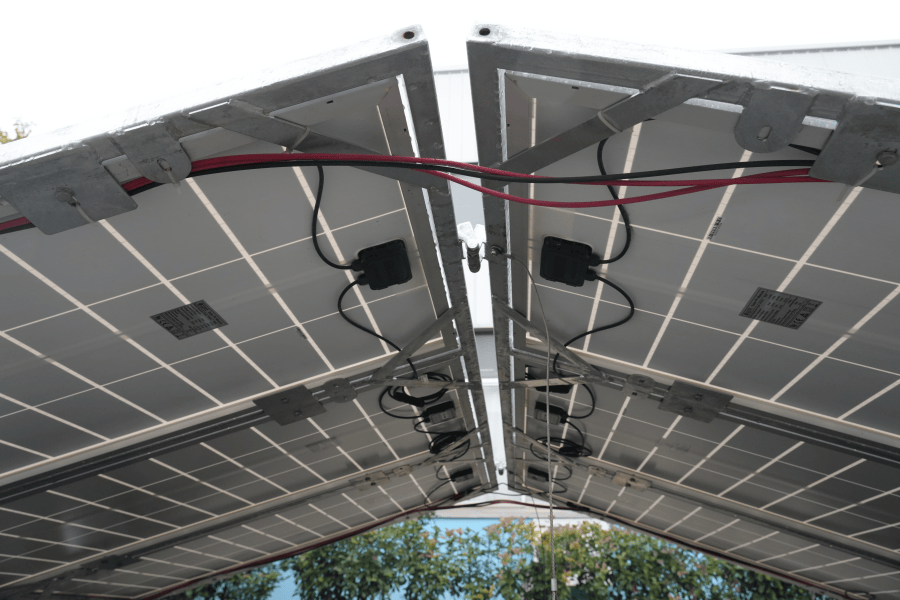
Table of Contents
- The Silent Battle for Power on the Front Lines
- Why Traditional BESS Setups Fail in the Field
- The Game-Changer: All-in-One, Battle-Ready Power Stations
- A Real-World Case: Powering Through the Dust and Heat
- The Tech Behind the Toughness: It's Not Just a Big Battery
- Lessons for Rugged Commercial & Industrial Sites
The Silent Battle for Power on the Front Lines
Let's be honest, when most folks think about military base energy, they picture diesel generators roaring in the background. And for decades, that's been the reality. But that reality comes with a massive, vulnerable supply chain, sky-high operational costs, and a thermal signature that's, well, not exactly discreet. I've been on site for deployments where the fuel convoy was the single biggest point of failure in the entire energy security plan. It's a problem that keeps commanders up at night.
The push for renewables on bases isn't just about being "green" - it's a critical tactical and strategic imperative. The U.S. Department of Defense, for instance, has a clear mandate to enhance energy resilience. But integrating solar PV with battery storage in these environments isn't like installing a system on a warehouse roof in California. The challenges are on a whole other level.
Why Traditional BESS Setups Fail in the Field
Here's the agitating part, based on what I've seen firsthand. A standard commercial battery energy storage system (BESS), even a containerized one, often isn't built for this life. The deployment model is usually piecemeal: solar panels from one vendor, inverters from another, a battery rack system, a separate HVAC unit for cooling, all shipped separately and integrated on-site over weeks.
On a remote base, this process is a nightmare. You're dealing with:
- Extended, Vulnerable Deployment Windows: More time on site means more exposure and more complexity.
- Thermal Management Catastrophes: Standard air-cooling fails miserably in desert heat or fine, abrasive dust. I've seen systems derate power output by 40% just to avoid overheating, defeating the purpose of the install. Dust clogs filters weekly.
- Standard Compliance Gaps: Many commercial systems meet basic UL 9540, but military specs often demand tougher environmental (MIL-STD-810), seismic, and cybersecurity standards.
- Operational Complexity: When systems are cobbled together, diagnostics and maintenance become a puzzle. In a high-stakes environment, you need a single pane of glass for control, not three different vendor logins.
The result? Projects that promise energy independence end up being high-maintenance, underperforming liabilities.
The Game-Changer: All-in-One, Battle-Ready Power Stations
This is where the concept of the liquid-cooled, pre-integrated PV container shifts from a "nice-to-have" to a "must-have." We're not talking about a simple container with stuff thrown in. Think of it as a self-contained, autonomous power station that's factory-tested, pre-wired, and pre-commissioned. It arrives on site virtually "plug-and-play."
The core solution lies in the pre-integration and liquid cooling. By marrying high-density battery racks, PV inverters, DC/DC converters, and a central thermal management system into a single, ruggedized enclosure at the factory, we eliminate 80% of the on-site integration risk. The liquid cooling system is the real hero - it silently and efficiently pulls heat directly from the battery cells, maintaining optimal temperature (<20C delta T across the pack is what we aim for) even when it's 50C (122F) outside. This isn't just about comfort; it's about battery life and safety. According to a NREL study, proper thermal management can double the cycle life of a lithium-ion battery. That directly slashes the Levelized Cost of Energy Storage (LCOES) for the asset owner.
A Real-World Case: Powering Through the Dust and Heat
Let me walk you through a recent deployment for a forward-operating base in the Southwestern U.S. The challenge was classic: provide renewable backup for critical comms and surveillance infrastructure, reduce diesel consumption by over 70%, and do it in an environment with extreme diurnal temperature swings and pervasive fine silica dust.
The traditional approach was a non-starter. Instead, the solution was a pre-fabricated container housing a 500kW/1MWh liquid-cooled BESS, integrated with a dedicated maximum power point tracking (MPPT) system for a 750kWp solar array mounted on adjacent canopies. The entire power conversion and storage system was inside the container.

Here's what made it work:
- Deployment: The container was shipped, dropped, and connected to the pre-laid grid and solar feeds. From delivery to first charge was under 96 hours.
- Thermal Performance: During a peak summer week, with ambient temps hitting 46C (115F), the battery stack temperature never exceeded 32C (90F). The system maintained full C-rate (1C) discharge capability with zero derating. The diesel gensets stayed off.
- Resilience: The enclosure was rated to IP54 and the cooling system used sealed, dust-proof cold plates. Filter maintenance intervals went from weekly to quarterly.
The outcome? A resilient microgrid that now operates for days on solar+storage alone, with generators as a last resort. The fuel savings paid for a significant portion of the system capex in under three years.
The Tech Behind the Toughness: It's Not Just a Big Battery
When we at Highjoule design these systems, we're thinking beyond the spec sheet. Sure, we build to UL 9540 and IEC 62933, but we layer on the requirements we know matter from the field.
Let's demystify two key terms:
C-rate: Simply put, it's how fast you can charge or discharge the battery. A 1C rate means you can use the full capacity in one hour. In a crisis, you need high C-rate capability (like 1C or more) to support sudden, large loads - think radar systems powering up. Liquid cooling is essential to sustain high C-rates without damaging the cells.
LCOE (Levelized Cost of Energy): This is the true total cost of ownership. A cheaper, air-cooled system might have a lower upfront cost, but if it degrades 30% faster in the heat and needs constant maintenance, its LCOE is actually higher. The robustness of a pre-integrated, liquid-cooled unit delivers a lower LCOE over 10-15 years, which is what finance officers and base commanders really care about.
Our design philosophy is "simplify on site, sophisticate in the factory." That means rigorous testing of the entire system as a unit before it leaves our dock - grid-disconnect tests, thermal runaway containment checks, and cybersecurity penetration testing on the monitoring system. The goal is to hand the client a single, turnkey asset with one point of contact for service.

Lessons for Rugged Commercial & Industrial Sites
While the military case is extreme, the lessons are directly transferable. Any remote industrial site - mining operations in Australia, agricultural processing plants in the Central Valley, telecom hubs in the mountains - faces similar challenges: harsh environments, high reliability needs, and a desire to cut both fuel costs and carbon footprint.
The move towards pre-integrated, liquid-cooled containers isn't just a niche trend; it's the logical evolution for deploying robust, utility-grade storage anywhere the conditions are less than a perfect, climate-controlled data center. It reduces total project risk, ensures performance, and ultimately delivers on the financial promise of energy storage.
So, what's the biggest energy security vulnerability at your remote site? Is it the fuel line, the complexity of maintenance, or the fear that your system won't perform when the weather turns extreme? Maybe it's time to think about a solution that's built not just for a spec sheet, but for the real world.
Tags: UL Standard BESS Renewable Integration Thermal Management Liquid Cooling Microgrid Pre-integrated Container Military Energy Security
Author
James Zhang
20+ years agricultural energy storage engineer / Highjoule CTO