
Wholesale Price of IP54 Outdoor 5MWh BESS for Coastal Salt-spray Environments
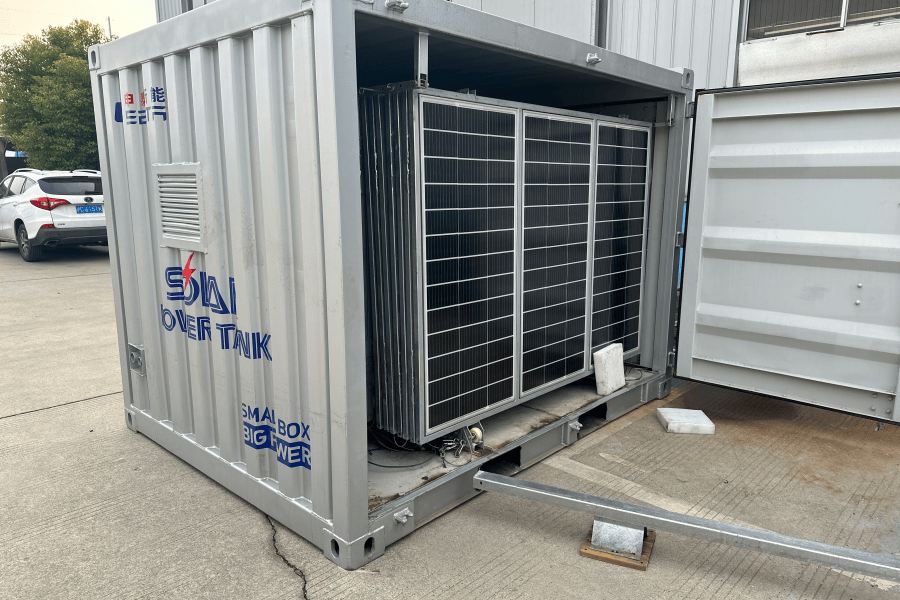
Let's Talk Real Numbers: The True Cost of Putting a BESS by the Sea
Hey there. If you're looking into utility-scale battery storage for a coastal site C maybe for grid support, a solar farm, or an industrial microgrid C you've probably already gotten a few quotes for that Wholesale Price of IP54 Outdoor 5MWh Utility-scale BESS for Coastal Salt-spray Environments. Honestly, I've been on enough sites from the North Sea to the Gulf Coast to tell you this: that initial sticker price is just the beginning of the conversation. The real question isn't just "what does it cost?" but "what will it cost me in five years if I get this wrong?"
Quick Navigation
- The Hidden Cost in the Salt Air
- Why "IP54" on a Datasheet Isn't a Magic Shield
- The LCOE Trap: When Cheap Upfront Becomes Costly Long-Term
- What to Really Look For (Beyond the Price Tag)
- A Real-World Scenario: Learning from the Field
The Hidden Cost in the Salt Air: It's More Than Rust
The problem with coastal salt-spray isn't just cosmetic. We're talking about a highly conductive, corrosive mist that gets into everything. I've seen firsthand on site how standard outdoor enclosures, even those marketed as "weatherproof," can fail. It starts with minor corrosion on cable lugs and busbars, increasing electrical resistance. This leads to localized heating, efficiency drops, and eventually, thermal runaway risks or catastrophic failure. A National Renewable Energy Laboratory (NREL) report highlighted that environmental stressors are a leading contributor to premature BESS performance degradation, with coastal sites seeing accelerated aging.
The financial hit? Unplanned downtime, expensive component replacements (think entire HVAC units or inverter stacks), and a system that never meets its promised cycle life. Your levelized cost of energy (LCOE) C the metric that truly matters for ROI C goes through the roof.
Why "IP54" on a Datasheet Isn't a Magic Shield
Here's a key insight many miss. IP54 (Ingress Protection) means protection against dust and water splashes from any direction. It's a good baseline, but for a constant, fine, corrosive salt aerosol? It's often insufficient. Salt doesn't just "splash"; it drifts, settles, and accumulates. You need a system engineered for the specific chemistry of the environment, not just its weather.
At Highjoule, when we talk about a BESS for these environments, IP54 is the starting point. The real magic is in the details: stainless-steel fasteners and fittings, corrosion-inhibiting coatings on internal structural components, sealed and conformally coated PCBs, and HVAC systems with specialized corrosion-resistant coils and filters. This is where that wholesale price gets its justification. You're paying for materials and design that fight corrosion from day one.
The LCOE Trap: When Cheap Upfront Becomes Costly Long-Term
Let's get technical in a simple way. LCOE is your total system cost over its life, divided by the total energy it dispatches. A lower upfront price can balloon your LCOE if:
- Thermal Management Struggles: Corroded cooling fans or clogged filters force the system to derate (reduce power) to avoid overheating, so you're not getting your full 5MWh output.
- Higher Degradation: Salt-induced corrosion on battery cell terminals increases internal resistance. This means more energy is lost as heat, not power, and your capacity fades faster. You might lose 20% of your capacity in 5 years instead of 10.
- Maintenance Nightmares: Every bolt seized by corrosion turns a 2-hour service call into a day-long ordeal with cutting tools and replacement parts.
You're not just buying a container of batteries; you're buying 20+ years of predictable performance. The Wholesale Price of IP54 Outdoor 5MWh Utility-scale BESS for Coastal Salt-spray Environments must be evaluated against this 20-year cash flow, not the initial CAPEX.

What to Really Look For (Beyond the Price Tag)
When comparing quotes, drill down on these points with your supplier:
- Standards Compliance: Does it meet UL 9540 (system level) and UL 1973 (battery unit) for safety? For grid interconnection, what about IEEE 1547? These are non-negotiable in the US. In Europe, look for IEC 62933 series. Compliance isn't cheap, but it's your safety and insurance bedrock.
- Material Disclosure: Ask for a bill of materials for the enclosure and cooling system. What grade of aluminum or steel? What's the coating specification?
- C-Rate and Usable Energy: A 5MWh system with a 1C rating can discharge 5MW in an hour. But ensure that rating is sustainable in high ambient temperatures (like inside a hot, coastal container). Some systems throttle power (lower effective C-rate) to protect components.
A Real-World Scenario: Learning from the Field
I recall a project at a port facility in Northern Germany. They installed a BESS for peak shaving and backup power. The initial system saved them 15% on CAPEX. Within 18 months, salt corrosion had damaged the air-handling units and several inverter modules. The downtime and repairs wiped out the capital savings and then some. When they came to us for a replacement, we didn't just ship a container. We worked with their local engineering team, specified a full stainless-steel external HVAC skid, used pressurized and filtered air intakes, and provided a detailed corrosion inspection checklist for their maintenance crew.
The result? Three years in, with zero corrosion-related issues, their LCOE is tracking 30% lower than the failed project's actual cost. That's the value of getting it right the first time.
The Highjoule Approach: Engineering for the Real World
Our focus is on designing systems where the Wholesale Price of IP54 Outdoor 5MWh Utility-scale BESS for Coastal Salt-spray Environments reflects real-world durability. It means our standard coastal package includes the corrosion protections I mentioned as default, not costly add-ons. We also build in redundancy for critical cooling components and offer remote monitoring specifically tuned to spot efficiency dips that signal early corrosion issues. Our goal is to ensure your project's financial model holds up, because we've seen what happens when it doesn't.
So, when you're reviewing those proposals, look past the per-kWh price on page one. Flip to the technical specifications, ask about the environmental testing reports, and challenge the assumed degradation curve. Your perfect site by the water deserves a storage system built to thrive there, not just survive.
What's the biggest challenge you're facing with your coastal project's feasibility study?
Tags: UL Standard Renewable Energy Integration BESS LCOE Salt-Spray Corrosion Utility-Scale Energy Storage Coastal Energy Projects
Author
James Zhang
20+ years agricultural energy storage engineer / Highjoule CTO