
Cost of Tier 1 Battery Storage for Industrial Solar: A Real-World Breakdown
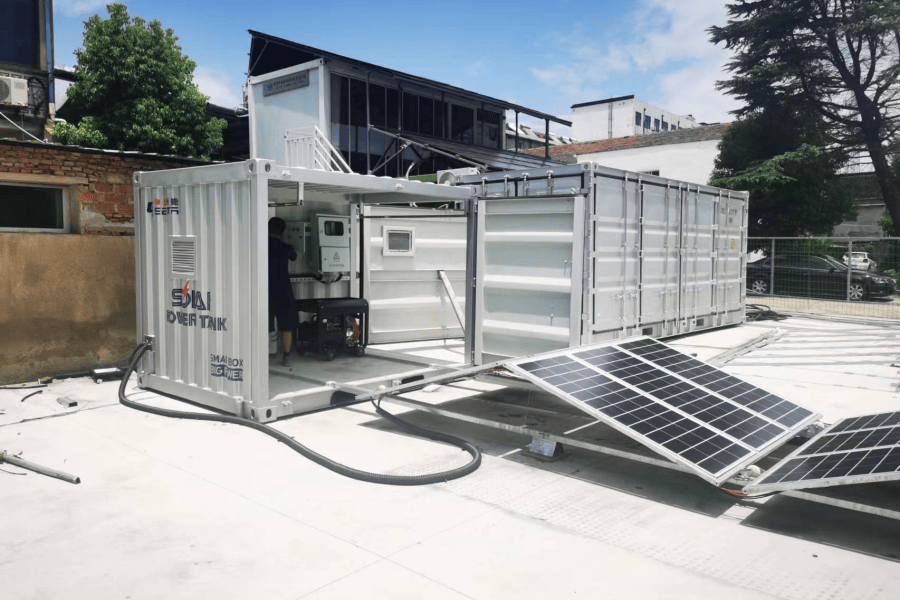
Let's Talk Real Numbers: What a Tier 1 Industrial Solar & Storage System Actually Costs
Honestly, when a plant manager or a CFO asks me that question over coffee, I never just blurt out a dollar-per-kilowatt-hour figure. It's the most common question I get, but also the one where the simplest answer is often the most misleading. Deploying a Tier 1 battery system for an industrial park isn't like buying a commodity. You're not just purchasing a box of batteries; you're investing in a critical piece of electrical infrastructure that needs to be safe, reliable, and profitable for the next 15-20 years. So, let's break down what really goes into that cost, from my two decades of being on-site, sweating the details from California to North Rhine-Westphalia.
Quick Navigation
- The Problem: Why "Sticker Price" is a Trap
- What You're Really Paying For with Tier 1
- The Real Cost Breakdown: Hardware is Just the Start
- A Real-World Case: From Challenge to ROI
- Expert Insight: The Hidden Levers of Total Cost
- Making the Decision: It's About Value, Not Just Price
The Problem: Why "Sticker Price" is a Trap
Here's the scene I've seen firsthand: A business gets three quotes for a 2 MW / 4 MWh system. Quote A is 20% cheaper than Quotes B and C. The temptation is huge. But digging deeper, Quote A uses cells from a manufacturer with a shorter, less proven track record in grid-scale applications. Their safety certifications are pending, and their thermal management design is, well, let's say "optimistic" for a packed container in a Texas summer. The balance-of-plant components are generic. The cheaper price today could mean massive downtime, safety risks, or a system that degrades twice as fast tomorrow.
The pain point isn't the initial investment; it's the Total Cost of Ownership (TCO) and the unexpected liabilities. A fire, a failure to pass a local utility interconnect review, or losing 20% of your capacity in 5 years instead of 10 - these are the costs that sink a project's ROI and keep operations managers up at night.
What You're Really Paying For with Tier 1
When we say "Tier 1" in our industry, we're not just talking about brand recognition. It's a shorthand for proven reliability, and that comes from a few non-negotiable pillars:
- Cell & Module Provenance: Cells from manufacturers like CATL, BYD, or LG, who have produced billions of amp-hours with publicly available, long-term performance data.
- Safety as a System, Not a Feature: This is critical. It's not just about a cell passing a lab test. It's about the entire system - enclosure, cooling, wiring, software controls - being designed and certified to UL 9540 (US) and IEC 62933 (EU) standards. This is where the engineering hours and cost go.
- Bankability: Major financial institutions and insurers recognize the product. They've seen the due diligence reports and are willing to finance or insure projects using it, which directly lowers your cost of capital.

The Real Cost Breakdown: Hardware is Just the Start
So, to answer the question directly, a Tier 1 system for an industrial park in the US or Europe typically ranges from $450 to $700 per usable kWh for a fully installed, grid-connected system. But that wide range tells the story. Here's what makes it up:
At Highjoule, we've found that investing more upfront in modular, pre-integrated designs that are pre-certified to UL and IEC standards can dramatically slash those "soft costs" and timeline uncertainties, bringing the total project cost toward the lower end of that range.
A Real-World Case: From Challenge to ROI
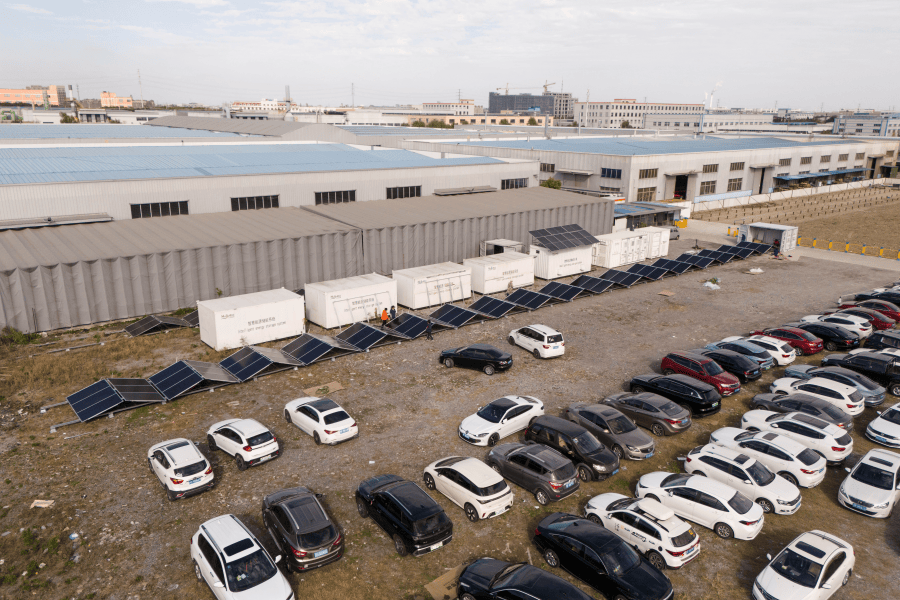
Let me give you a concrete example from a food processing plant in the Midwest US. Their pain points were classic: demand charges spiking every afternoon, a desire to add solar but worried about intermittency, and a corporate mandate for sustainability.
Challenge: They needed a system that could handle 400+ full-depth cycles per year, survive harsh winters, and have its safety case approved by a very cautious local fire marshal.
Solution & Cost Context: We deployed a 1.5 MW / 3 MWh system using Tier 1 LFP chemistry. The hardware cost was at a premium. However, because the system was pre-engineered with UL 9540A test data in hand, we cleared permitting in 60 days instead of a projected 6+ months. The advanced thermal management ensured rated output even at -10C. The Levelized Cost of Storage (LCOS) - the real metric - came in under 10 cents/kWh.
Outcome: They're now saving over $180,000 annually on demand charges, have backup power for critical refrigeration, and their on-site solar is utilized 95%+ internally. The higher initial cost for Tier 1 was justified in 4.2 years, not 6+.
Expert Insight: The Hidden Levers of Total Cost
Let me geek out for a minute on two technical factors that massively influence cost and performance:
- C-rate (Charge/Discharge Rate): A battery's "C-rate" is like the engine size in a truck. A 1C system (like a 2 MW inverter on a 2 MWh battery) can discharge fully in one hour. It's powerful but stresses the cells more. A 0.5C system (2 MW on 4 MWh) is like a bigger, gentler engine. It costs more in battery capacity upfront but leads to less degradation, longer life, and a better LCOS. For most industrial load-shaving, you don't always need a 1C system.
- Thermal Management: This is the unsung hero. Lithium-ion cells hate being hot. I've seen systems with cheap, under-sized cooling lose years of lifespan in a single hot season. A proper liquid-cooled or advanced forced-air system adds cost but is the single best investment for ensuring your $/kWh calculation holds up over time.
Our design philosophy at Highjoule is to engineer around these principles from the start. We might spec a slightly larger, lower C-rate battery with a superior cooling system because our models show it delivers a lower total cost per cycle over 15 years. That's the conversation we want to have.
Making the Decision: It's About Value, Not Just Price
So, when you're evaluating proposals, don't just compare the top-line number. Tear into the assumptions. Ask: What is the projected annual degradation? Can I see the UL 9540 certification and the UL 9540A test report for the exact system configuration? What's the guaranteed end-of-life capacity? How does the thermal management work on the hottest day at my site?
The cost of a Tier 1 Photovoltaic Storage System is the ticket to a long-term, low-risk energy asset. The cheaper alternative is often just that - cheaper upfront. What has your due diligence process revealed about the long-term value of the systems you're looking at?
Tags: UL Standard LCOE Europe US Market Renewable Energy BESS Cost Tier 1 Battery Industrial Solar Storage
Author
James Zhang
20+ years agricultural energy storage engineer / Highjoule CTO