
How to Optimize 20ft High Cube Mobile Power Container for Construction Site Power
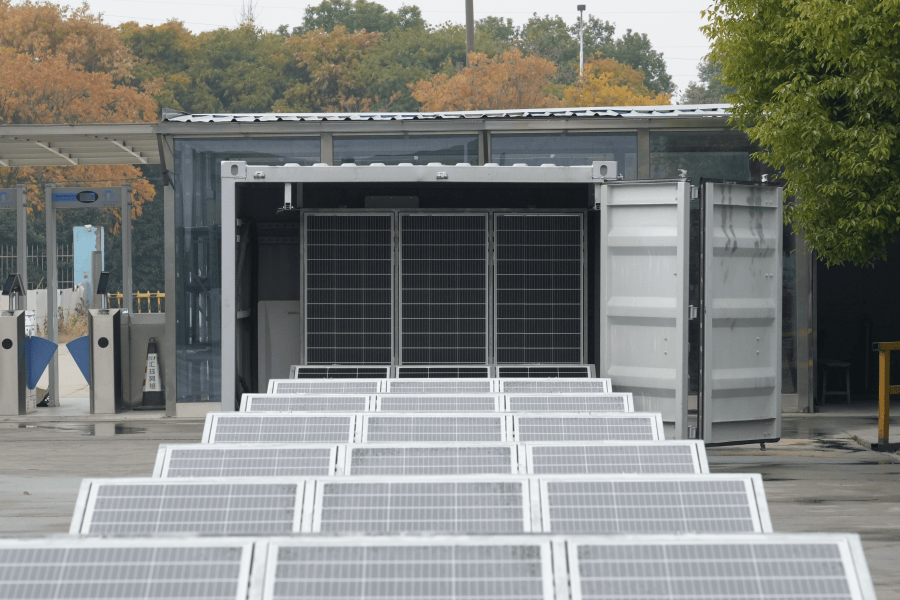
Table of Contents
- The Silent Cost Killer on Your Job Site
- Why a Standard BESS Isn't Enough for Construction
- Your Optimization Checklist: Beyond the Spec Sheet
- A Real-World Case: From California Chaos to Reliable Power
- Making It Work for Your Next Project
The Silent Cost Killer on Your Job Site
Let's be honest. When you're managing a construction timeline, power is often the last thing you want to worry about - until it isn't. The default move for years has been diesel generators. You rent them, fuel them, and deal with the noise and fumes. But honestly, the real pain point I've seen firsthand on site isn't just the fuel bill or the emissions report. It's the unpredictability. The price volatility of diesel, the logistical nightmare of refueling in tight schedules, and the sheer operational rigidity of it all. You're essentially chaining your project's critical path to a fuel truck's delivery schedule.
And here's the data that should make every project manager pause: according to the National Renewable Energy Laboratory (NREL), construction sites can waste up to 30-40% of generated power due to inefficient load management and idling generators. That's money literally burning off into thin air. The problem isn't a lack of power; it's a lack of smart, adaptable, and resilient power.

Why a Standard BESS Isn't Enough for Construction
Now, you might be thinking, "Alright, let's just drop a standard battery container on site and call it a day." I wish it were that simple. A commercial or grid-scale Battery Energy Storage System (BESS) is built for stability, for a fixed location with a relatively predictable load profile. A construction site is its polar opposite.
The challenge is threefold: environmental brutality, load volatility, and mobility. You have dust, wide temperature swings, constant vibration from heavy machinery, and a power demand that spikes from a few kW for lighting to several hundred kW when the crane and welding crews fire up simultaneously. A standard unit's thermal management system might be overwhelmed, its battery cells stressed by wild C-rate swings (that's the speed of charge/discharge), and its rigid structure might not survive the bumpy ride from site to site. Deploying an unoptimized system here is a fast track to premature aging, safety risks, and disappointing returns.
The "On-Site" Reality Check
From my two decades in the field, the biggest failures happen at the intersection of specs and reality. A spec sheet might say "operating range: -10C to 50C." But in Arizona, the sun beating down on a dark container can create internal hotspots far beyond that, triggering shutdowns right when you need power most. Optimization isn't about pushing the tech to its limits; it's about engineering resilience for the real world.
Your Optimization Checklist: Beyond the Spec Sheet
So, how do you optimize a 20ft High Cube Mobile Power Container specifically for the construction grind? It's about intentional design choices. Here's what truly matters:
- Thermal Management That Can Fight Dust & Heat: Forget basic air conditioning. You need an IP54-rated or higher climate control system that can keep cooling fins clean and maintain a consistent temperature for the battery cells, even in dusty conditions. Thermal runaway doesn't start with a bang; it starts with a slow, cumulative heat buildup.
- Battery Chemistry & C-Rate for Burst Power: You need cells that can handle high C-rate discharges without significant degradation. Lithium Iron Phosphate (LFP) is often a champion here for its safety and cycle life, but the pack design - how the cells are configured and managed - is crucial. It's like choosing an engine for a truck that needs both torque and longevity.
- Structural Integrity for the Ride: This is mobile power. The ISO container frame is just the start. Internal components need advanced vibration damping. Busbars and electrical connections must be lock-wired or otherwise secured against constant movement. I've seen loose connections from transport become major faults on site.
- Grid-Forming Capability & Seamless Transition: When the grid connection is weak or non-existent, your BESS must be the "boss" of the microgrid - creating a stable voltage and frequency (that's grid-forming) for sensitive tools. It should switch between grid-charging, generator-hybrid mode, and full islanding without dropping a single tool.
- Safety as a Non-Negotiable Core: This goes beyond a UL 9540 certification for the system. It's about on-site practicality. Integrated gas venting, fire suppression accessible without opening the container (think external cartridge systems), and clear, fail-safe emergency shutdown procedures that a site foreman can understand in an instant.
At Highjoule, when we build for construction, we obsess over these details. It's not just about meeting UL or IEC standards - it's about exceeding them for the specific abuse of a job site. Our design philosophy is to bake the Levelized Cost of Energy (LCOE) optimization into the hardware. A lower LCOE here doesn't just mean cheaper kilowatt-hours; it means predictable power costs over the project lifecycle, immunity from fuel spikes, and avoiding the monumental cost of a work stoppage.
A Real-World Case: From California Chaos to Reliable Power
Let me give you a concrete example from a project we supported in Northern California. The challenge was a remote highway expansion site. Grid connection was prohibitively expensive and time-consuming. The contractor was relying on a bank of diesel gensets, but noise ordinances limited runtime, and fuel costs were blowing the budget.
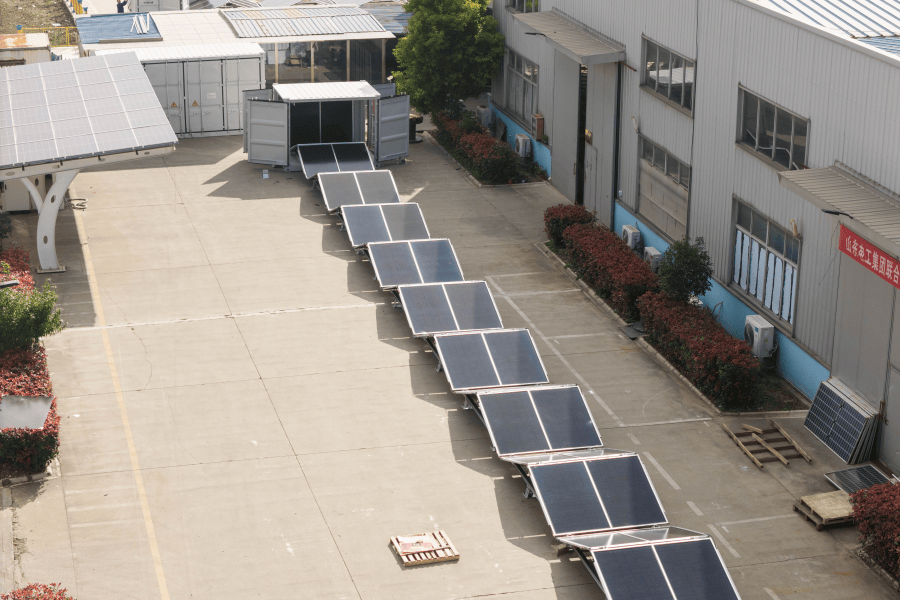
The solution was a hybrid system built around a 20ft High Cube we optimized. We paired a smaller, sound-shielded diesel generator with a 500kWh LFP BESS designed for high-cycling. The BESS provided the base load and peak shaving, allowing the generator to run only at its most efficient, steady state to recharge the batteries. The system's advanced controller managed it all autonomously.
The result? A 65% reduction in diesel fuel consumption and a project power cost that became predictable overnight. The mobile container was ruggedized for the gravel access road and its thermal system was uprated for the valley's temperature swings. After the highway project, that same unit was easily transported and recommissioned for a residential development project - that's the true value of a properly optimized mobile asset.
Making It Work for Your Next Project
The leap from diesel dependence to an optimized mobile BESS isn't just an equipment swap. It's a shift in how you think about site power as a strategic, manageable asset. The key is to start the conversation early in the project planning phase. Ask your potential provider not just for datasheets, but for site-specific simulation data. Can they model your expected load profile and prove the battery's cycle life will hold up? Do they have local service technicians who understand both the technology and the urgency of a construction deadline?
Honestly, the technology is ready. The business case, especially with volatile fuel prices and tightening emissions regulations, is stronger than ever. The question is no longer "if" but "how." How will you specify the resilience, intelligence, and mobility you actually need?
What's the one power reliability headache on your current site that keeps you up at night? Maybe it's time we talked about turning that into a solved problem.
Tags: Mobile BESS Construction Site Power UL Standard LCOE Europe US Market Renewable Energy Energy Storage Optimization
Author
James Zhang
20+ years agricultural energy storage engineer / Highjoule CTO