
Optimize 215kWh Pre-Integrated PV Container for Construction Site Power
The Quiet Revolution on Your Job Site: Optimizing Your 215kWh Power Container
Let's be honest for a second. When you're managing a construction project, whether it's a new warehouse in Texas or a residential complex in Bavaria, your power setup is often an afterthought - a noisy, fume-belching, expensive necessity. You rent the diesel gensets, you pay for the fuel, and you just accept the cost and the hassle as part of doing business. But what if I told you that the game has changed? I've been on sites from California to the Ruhr Valley, and the shift towards containerized solar and storage isn't just coming; for the smart project managers, it's already here. Today, I want to talk about how you can truly optimize one of the most powerful tools in this shift: the 215kWh cabinet-style, pre-integrated PV container for construction site power.
Quick Navigation
- The Real Cost of "Business as Usual" Power
- Beyond the Brochure: The On-Site Reality of Containerized Power
- The Optimization Playbook for Your 215kWh Unit
- A Case in Point: Making it Work in the Real World
- Your Next Steps: Asking the Right Questions
The Real Cost of "Business as Usual" Power
We all know diesel is expensive. But the problem goes deeper than the weekly fuel bill. The International Energy Agency (IEA) has highlighted the construction sector's heavy reliance on temporary fossil fuel power as a major emissions hotspot. Think about the operational headaches: noise complaints that delay night pours or early starts, air quality permits, the security risk of fuel theft, and the sheer logistics of keeping those generators running 24/7. The financial pain is twofold: direct fuel costs and the indirect costs of delays and community relations. It's a volatile, unpredictable cost center that you have almost no control over.
Beyond the Brochure: The On-Site Reality of Containerized Power
So, you see the ads for "plug-and-play" solar containers and think, "That looks easy." And in principle, it is. But having deployed these systems across different climates and regulatory environments, I can tell you the devil is in the details. A 215kWh unit isn't just a big battery in a box. Its real-world performance - and your return on investment - hinges on optimization.
I've seen units underperform because their thermal management couldn't handle the Arizona heat, throttling their output right when the site needed it most. I've seen projects get held up because the electrical interfaces weren't pre-certified to local standards like UL 9540 or IEC 62933, leading to costly inspection delays. The brochure might talk about "215kWh," but your site superintendent cares about how many hours of crane operation or welding that translates to on a cloudy Tuesday afternoon. That gap between the spec sheet and the site requirement is where optimization lives.

The Optimization Playbook for Your 215kWh Unit
Optimizing your container isn't about pushing it beyond its limits. It's about configuring and operating it to deliver the lowest possible Levelized Cost of Energy (LCOE) for your specific site. Let's break down the key levers you can pull:
1. Right-Sizing the Solar & Battery Dance
That 215kWh battery capacity is fixed, but the solar array on the container roof often isn't. The first optimization step is matching the PV generation to your daily load profile and the battery's C-rate. A 1C-rate battery can safely discharge its full 215kWh in one hour, which is great for high-power, short-duration tasks. But if your load is a long, slow draw, you might not need that aggressive (and more expensive) chemistry. We often model site loads to recommend the optimal PV-to-storage ratio, ensuring the battery is charged efficiently by solar without needing grid top-up too often.
2. The Silent Guardian: Thermal Management
This is non-negotiable. Batteries are like athletes; they perform best within a comfortable temperature range. An optimized system has a climate control system that's not just an afterthought. It's a redundant, low-power-consumption unit that keeps the battery at its happy place (usually around 20-25C) in both freezing winters and scorching summers. This extends lifespan, maintains safety, and ensures you get every kilowatt-hour you paid for. At Highjoule, our containers use a staged cooling system that minimizes its own parasitic load, which is a fancy way of saying it doesn't use up the precious energy it's supposed to be saving.
3. Intelligence is Everything: The Software Brain
The hardware is just muscle; the software is the brain. An optimized container has an energy management system (EMS) that you can easily program. You need to tell it: "Prioritize solar charging, run the site tools off battery from 7 AM to 6 PM, and only use the grid connection as an absolute last resort." Good software lets you do that remotely, tracks your fuel and cost savings in real-time, and provides alerts. This operational intelligence is what turns a capital expense into a strategic, cost-saving asset.
4. Compliance by Design, Not by Accident
For the US market, UL 9540 certification for the entire energy storage system is your safety passport. In Europe, you're looking at IEC 62933. True optimization means these certifications are baked into the pre-integrated container from the factory. You shouldn't be hiring an engineering firm to certify it on your site - that's slow and expensive. Our approach has always been to deliver units that are pre-certified, with all the safety disconnects, fire suppression, and labeling already inspected and approved. This gets your project powered up faster, which is the ultimate form of cost optimization.
A Case in Point: Making it Work in the Real World
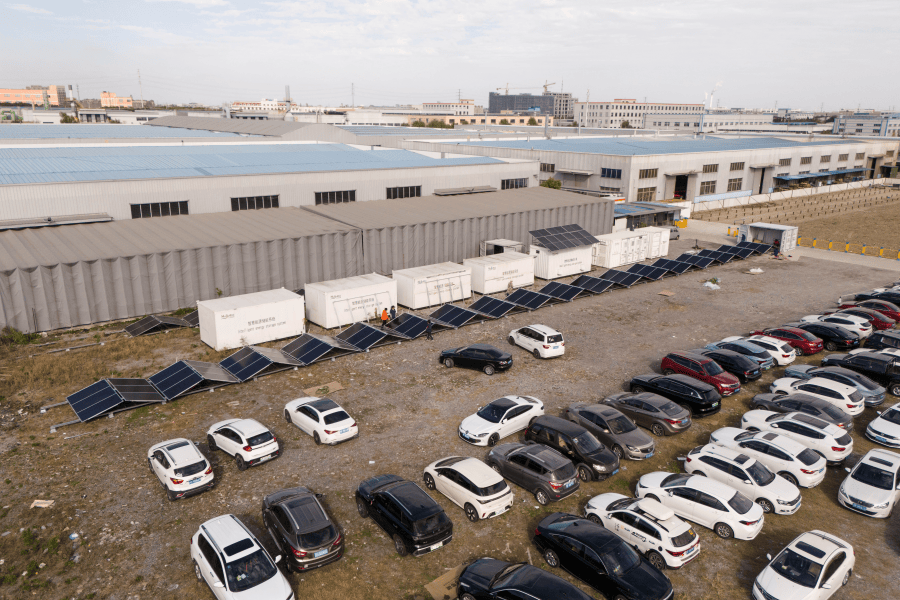
Let me give you a concrete example from a project we supported in Northern Germany. A mid-sized civil engineering firm was building a bridge over a ecologically sensitive area. Diesel generators were a problem due to strict emissions and noise regulations on-site. Their challenge was powering a site office, lighting, and electric tools for a 10-person crew.
We deployed one of our 215kWh pre-integrated containers. Here's how optimization played out on the ground:
- Scenario Programming: The EMS was set to guarantee a "silent running" mode for 10 hours each workday, using only battery and solar.
- Grid as Backup: A single low-amperage grid connection was used only at night during prolonged cloudy periods, minimizing connection costs.
- Local Compliance: The pre-certified IEC documentation sailed through the local utility's interconnection review.
The result? They eliminated over 90% of their planned diesel use. The project manager told me the biggest saving wasn't even the fuel bill - it was the time his foremen didn't have to spend dealing with generator maintenance and refueling logistics.
Your Next Steps: Asking the Right Questions
So, you're considering a 215kWh container for your next project. Fantastic. To make sure you get an optimized system, not just a generic box, start asking your supplier these questions:
- "Can you show me the UL 9540 or IEC 62933 certification for the entire container system, not just the components?"
- "How does the thermal management system work, and what is its own power draw?"
- "Can I program the operating modes (solar-first, silent, backup) easily through a web interface?"
- "Based on my average daily load profile, what's the optimal PV capacity to pair with the 215kWh battery?"
Honestly, the technology is ready. The standards are clear. The economics now make undeniable sense, especially with volatile fuel prices. The optimization journey starts with treating your temporary site power not as a rental expense, but as a deployable, strategic asset. What's the first project you could run quieter, cleaner, and cheaper?
Tags: Construction Site Power UL Standard BESS LCOE Energy Storage Renewable Energy
Author
James Zhang
20+ years agricultural energy storage engineer / Highjoule CTO