
Optimize Air-cooled Pre-integrated PV Container for Remote Island Microgrids
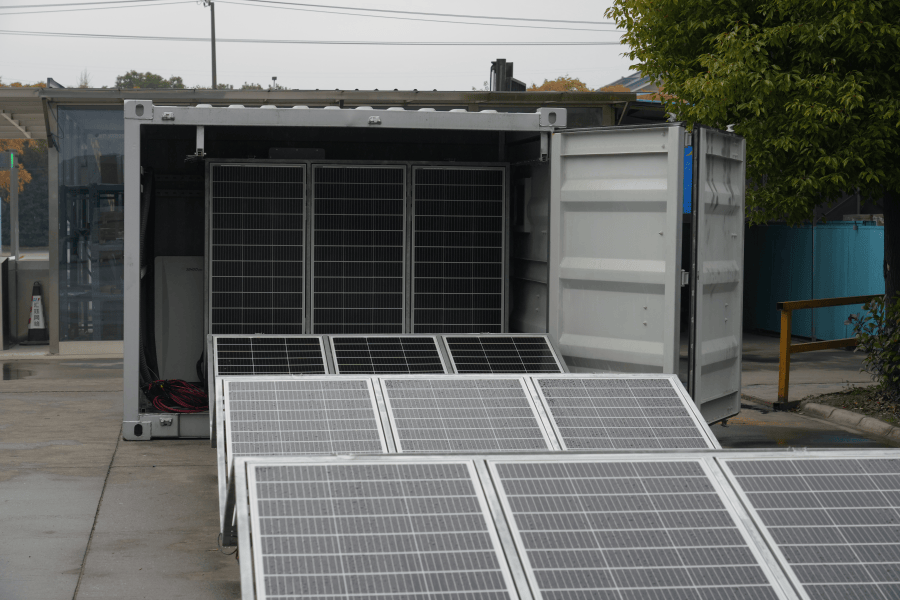
Optimizing Your Island's Lifeline: A Real-World Guide to Air-Cooled PV Containers
Honestly, after two decades of deploying battery storage from the Caribbean to the Scottish Isles, I've learned one thing: remote islands are the ultimate proving ground for energy tech. The stakes are high, the logistics are tough, and there's no backup grid to bail you out. Lately, I've been getting a lot of questions from project developers and community energy managers about a specific solution: the air-cooled, pre-integrated PV container. It seems like the perfect fit - shipped as a single unit, ready to plug and play. But the real question I hear, and the one we'll tackle today, is how to truly optimize it for the harsh, isolated reality of an island microgrid. It's not just about dropping a box on a dock; it's about engineering resilience.
What We'll Cover
- The Real Problem: More Than Just a Power Outage
- Why "Good Enough" Isn't Good Enough: The Cost of Compromise
- The Optimization Framework: It's a System, Not a Box
- Case in Point: Lessons from a Mediterranean Island
- Key Technical Levers You Can Pull
- Making It Work for Your Island
The Real Problem: More Than Just a Power Outage
Let's cut to the chase. The core pain point for island microgrids isn't just intermittency - it's the astronomical cost and complexity of energy security. You're often replacing diesel generators, where fuel costs can be 3-4 times higher than on the mainland, and a single shipment delay can mean blackouts. I've seen this firsthand on site. The promise of a pre-integrated container - housing PV inverters, batteries, and controls in one weatherproof unit - is massive. It reduces on-site construction by up to 70%, which is a godsend where skilled labor is scarce.
But here's the agitation: many treat these containers as a black box. You order a standard 20-foot unit, bolt it down, and hope. The problem? Island environments are uniquely brutal. Salt spray corrodes connectors. Ambient temperatures swing wildly, stressing the number one enemy of battery life: heat. And if your thermal management (that air-cooling system) isn't meticulously matched to your specific duty cycle and climate, you're looking at accelerated degradation, safety risks, and a levelized cost of energy (LCOE) that misses its target.
Why "Good Enough" Isn't Good Enough: The Cost of Compromise
According to a National Renewable Energy Laboratory (NREL) analysis, improper thermal management in BESS can increase long-term degradation costs by over 30%. On an island, where replacing a failed module involves complex shipping and downtime, that percentage feels even higher. It's not just an engineering metric; it's a threat to the community's economic stability. A poorly optimized system might save you 5% on CapEx upfront but cost you 25% more in OpEx and replacement costs over a decade. That math simply doesn't work for a long-term microgrid.
The Optimization Framework: It's a System, Not a Box
So, how do we optimize? The mindset shift is key: view the container as a living system that must be tuned to its environment. Optimization happens in three layers: Design, Integration, and Operation.
At Highjoule, when we approach a project like this, we start with the local climate data - not just average temps, but peak humidity, salt mist density, and even sandstorm frequency. This dictates our corrosion protection standards (beyond standard IEC 60068-2-52) and the critical specification of the air-cooling system. We're not just slapping in bigger fans; we're designing for airflow patterns that prevent hot spots within the battery racks, which I've seen cripple C-rate performance during peak solar hours.
Case in Point: Lessons from a Mediterranean Island
Let me give you a concrete example. We deployed a pre-integrated PV container for a hotel and water desalination plant on a Greek island. The challenge was classic: space was limited, aesthetics mattered, and the summer heat was intense. The standard air-cooling setup would have been running at 100% capacity for 14 hours a day, wearing out fans and struggling to keep cells below 35C.
Our optimization involved:
- Predictive Ventilation: We integrated weather forecasting data with the BEMS (Building Energy Management System). The system would pre-cool the container overnight using cooler ambient air, reducing the thermal load at peak sun.
- Cell-Level Analytics: Using our onboard monitoring, we identified and slightly de-rated a specific module bank that was prone to running hotter, balancing the load and extending its life.
- Local Grid Interaction: We tuned the inverter's grid-forming settings to be more resilient to the sudden load changes from the desalination pumps, a common issue IRENA highlights for island systems.
The result? A 15% reduction in auxiliary cooling energy use and projected battery lifespan extension that improves the project's LCOE by nearly 18%. That's the power of optimization.

Key Technical Levers You Can Pull
For the decision-makers, here's what to focus on in your specs:
- C-rate and Thermal Coupling: Don't oversize the battery just for capacity. Match the C-rate (charge/discharge speed) to your solar curtailment and load-ramping needs. A lower, steady C-rate generates less heat. Ensure the air-cooling design is rated for your actual peak C-rate, not an average.
- Thermal Management Zoning: Demand a container design with separate cooling zones for power electronics (inverters, which handle high temps well) and battery racks (which need stricter control). Mixing them is a common mistake.
- LCOE as the True North: Every decision - cell chemistry, cooling setpoints, redundancy - must feed into minimizing Levelized Cost of Energy. A slightly more expensive, UL 9540-certified system with superior thermal design will almost always win in a 15-year island project versus a cheaper, less robust alternative. The safety and longevity pay for themselves.
Making It Work for Your Island
The journey doesn't end at commissioning. Optimization is continuous. Work with a provider that offers remote, predictive diagnostics and has local service partners within a reasonable distance. At Highjoule, our platform flags anomalies in cell voltage or cooling performance before they become failures, which is crucial when you're an 8-hour ferry ride away from the nearest technician.
So, when you're evaluating that pre-integrated container solution, push beyond the datasheet. Ask about the thermal simulation reports. Discuss the control logic for the air-cooling system. Scrutinize the compliance with not just UL 9540 but also UL 9540A for fire safety, a growing concern for insurers. Your island microgrid isn't a side project; it's critical infrastructure. The container you choose should be built and optimized with that same level of seriousness.
What's the single biggest environmental challenge your island site is facing - is it salt air, extreme heat, or something else entirely? Let's talk about how to engineer for it.
Tags: UL Standard BESS LCOE Energy Storage Europe US Market Renewable Energy Microgrid Containerized ESS Island Grid
Author
James Zhang
20+ years agricultural energy storage engineer / Highjoule CTO