
Air-Cooled BESS: The Proven Path to Reliable, Profitable Rural Electrification
Quick Navigation
- The Real Cost of Getting Energy Storage Wrong
- Why Air-Cooled Systems Are Winning in Tough Environments
- From Blueprint to Reality: A Project That Worked
- Expert Insight: It's Not Just About the Box
- Choosing the Right Partner for Your Project
The Real Cost of Getting Energy Storage Wrong
Honestly, when we talk about bringing reliable power to remote areas, whether it's a village in the Philippines or a ranch in Texas, the conversation often starts with solar panels. But I've been on enough sites to tell you that's only half the story. The real make-or-break factor? The battery system storing that sun. Get it wrong, and you're looking at more than just an underperforming project. You're looking at a safety hazard, a financial sinkhole, and a community left disillusioned with renewable energy.
The core problem we see, especially when projects are adapted from one region to another without deep local expertise, is a mismatch between the technology's design limits and the environment's harsh reality. Think about it: an off-grid site in a tropical climate faces 95% humidity, salty air, and ambient temperatures that can soar above 40C (104F). Now, cram a high-density battery system into a container without a robust thermal management plan. What happens? According to a National Renewable Energy Laboratory (NREL) analysis, every 10C rise above a battery's optimal temperature range can halve its cycle life. That's not a gradual loss; that's your project's financial model crumbling in real-time.
Why Air-Cooled Systems Are Winning in Tough Environments
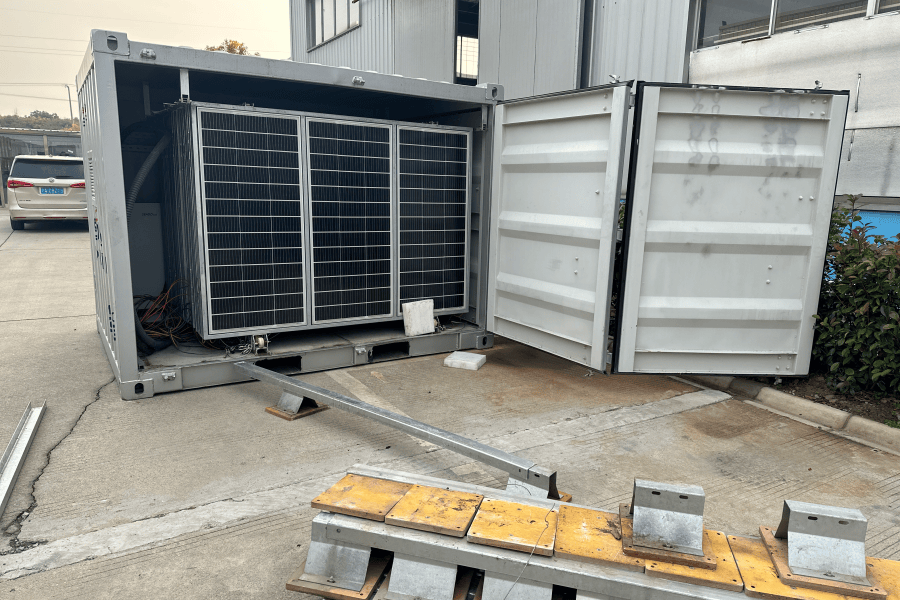
This is where the philosophy behind air-cooled off-grid solar generators becomes so critical. It's not about being "low-tech." It's about being right-tech. For remote, off-grid deployments, simplicity equals reliability. A well-designed air-cooled Battery Energy Storage System (BESS) uses forced air circulation - powerful, intelligent fans and ductwork - to pull ambient air through the battery racks and exhaust the heat. No complex coolant loops, no chillers, no secondary pumps that can fail.
The beauty is in the operational and safety design. Systems built for this duty, like the ones we engineer at Highjoule, start with a lower C-rate chemistry. This means the batteries charge and discharge at a gentler pace, generating less internal heat to begin with. Combine that with a thermal management system that's designed for peak ambient temperatures, not just average ones, and you get a system that stays within its happy zone. And because every component, from the cell to the container-level HVAC, is certified to standards like UL 9540 and IEC 62619, you have a clear, auditable safety trail - something that's non-negotiable for insurance and financing in North America and Europe.

From Blueprint to Reality: A Project That Worked
Let me give you a real example, closer to home. We worked on a microgrid for an off-grid agricultural research station in California's Central Valley. The challenge was classic: provide 24/7 power for sensitive lab equipment and data servers using solar + storage, with zero grid connection. Summer temperatures consistently hit 110F (43C). The initial proposal from another vendor was a liquid-cooled, high-density system.
Our team pushed for an air-cooled solution. Why? On-site maintenance for liquid systems in that dust-heavy, remote environment would have been a nightmare. A single leak or pump failure could take the whole system down for days. We deployed a modular, air-cooled BESS with a N+1 fan redundancy design. Honestly, during commissioning, we watched the BMS diligently ramp up fan speed as the afternoon heat peaked, keeping the battery??2? a solid 15C below ambient inside the racks. Three years on, the performance data shows less than 2% deviation from the original cycle life projection. The client sleeps well at night because their system is simple to monitor and maintain.
Expert Insight: It's Not Just About the Box
If you take one thing from this, let it be this: the true metric of success is Levelized Cost of Energy (LCOE). It's the total lifetime cost of your system divided by the total energy it produces. A cheaper, more complex system that fails early or requires expensive upkeep has a terrible LCOE.
Air-cooling directly optimizes for LCOE in harsh, remote settings. It lowers upfront Capex compared to complex liquid systems. It drastically reduces Opex because there's less to maintain and the energy used for cooling is itself lower. And most importantly, by preserving battery life through consistent thermal management, it ensures you get every kilowatt-hour you paid for over the system's full 10-15 year lifespan. You're not just buying a container; you're buying a guaranteed energy output. That's the business case that resonates with project developers and financiers.
Choosing the Right Partner for Your Project
So, how do you translate this philosophy into a successful project? It starts with a partner who thinks beyond the datasheet. At Highjoule, our engineering conversations always start with the environment and the operational reality. We don't just sell a standard box; we adapt the cooling capacity, the battery chemistry's C-rate, and the system architecture to match your specific climate and load profile.
Our design process embeds compliance with UL, IEC, and IEEE standards from day one, not as an afterthought. This isn't just about ticking a box for regulators. I've seen firsthand on site how this disciplined approach prevents field failures. It means using components with the right certifications, designing clear airflow paths, and building in safety buffers. The goal is to deliver a system that a local technician, with basic training, can keep running optimally for decades. That's the kind of sustainable solution that truly powers communities - whether they're in Southeast Asia or the American Southwest.
What's the biggest environmental challenge facing your next off-grid or microgrid project?
Tags: LCOE Optimization UL Standards Rural Electrification Off-grid Solar Air-Cooled BESS
Author
James Zhang
20+ years agricultural energy storage engineer / Highjoule CTO