
Wholesale Price of Grid-forming Pre-integrated PV Container for Construction Site Power
Contents
- The Hidden Cost of "Just Hooking Up to the Grid"
- Beyond Diesel Generators: The Modern Site's Power Dilemma
- A Smarter Way to Power Your Build
- Making the Numbers Work: The Wholesale Advantage
- A Tale of Two Sites: Seeing is Believing
- What to Look for in Your Container Solution
- Your Next Move
The Hidden Cost of "Just Hooking Up to the Grid"
Let's be honest. When you're planning a new construction project, whether it's a warehouse in Ohio or a residential complex in Bavaria, your initial power plan is often the simplest one: get a temporary connection from the local utility. It seems straightforward. But after two decades on sites across the globe, I've seen firsthand how this "simple" hookup becomes a major source of budget overruns and scheduling headaches. You're not just paying for the energy you use; you're paying for peak demand charges, dealing with unreliable grids in remote areas, and facing ever-rising utility rates that turn your budget spreadsheet into a guessing game.
Beyond Diesel Generators: The Modern Site's Power Dilemma
So, the natural pivot is to diesel generators. They're familiar, they're available. But here's the agitation point we all feel but rarely quantify holistically: the true cost is staggering. Beyond the wholesale fuel price itself, you have the constant refueling logistics (a crew and truck tied up daily), the deafening noise that sparks community complaints and limits work hours, the exhaust fumes violating increasingly strict local emissions regulations, and the sheer maintenance they demand. A study by the National Renewable Energy Laboratory (NREL) highlights how fuel and O&M can constitute over 70% of a generator's lifetime cost. That's not an energy solution; it's a liability on wheels.
And let's talk about the grid itself. In many areas, especially where new development is happening, the grid is weak. Voltage sags and micro-outages can fry sensitive equipment and bring precision work to a halt. A traditional "grid-following" solar-plus-storage system just shuts off during a grid fault - it needs that grid signal to operate. For a construction site, that's a non-starter. You need power especially when the grid blinks.
A Smarter Way to Power Your Build
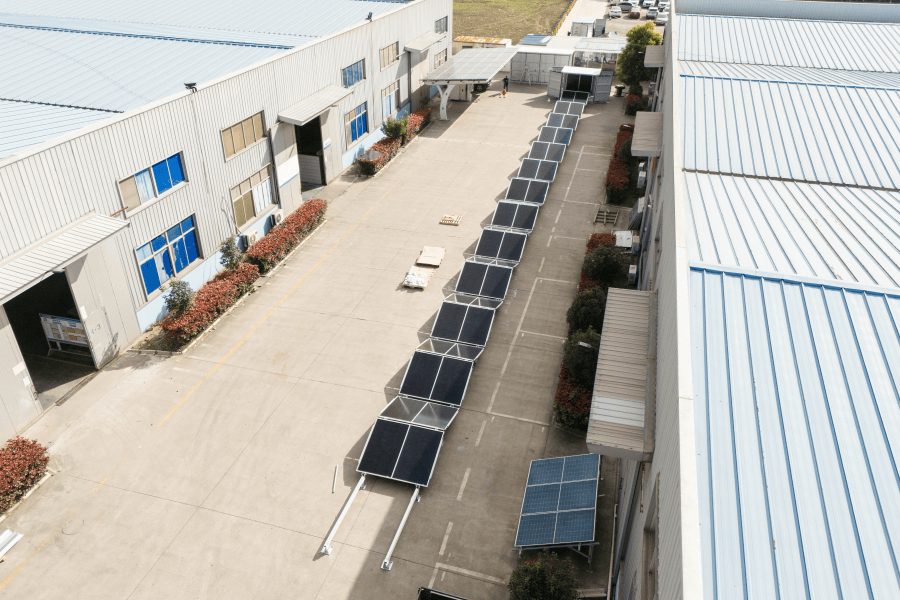
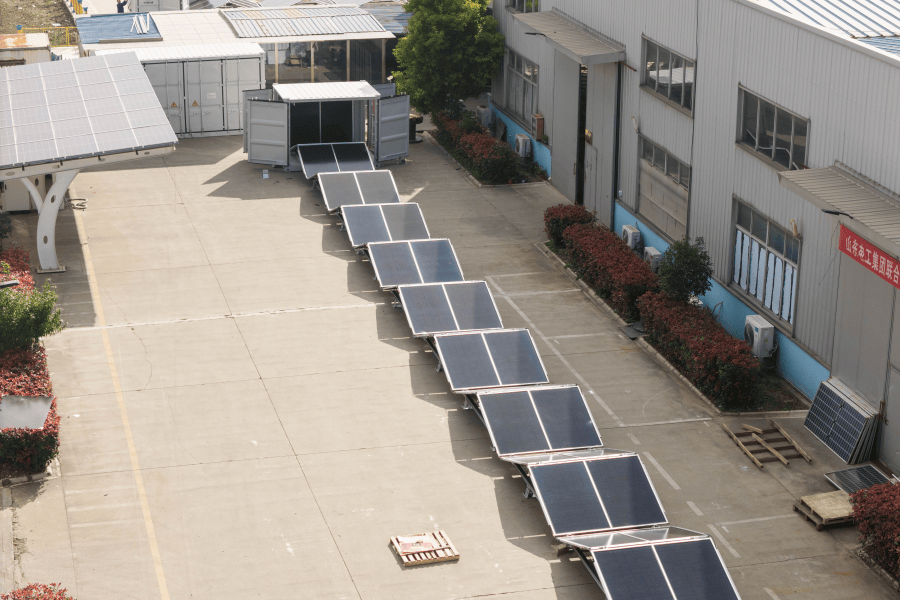
This is where the conversation gets interesting. The solution isn't just slapping some solar panels and a battery on site. It's about an integrated, intelligent, and independent power system. We're talking about the Grid-forming Pre-integrated PV Container. Honestly, this is the evolution we've been working towards. Think of it as a "power plant in a box" delivered to your site. The solar generation, the battery storage, the advanced grid-forming inverters, and the critical thermal management and safety systems - all pre-assembled, pre-wired, and pre-tested in a single, ruggedized shipping container.
The magic word is "grid-forming." Unlike standard systems, these inverters can create their own stable voltage and frequency waveform, acting as the bedrock of a mini-grid. If the public grid fails, your site doesn't even notice. The lights stay on, the tools keep running. This isn't future tech; it's deployable today and is a game-changer for site reliability.

Making the Numbers Work: The Wholesale Advantage
Now, I know what you're thinking: "This sounds premium. What's the catch?" This is where the Wholesale Price model changes the calculus. When you source a pre-integrated container at scale, the economies are fundamentally different than piecing together components project-by-project. The manufacturer procures batteries, inverters, and structural components in bulk, passing significant savings down the line. More importantly, the Levelized Cost of Energy (LCOE) - the total lifetime cost divided by energy produced - plummets.
Your "fuel" is free sun, your maintenance is dramatically simplified (we're talking quarterly checks vs. daily refueling), and the system's lifespan often exceeds the construction timeline, allowing for redeployment. You're not buying a consumable like diesel; you're acquiring a high-value, movable asset. The upfront number might look different, but the total cost of ownership tells the true story - and it's overwhelmingly in favor of the integrated container.
A Tale of Two Sites: Seeing is Believing
Let me give you a real example from our work at Highjoule. We deployed a 500kWh grid-forming container for a civil engineering firm building a new highway section in a remote part of Texas. The grid connection quote was prohibitive, and diesel gensets were eating $5,000 a week in fuel alone, not counting logistics. The challenge was pure, uninterrupted power for their batch plant and surveying equipment.
We dropped a single container on-site, paired with a ground-mount PV array. From day one, it provided over 85% of their energy needs, with the grid (when available) and a small backup generator as a last resort. The grid-forming capability meant their sensitive instruments never glitched. Over the 14-month project, they saved an estimated $180,000 in fuel and grid connection fees. The project manager told me the quiet site (no generator roar) was an unexpected benefit that improved crew communication and safety. That container is now being refurbished and is headed to its next project in Colorado - demonstrating the asset's residual value.
What to Look for in Your Container Solution
Not all containers are created equal. Based on what I've learned in the field, here's your checklist:
- Safety First, On Paper and On Site: It must be built to and certified for your market. In the US, that means UL 9540 for the energy storage system and UL 1741-SB for the grid-forming inverters. In the EU, look for IEC 62619 and IEC 62109. This isn't bureaucracy; it's your insurance policy.
- Thermal Management is Everything: Batteries hate extreme heat. A robust, independent liquid-cooling or forced-air system within the container is non-negotiable for performance and longevity. Ask about the design ambient temperature range.
- Understand the C-rate: This sounds technical, but it's simple. It's basically how fast the battery can charge or discharge relative to its size. A 1C rate means a 100kWh battery can output 100kW. For construction sites with heavy equipment (big loads), you need a system with a high enough C-rate to handle those surges without tripping. Make sure your provider explains this in the context of your planned equipment load.
- Localized Support: Does the provider have local technicians or partners? When you have a question or need a software update, you don't want to wait for an email reply from a different timezone.
At Highjoule, we've baked these principles into our SitePower Max containers. We obsess over the thermal design, we certify rigorously for both UL and IEC markets, and we provide a clear LCOE analysis upfront because we're confident in the numbers. Our goal is to be your long-term energy partner, not just a box supplier.
Your Next Move
The shift to mobile, renewable site power isn't coming; it's here. The question is no longer if the technology works, but how quickly it can improve your bottom line and de-risk your project schedule. So, next time you're looking at a site power budget line that makes you wince, consider this: What would change if you could lock in 80% of your energy costs at near-zero, eliminate fuel logistics, and guarantee power quality?
What's the one piece of equipment on your next site that would benefit most from absolutely clean, reliable power?
Tags: UL Standard BESS LCOE Europe US Market Construction Power Renewable Energy Grid-forming
Author
James Zhang
20+ years agricultural energy storage engineer / Highjoule CTO