
How to Optimize All-in-one Industrial ESS Containers for EV Charging Stations
The Real-World Guide to Optimizing Your Industrial ESS for EV Charging
Honestly, if I had a coffee for every time a commercial or industrial client asked me about pairing battery storage with their new EV charging stations, I'd be wired for a week. It's the hottest topic on the ground right now. But here's what I've seen firsthand: too many projects treat the Energy Storage System (ESS) as just another box to check, a simple battery next to the chargers. That approach, frankly, leaves a ton of value - and a lot of money - on the table. Let's talk about how to truly optimize an all-in-one industrial ESS container specifically for the brutal, variable demands of fleet or public EV charging.
Quick Navigation
- The Real Problem: It's Not Just Power, It's the Bill
- Why "Standard" ESS Optimization Fails for EV Charging
- Core Optimization Levers for Your ESS Container
- A Case in Point: The German Logistics Hub
- Beyond the Hardware: The Integration Mindset
The Real Problem: It's Not Just Power, It's the Bill
The core pain point for any business deploying EV charging at scale isn't usually the cost of the electrons themselves. It's the demand charges. In the US and many European markets, utilities charge commercial customers not only for the total energy consumed (kWh) but also for the peak power draw (kW) in any given billing period. A single 350kW ultra-fast charger can spike your demand like nothing else. According to the National Renewable Energy Lab (NREL), demand charges can constitute 50-90% of a commercial site's electricity bill. Now imagine ten chargers hitting at once during a fleet's midday return.
The problem gets worse. Many sites have grid connection limits. You want to install 2 MW of charging, but your transformer only supports a 1.5 MW peak upgrade. The cost and time for a grid upgrade can kill a project's ROI before it even starts. This is where a well-optimized ESS isn't a nice-to-have; it's the economic enabler.
Why "Standard" ESS Optimization Fails for EV Charging
Most all-in-one ESS containers are designed for solar smoothing or basic time-shifting - relatively predictable cycles. EV charging is a different beast. The load profile is incredibly "spiky" and unpredictable. A standard setup might:
- Under-cycle the battery: Being too conservative, missing out on revenue.
- Over-stress the battery: Responding too aggressively to every spike, degrading the cells prematurely.
- Mis-manage heat: Those rapid, high-power discharges (high C-rate events) generate significant heat. A standard thermal system might not be calibrated for this, leading to throttled power or, worse, accelerated aging.
The goal of optimization shifts. It's not just about storing cheap night-time power. It's about predictive peak shaving and dynamic response to protect both your grid connection and your wallet.

Core Optimization Levers for Your ESS Container
So, how do you tweak the knobs? Based on our deployments from California to North Rhine-Westphalia, here are the non-negotiable levers to discuss with your provider.
1. The Brain: Advanced, Charging-Aware EMS
The Energy Management System (EMS) is the quarterback. It must go beyond simple schedules. An optimized EMS for EV charging needs:
- Real-time communication with charging points (via OCPP): To know if a 350kW stall is about to initiate a session.
- Load forecasting: Using historical data and even calendar integration (for fleet operations) to predict busy periods.
- Demand charge algorithm customization: You should be able to set the target peak power threshold based on your specific utility tariff structure.
2. The Heart: Battery Cell & C-Rate Specification
This is technical, but stick with me. The C-rate essentially tells you how fast you can charge or discharge the battery safely. A 1C battery can give you its full rated capacity in one hour. For EV charging support, you often need a higher discharge C-rate - say 1.5C or even 2C - to meet those sudden, high-power demands. But there's a trade-off: consistently high C-rates can stress cells. The optimization lies in selecting cells engineered for this duty (like LFP chemistry, which is inherently more robust) and then configuring the system to use high C-rate bursts only when absolutely necessary for peak shaving, not for all discharges.
3. The Lungs: Thermal Management System Tuning
Heat is the enemy of battery life. During a site visit in Texas, I saw a poorly sized cooling system throttle an ESS output on a hot day - right when the chargers needed it most. For EV charging applications, the thermal system must be oversized relative to a standard ESS. It needs to handle heat rejection from high-power, short-duration events. Look for liquid cooling systems with dynamic control that can anticipate heat buildup based on the discharge schedule, not just react to it.
4. The Foundation: Safety & Standards (UL/IEC/IEEE)
Optimization never trumps safety. In the US, UL 9540 (the standard for ESS safety) is paramount. In Europe, it's IEC 62933. An optimized container is one that's pre-certified to these standards, with fire suppression, segregation, and ventilation designed in from the start. This isn't just about compliance; it's about insurability and peace of mind. I've seen projects delayed by months waiting for certification on a customized box. A pre-engineered, certified solution from a provider like ours at Highjoule gets you online faster and safer.
A Case in Point: The German Logistics Hub
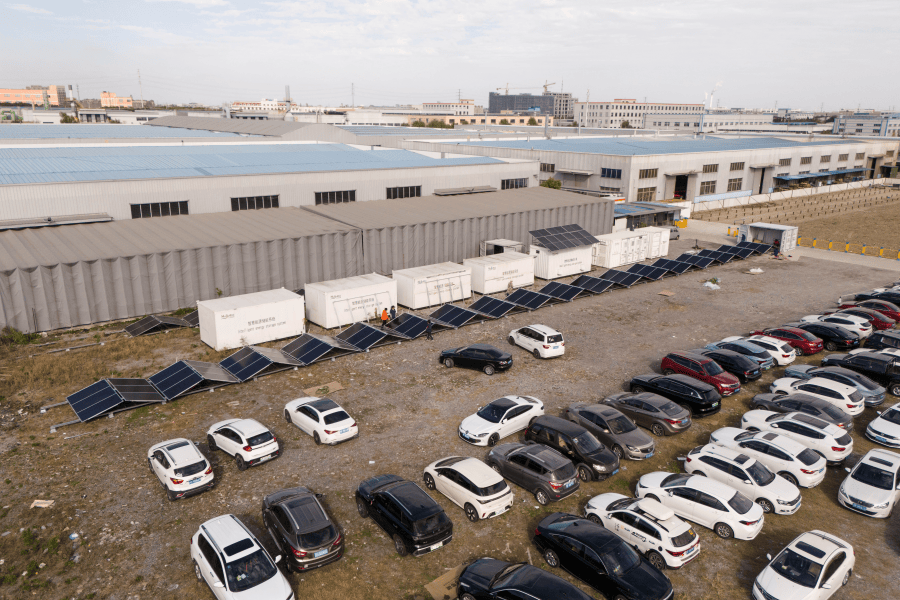
Let me make this real. We deployed a 1.2 MWh all-in-one container for a logistics company in Germany. They had a fleet of 40 electric delivery vans and a hard grid limit.
- Challenge: Charge all vans between 2 PM and 5 PM without exceeding a 800 kW grid limit. Their chargers alone could draw 1.4 MW.
- Optimization: We didn't just size the battery for capacity. We:
- Spec'd cells with a sustained 1.8C discharge capability for the 3-hour window.
- Integrated the EMS directly with their fleet management software to get a rough charging schedule each morning.
- Tuned the liquid cooling to handle the predictable afternoon heat load from both the environment and the battery discharge.
- Result: Zero grid upgrades. They stay under their demand limit. The ESS handles the peak, charging from excess solar midday and cheaper off-peak power at night. Their Levelized Cost of Energy (LCOE) for charging - factoring in the ESS capital cost - is still 35% lower than relying solely on the grid during peak times.
Beyond the Hardware: The Integration Mindset
Finally, true optimization happens before the container arrives on site. It's in the planning. A site assessment that looks at your specific grid constraints, tariff, charging patterns, and even future expansion plans is critical. At Highjoule, our engineering team spends as much time on this phase as on the hardware specs. Because the best-optimized container is one that's designed for your problem from day one, with local service teams who understand both the battery and the charging infrastructure.
The bottom line? Optimizing an ESS for EV charging is about moving from a passive battery to an active, intelligent grid partner. It's about specifying the right components and, more importantly, the right logic. The question isn't just "how big a battery do I need?" It's "How do I configure the system to maximize my return and ensure reliability for the next decade?"
What's the biggest grid constraint you're facing on your current or planned EV charging project?
Tags: UL Standard BESS LCOE Europe US Market Thermal Management Industrial ESS EV Charging
Author
James Zhang
20+ years agricultural energy storage engineer / Highjoule CTO