
Environmental Impact of Air-cooled Photovoltaic Storage Systems for Military Bases
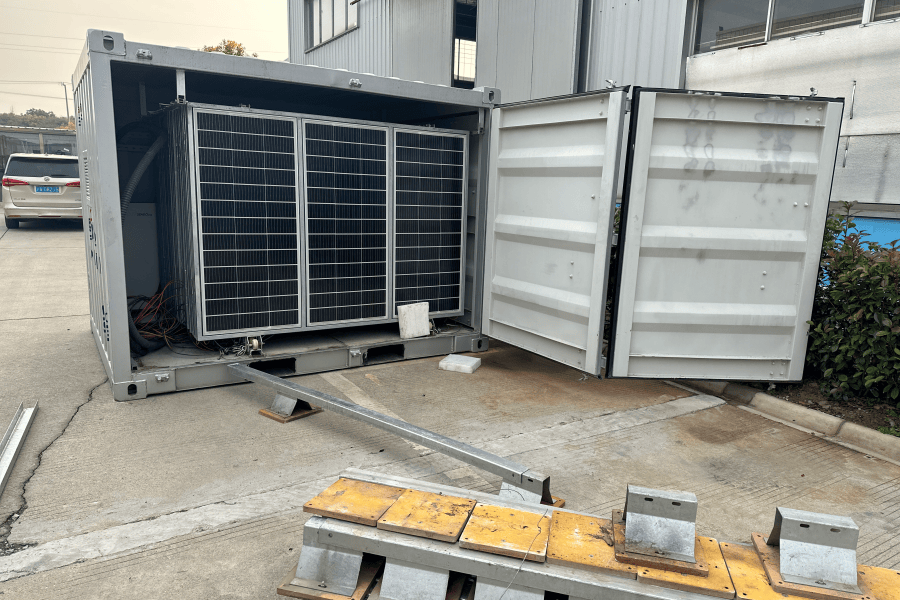
Table of Contents
- The Silent Challenge: Balancing Readiness and Responsibility
- Why This Matters More Than You Think
- The Cool Solution: Air-cooled PV Storage Enters the Field
- A Case in Point: The "Project Sentinel" Story
- Beyond the Basics: What Makes a System Truly Resilient
- The Real-World Impact: It's Not Just About Megawatts
The Silent Challenge: Balancing Readiness and Responsibility
Let's be honest. When we talk about energy for military bases, the first word that comes to mind is "resilience." It's about keeping the lights on, the comms up, and the mission going, no matter what. For decades, that meant massive, reliable diesel generators. But here's the quiet problem I've seen firsthand on bases from Europe to the US: that model is under a double siege. First, from volatile fuel supply chains and costs. Second, and just as pressing, from a growing mandate to reduce the environmental footprint. Commanders aren't just evaluated on readiness anymore; they're accountable for sustainability goals, noise pollution, and local emissions. It's a tough spot to be in.
Why This Matters More Than You Think
This isn't just about feeling good. The pressure is quantifiable. The International Energy Agency (IEA) highlights that the global military sector is a significant energy consumer, and decarbonization efforts are extending into defense infrastructure. On the ground, this translates to real pain points. Diesel generators are noisy, which isn't great for training or community relations. They have a visible exhaust plume C a tactical and environmental concern. And their fuel logistics create vulnerable convoys. The traditional "solve" for adding solar C pairing it with a basic, utility-grade Battery Energy Storage System (BESS) C often falls short. Many of those systems use liquid cooling, which is complex, requires maintenance, and uses coolant fluids that pose their own containment and disposal risks. You're trading one environmental headache for another.
The Hidden Cost of Complexity
Liquid-cooled systems, while efficient for massive grid-scale projects, can be over-engineered for the distributed, rugged needs of a base. I've been called to sites where a small leak in the cooling loop took an entire 2MW BESS offline for days. The repair wasn't just a fix; it was a hazmat incident. That's downtime you can't afford and an environmental report you don't want to file.
The Cool Solution: Air-cooled PV Storage Enters the Field
So, what's the alternative? This is where the environmental impact of air-cooled photovoltaic storage systems for military bases becomes a game-changer. The core idea is elegant in its simplicity: use ambient air, intelligently managed, to keep the battery packs at their optimal temperature. No coolant loops, no pumps, no secondary containment systems for fluids.
At Highjoule, when we design these systems, we start with a fundamental principle: resilience through simplicity. Our air-cooled BESS units are essentially self-contained fortresses. They leverage advanced, passive thermal management designs and variable-speed fans that only kick in when needed. This drastically cuts parasitic load C that's the energy the system uses to run itself C which directly improves the overall system's efficiency and extends battery life. Honestly, in many temperate climates we work in, like parts of Germany or the Northern US, the system relies on passive cooling most of the time, making it incredibly efficient.

A Case in Point: The "Project Sentinel" Story
Let me give you a real example, though I'll keep the specific base anonymous for security. We'll call it "Project Sentinel" at a US National Guard facility in the Southwest. Their challenge was classic: reduce diesel use for peak shaving and provide backup for critical loads, but do it within strict new base sustainability guidelines.
They had space for a 1.5 MW solar carport. The initial storage proposals all involved liquid-cooled containers. Our team proposed an air-cooled alternative. The deciding factors? Lower Lifetime Cost (LCOE) due to virtually zero cooling maintenance, and a drastically simplified environmental permitting process. No coolant management plans were needed. Deployment was faster because the units are pre-fabricated and tested to UL 9540 and IEC 62933 standards before they even ship.
The result? The system now offsets over 40% of the facility's peak-time grid draw, and the backup runtime for their comms center doubled compared to the old diesel-only plan. The base commander loved that the units are silent when not discharging and that his team could focus on mission-critical training, not complex HVAC maintenance for a battery.
Beyond the Basics: What Makes a System Truly Resilient
Choosing air-cooled isn't just about skipping the coolant. It's about a holistic design philosophy suited for mission-critical environments. Here's what we bake into our systems:
- C-rate Intelligence: You'll hear engineers talk about "C-rate" C basically, how fast you charge or discharge the battery. For military applications, you need a high discharge C-rate for sudden, large loads (like powering up a radar). But doing that constantly stresses the battery and generates heat. Our systems use smart controls to manage the C-rate in real-time, balancing immediate power needs with long-term battery health. This thermal management is the key to longevity.
- Standard-Compliant from the Cell Up: Every component, from the cell to the container, is selected and integrated with UL, IEC, and IEEE standards in mind. This isn't a box we just put together; it's a system certified for safety and performance. It gives peace of mind to base engineers and procurement officers alike.
- Design for the Real World: Our containers are rated for extreme temperatures and include corrosion-resistant coatings. I've seen units deployed in coastal areas where salt spray is a killer for electronics, and a robust air-filtering and conditioning system is non-negotiable.
The Real-World Impact: It's Not Just About Megawatts
When you step back, the environmental impact of air-cooled photovoltaic storage systems for military bases is multi-layered. Yes, it enables more solar, cutting GHG emissions. But it goes deeper:
| Impact Area | Traditional Approach | Air-cooled BESS + PV |
| Operational Noise | High (Generator Noise) | Very Low to Silent |
| Local Air Emissions | High (Diesel Particulates, NOx) | Zero at Point of Use |
| Hazardous Materials Risk | Fuel Spills, Coolant Leaks | Dramatically Reduced (No Liquid Coolant) |
| Supply Chain Vulnerability | High (Fuel Logistics) | Reduced (Sun & Grid as "Fuel") |
| Physical Footprint & Siting | Complex (Fuel Tanks, Containment) | Simplified (Single Container) |
This is the future of base energy security - systems that are not only tough and reliable but also quiet, clean, and simpler to manage. They let personnel focus on the mission, not on managing energy infrastructure.
So, the next time you're evaluating energy resilience, ask your vendor not just about the kW and kWh, but about the total cost of ownership and the total footprint of operation. Ask them how the system stays cool under pressure, and what's in the pipes. The answer might just lead you to a simpler, cleaner, and more resilient solution. What's the one energy challenge on your site that keeps you up at night?
Tags: UL Standard BESS LCOE Renewable Energy Environmental Impact Military Energy Security Air-cooled ESS
Author
James Zhang
20+ years agricultural energy storage engineer / Highjoule CTO