
Optimizing Black Start Capable BESS for Public Utility Grids: A Practical Guide
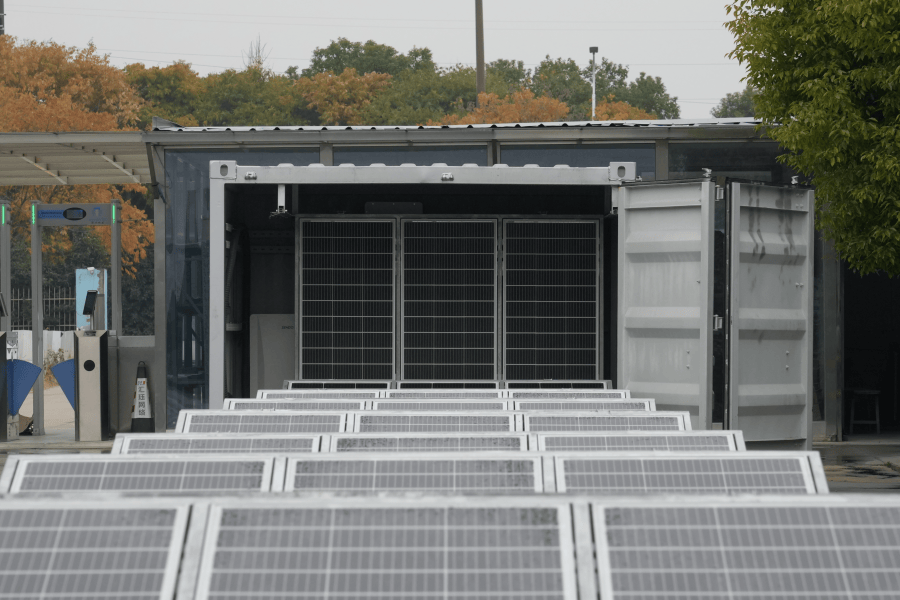
Table of Contents
- The Silent Grid Problem: More Than Just Backup Power
- Beyond the Spec Sheet: The Real Cost of Getting Black Start Wrong
- The Optimization Playbook: It's a System, Not a Box
- A Tale of Two Grids: Learning from the Field
- The Human Element: Expertise You Can't Download from a Datasheet
The Silent Grid Problem: More Than Just Backup Power
Let's be honest. When most utilities think about grid-scale battery storage, the first thought is often frequency regulation or solar smoothing. It's about keeping the lights on while things are running. But there's a far more critical, and frankly, more stressful scenario that keeps grid operators up at night: a complete blackout. A situation where the system is dead, and you need to bring it back from zero - a "black start."
The challenge in North America and Europe isn't just having a battery that can provide power. It's having a system reliably and repeatedly crank up a gas turbine, energize a transmission line, or restart a critical substation when there's absolutely no grid support. I've seen this firsthand on site: a container full of batteries that looks great on paper but struggles with the inrush currents of large motors or can't maintain voltage stability during the delicate sequencing of a grid restoration. According to the National Renewable Energy Laboratory (NREL), as inverter-based resources like BESS and renewables penetrate deeper, ensuring grid-forming capabilities for system recovery becomes a top reliability priority. The old way of thinking about storage isn't enough.
Beyond the Spec Sheet: The Real Cost of Getting Black Start Wrong
The aggravation here is multi-layered. First, there's the capital risk. You invest millions in a "black start capable" container, only to find during commissioning or - worse - during an actual emergency, that it trips offline or degrades faster than expected. Then comes the operational risk. Every minute of extended downtime has a staggering economic cost, from regulatory penalties to lost commercial revenue. Finally, there's the reputational risk. In an age of social media, being the utility that took days instead of hours to restore power is a nightmare scenario.
The root cause? A disconnect between the battery cell's chemistry and the real-world demands of black start duty cycles. It's not a simple discharge. It's about massive, sudden bursts of power (high C-rate) to start equipment, followed by long, steady discharge to stabilize the nascent grid, all while managing the heat that such strenuous activity generates.

The Optimization Playbook: It's a System, Not a Box
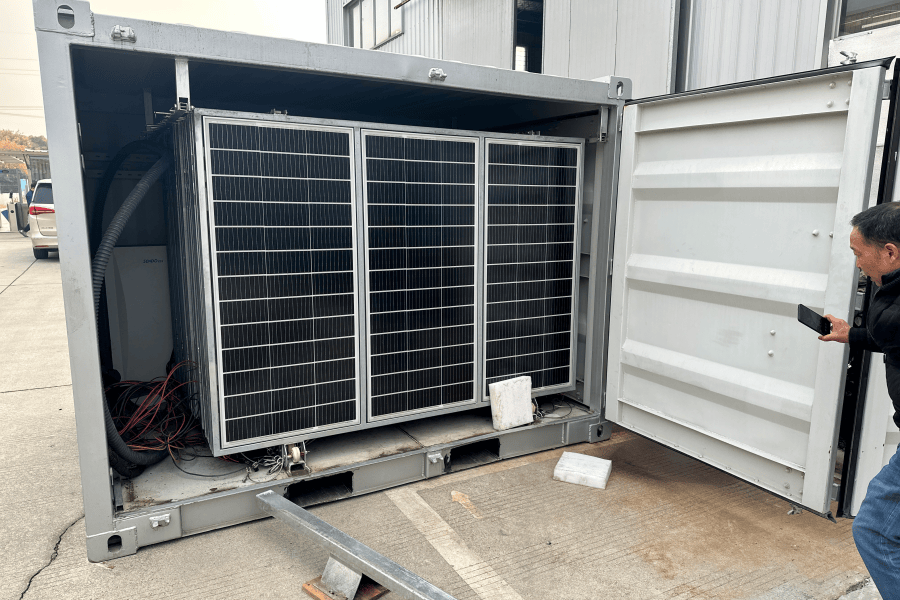
So, how do you optimize a lithium battery storage container specifically for this mission-critical role? You stop thinking of it as a commodity "box" and start engineering it as a fully integrated grid-forming power plant. Here's what that looks like on the ground.
1. Right-Sizing the Muscle: C-Rate and Capacity
Everyone looks at megawatt-hours (MWh). For black start, the megawatts (MW) C the power punch C are just as crucial. You need a high discharge C-rate. Simply put, if your battery is a 1 MWh pack, a 1C rate means it can deliver 1 MW of power. For black start, you often need 2C, 3C, or even 4C for short durations to handle those massive inrush currents. But you can't just crank the C-rate without consequences. It creates immense heat and stresses the cells. Optimization means selecting cells with a proven high-power chemistry and configuring the battery management system (BMS) to deliver these bursts without pushing every cell to its absolute limit, which preserves longevity.
2. The Thermal Management Heartbeat
This is non-negotiable. High C-rate discharges during black start generate heat. If that heat isn't whisked away uniformly, you get hot spots. Hot spots accelerate degradation, create safety risks, and can cause the BMS to derate power output - exactly when you need it most. An optimized system goes beyond basic air conditioning. It employs a liquid cooling system that directly contacts the cell racks, maintaining a tight temperature delta (often within 2-3C across the entire container). This isn't a luxury; it's what allows for repeatable, reliable high-power performance and is a cornerstone of designs that meet stringent UL 9540 and IEC 62933 standards for safety.
3. The Brain Trust: Advanced Grid-Forming Inverters & Controls
The battery is the muscle; the inverter and controls are the brain and nervous system. A black-start-optimized container needs grid-forming inverters that can create a stable voltage and frequency waveform out of nothing, mimicking a traditional generator. But it's smarter. The system must be programmed with specific black start sequences, understand how to manage fault currents, and communicate seamlessly with the utility's SCADA and protection systems. This software layer is where much of the customization happens, and it needs to be tested, validated, and documented to the letter of IEEE 1547 and other local grid codes.
A Tale of Two Grids: Learning from the Field
Let me give you a real example. We worked with a municipal utility in the Midwest US. Their challenge was restarting a remote but critical water treatment plant that was fed by a single, weather-vulnerable transmission line. Their initial BESS spec was for general backup.
Our team dove deeper. We analyzed the load profile of the plant's largest pumps and motors. We simulated the cold-start sequence. The generic container wouldn't have cut it. We optimized by:
- Specifying a cell chemistry with a sustained 3C capability.
- Integrating a redundant, glycol-based liquid cooling loop.
- Co-engineering the inverter controls with the plant's OEM to soft-start the biggest motors, staggering them to stay within the BESS's power envelope.
The result? A system that's successfully executed multiple test black starts, restoring the plant in under 30 minutes without any grid support. The Levelized Cost of Energy (LCOE) for this solution wasn't just about storage; it was about preventing a public health and compliance crisis, which justified the investment in optimized, robust hardware.
The Human Element: Expertise You Can't Download from a Datasheet
Here's the part that doesn't make it into a brochure. Optimizing for black start is as much about experience as it is about engineering. It's about knowing which compliance questions to ask the AHJ (Authority Having Jurisdiction) upfront. It's about understanding how the local fire marshal interprets NFPA 855 for a container sitting in a substation. It's about designing service access panels so that a technician can safely perform diagnostics on a critical DC busbar without having to power down the whole system.
At Highjoule, our approach is built on this field DNA. We don't just sell containers; we deliver a grid resilience asset. That means our designs bake in safety and serviceability from day one, with clear separation of power and control cabling, accessible monitoring points, and remote diagnostics capabilities that give your team visibility. Our partnerships with cell manufacturers and inverter OEMs let us tailor the core components, not just the wrapper. And because we've been through the UL and IEC certification grind on multiple projects, we can guide you through the process to avoid costly delays.
The goal isn't just to have a black start asset on your books. It's to have one you have absolute confidence in. So, what's the one piece of critical infrastructure in your network that keeps you up at night? Let's talk about what it would really take to bring it back online in the dark.
Tags: BESS UL Standards Black Start Grid Resilience IEEE Standards Utility-Scale Energy Storage
Author
James Zhang
20+ years agricultural energy storage engineer / Highjoule CTO