
Optimize Black Start Pre-integrated PV Container for Data Center Backup Power
Contents
- The Silent Problem: When "Backup" Isn't Enough
- The Real Cost of a Dark Data Center
- The Solution Unpacked: It's More Than Just a Box
- Beyond the Spec Sheet: The On-Site Optimization Checklist
- A Case in Point: Learning from a German Deployment
- Your Next Steps: From Concept to Resilient Power
The Silent Problem: When "Backup" Isn't Enough
Let's be honest. When most data center operators think about backup power, the mental image is rows of humming diesel generators, ready to kick in. And for decades, that's worked. But here's the problem I've seen firsthand, especially in the US and Europe: a traditional generator needs a stable grid reference to synchronize and start. What happens when the grid is completely down - a blackout, a severe weather event, the kind of grid collapse that's becoming, unfortunately, less rare? Your generators sit there. Your critical load is in the dark. That's the gap a black start capability is designed to fill.
Now, layering on solar (PV) and a battery energy storage system (BESS) in a pre-integrated container sounds like the perfect green, resilient solution. And it is. But I've been on sites where a "pre-integrated" container became a post-installation nightmare. Components from different vendors, slapped together, with thermal management that wasn't co-optimized, and control systems that argued with each other. The promise of black start was there on paper, but the reality was delayed commissioning and nervous facility managers.
The Real Cost of a Dark Data Center
We're not just talking about inconvenience. The Ponemon Institute pegs the average cost of a data center outage at over $9,000 per minute. Let that sink in. A one-hour black start failure during a widespread outage isn't an operational hiccup; it's a multi-million dollar event, not to mention reputational carnage.
The aggravation deepens when you look at total cost of ownership. A poorly optimized container might have a lower Capex, but its round-trip efficiency suffers. Maybe its battery degradation is faster because the cooling system isn't matched to the cells' true thermal profile. Over 10-15 years, that inefficiency balloons your Levelized Cost of Energy (LCOE) - the true metric we should all be watching. You saved a dollar upfront to spend five later.
The Solution Unpacked: It's More Than Just a Box
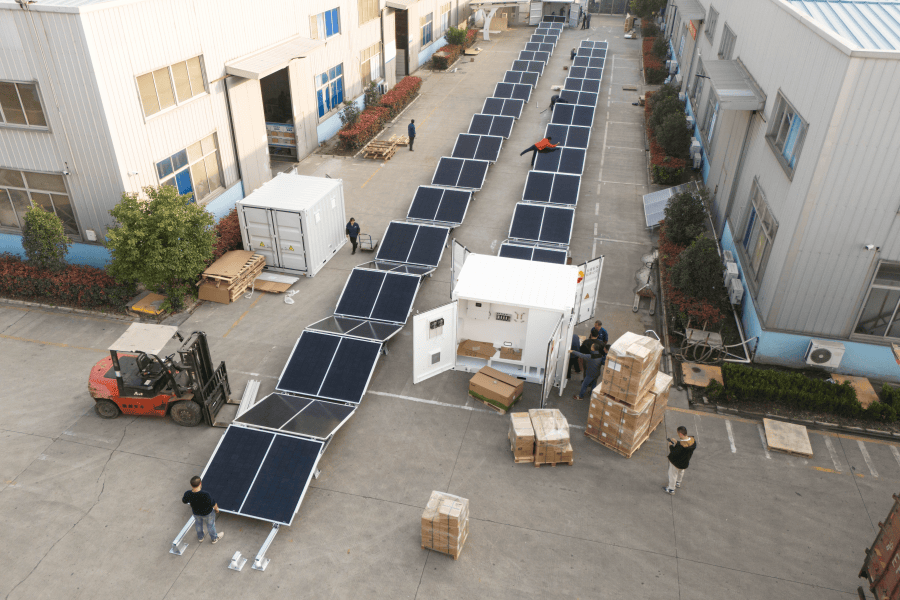
So, how do you optimize a black-start capable, pre-integrated PV container? It starts by rejecting the idea that it's just a "container." Think of it as a self-contained, autonomous power plant. Optimization happens on three parallel tracks: Design, Compliance, and Control.
At Highjoule, our approach is to engineer the system from the inside out for its mission. The battery C-rate - the speed at which it can discharge energy - isn't just a max number on a datasheet. For black start, you need a high burst C-rate to crank inverters and energize systems, but you also need sustained power. We size and specify cells that balance this peak-and-hold profile, ensuring the container can both wake up the dead bus and support the load.
Compliance is non-negotiable and a huge optimization lever. In North America, UL 9540 and UL 9540A (the infamous fire test) are your tickets to operation. In the EU, it's IEC 62933. An optimized container is designed for these standards from day one. It means the fire suppression system is integrated into the BMS logic, the spacing between modules allows for thermal runaway containment, and all components have the right certifications. This isn't red tape; it's your safety and insurance blueprint. I've seen projects stalled for months retrofitting for compliance.

The Silent Killer: Thermal Management
This is where the rubber meets the road. Lithium-ion batteries are sensitive to temperature. Poor thermal uniformity increases degradation, reduces capacity, and in worst-case scenarios, creates risks. An optimized container doesn't just have an air conditioner; it has a liquid cooling or advanced forced-air system that's thermally modeled for the specific battery pack's heat generation profile. We map hot spots during design and ensure our cooling strategy eliminates them. This single factor is the biggest driver of long-term battery life and, therefore, low LCOE.
Beyond the Spec Sheet: The On-Site Optimization Checklist
Based on my 20+ years, here's what you should be asking your vendor beyond the glossy brochure:
- Grid-Forming Inverters: Does the system have true grid-forming inverters that can establish voltage and frequency from a black state, or is it just grid-following? This is the core of black start.
- Seamless Mode Transition: How quickly and reliably does the system transition from grid-tied to off-grid/black start mode? Test this with the vendor. Ask for witness test reports.
- PV & BESS Control Handshake: In a black start scenario, how does the PV input get managed? The system must prioritize using solar to recharge the batteries while stabilizing the microgrid, without causing overloads. The control logic here is critical.
- Localization for Service: An optimized container for the US or German market has local service partners and stocked critical spares. What's the mean time to repair (MTTR) guarantee? Long-term, this is more important than a 1% efficiency gain.
A Case in Point: Learning from a German Deployment
Let me give you a real example. We deployed a 2 MW/4 MWh pre-integrated container with black start capability for a hyperscale data center campus in North Rhine-Westphalia, Germany. Their challenge was strict local grid codes (BDEW) and a mandate to reduce diesel hours.
The optimization wasn't just technical. We worked backwards from their critical load sequence. Which servers came up first? What was the inrush current? We modeled the black start sequence dozens of times digitally before the container ever left our factory. On site, because the container was truly pre-integrated and tested as a unit, commissioning took 3 days instead of 3 weeks. The system has successfully executed two real black start tests initiated by the grid operator, with seamless transition. The key was treating the PV, BESS, and controls as one organism, not a collection of parts.

Your Next Steps: From Concept to Resilient Power
Optimizing a black start container isn't a mystery. It's a disciplined engineering process that prioritizes mission reliability over component cost. It demands upfront clarity on standards, a ruthless focus on thermal management, and a control system smart enough to handle the chaos of a real blackout.
The question I leave you with is this: Is your next backup power system a collection of certified parts in a box, or a certified, optimized, and tested power plant ready for its most critical moment? The difference, as I've seen on too many sites, is measured in minutes of downtime and millions in loss. What's the first specific question you'll ask your engineering team about your current backup strategy?
Tags: UL Standard BESS LCOE Black Start Renewable Energy Data Center Backup IEC Standard Pre-integrated Container
Author
James Zhang
20+ years agricultural energy storage engineer / Highjoule CTO