
Optimizing C5-M Anti-Corrosion 1MWh Solar Storage for Rural Electrification in Philippines
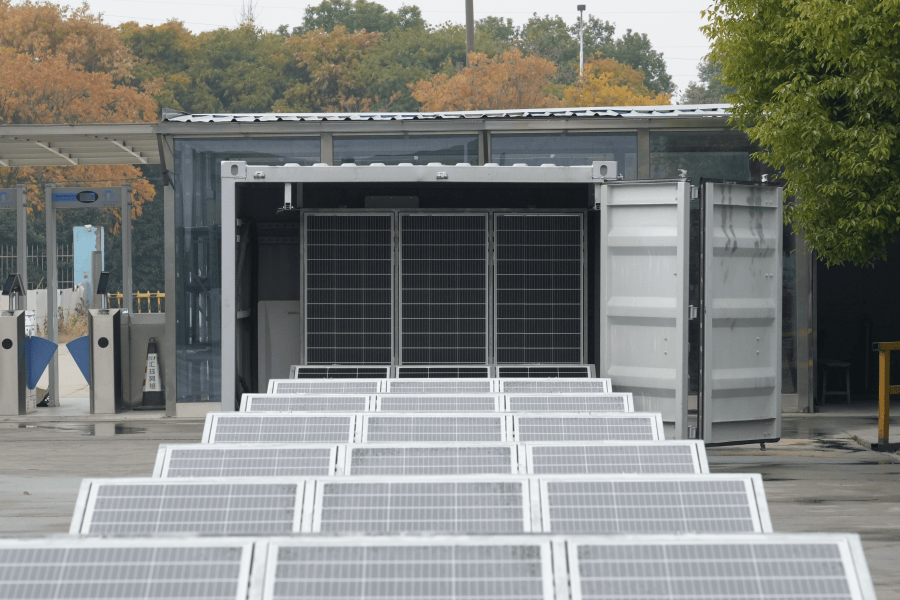
When Your "Tropical Paradise" Project Site is a Battery's Worst Nightmare: A Field Engineer's Take
Honestly, some of the most challenging and rewarding projects I've worked on weren't in the high-tech hubs of California or Germany. They were in places where reliable power isn't a given - like the remote islands and coastal communities of the Philippines. Deploying a 1MWh solar-plus-storage system there isn't just about the tech specs on paper; it's a battle against the environment itself. And the lessons we've learned? They're directly applicable to ensuring your BESS projects in humid coastal regions in the US or Europe stand the test of time. Let's talk about what really matters when you're optimizing for the real world.
Quick Navigation
- The Real Problem: It's Not Just the Heat, It's the Humidity (and the Salt)
- Why It Matters: The High Cost of "Standard" Equipment in a Non-Standard World
- The Solution Core: Building a Fortress with C5-M Protection
- Beyond the Box: System-Level Optimization for LCOE and Lifetime
- Lessons from the Field: What a Philippine Project Teaches Us About Global Standards
The Real Problem: It's Not Just the Heat, It's the Humidity (and the Salt)
I've seen this firsthand on site. You can have the most advanced battery cells with a perfect C-rate and thermal management system, but if your enclosure is quietly turning into a rust bucket, the entire project's ROI evaporates. The core challenge for rural electrification in archipelagos like the Philippines is the C5-M corrosion category as per ISO 12944. This isn't your average industrial atmosphere. We're talking about:
- Constant High Humidity: Often above 80-90%, leading to condensation inside enclosures if not managed.
- Salt-Laden Air: Coastal and island sites mean chloride ions are everywhere, aggressively attacking metal surfaces and electrical connections.
- Frequent Thermal Cycling: Hot days and warm nights with high humidity create perfect conditions for condensation, even without rain.
A standard, off-the-shelf container might be rated for general outdoor use, but in this environment, it's a liability. Corrosion leads to enclosure integrity failure, compromised thermal management seals, and ultimately, electrical faults and safety hazards.
Why It Matters: The High Cost of "Standard" Equipment in a Non-Standard World
Let's agitate that pain point a bit. Why should a developer in Texas or a utility in the UK care about a corrosion standard for the Philippines? Because the principle is universal: unexpected degradation is the single biggest killer of project economics.
The National Renewable Energy Laboratory (NREL) has shown that operations and maintenance (O&M) costs and unexpected replacement can swing the Levelized Cost of Storage (LCOS) by 30% or more. In a corrosive environment, you're not just looking at maybe repainting a box in 10 years. You're looking at:
- Premature HVAC Failure: The cooling system is your battery's lifeline. Corroded coils or fans fail, temperatures spike, and battery life plummets. I've had to emergency-airlift a specialty HVAC unit to a Pacific island site - a logistics cost nightmare.
- Electrical Connection Degradation: Loose or corroded busbars and connections increase resistance, create hot spots, and are a fire risk. This isn't a theoretical safety talk; it's a daily inspection checklist item in these conditions.
- Total System Downtime: For a rural microgrid, the BESS isn't backup; it's the core of the grid. Failure means darkness, lost productivity, and a broken trust with the community.
The Solution Core: Building a Fortress with C5-M Protection
So, what's the solution? It's a holistic, "design-for-environment" philosophy, not a bolt-on feature. Optimizing a 1MWh system for the Philippines means starting with C5-M as the non-negotiable baseline.
At Highjoule, for projects like these, we don't just specify "marine-grade paint." We engineer a system:
- Material Selection: Aluminum alloys with high corrosion resistance for structural parts, stainless steel fasteners, and composite materials where applicable. The goal is to remove the corrosion substrate entirely.
- Surface Preparation & Coating System: This is where the magic happens. It involves abrasive blasting to a specific surface profile, followed by a multi-layer, high-performance epoxy/polyurethane coating system with a total dry film thickness often exceeding 300 microns. This creates a barrier that salt spray simply can't penetrate.
- Sealed for Life: All cable entries, door seals, and ventilation louvres (if used) are designed with IP66 or higher ingress protection. We aim to keep the corrosive atmosphere out, while our closed-loop thermal management keeps the perfect climate in.

Beyond the Box: System-Level Optimization for LCOE and Lifetime
Getting the box right is 50% of the battle. The other 50% is optimizing what's inside for the specific duty cycle of rural electrification. The load profile isn't a smooth commercial curve; it's peaky - high demand at night for lighting and community use. This impacts our technical choices.
Thermal Management is Everything: In high humidity, you cannot afford condensation inside the battery compartment. Our systems use a refrigerant-based cooling with precise dew-point control. It doesn't just cool; it dehumidifies the internal air, ensuring no moisture settles on battery terminals. This directly extends cycle life.
Smart C-Rate Management: While the cells might be capable of high discharge (high C-rate), constantly maxing them out in a hot climate accelerates degradation. Our energy management system (EMS) is programmed for the local use-case, optimizing charge/discharge cycles to reduce stress, even if it means slightly oversizing the battery bank. It sounds counterintuitive, but for a 20-year asset in a harsh environment, this lowers the true LCOE by avoiding early replacement.
Lessons from the Field: What a Philippine Project Teaches Us About Global Standards
Let me give you a concrete example. We deployed a 1.2MWh system for an island resort and community microgrid in Palawan. The challenge was triple: salt air, 24/7 operation, and no local technical staff for complex maintenance.
Our solution was a C5-M certified containerized BESS, but with key optimizations:
- UL 9540 & IEC 62933 Compliance: The core system was certified to the strictest international safety standards. This wasn't just for our own quality; it was a requirement for international financing. Investors in New York or London need to see that benchmark.
- Remote Monitoring & Diagnostics: All critical parameters - from internal humidity levels to individual cell temperatures - are monitored from our regional ops center in Singapore. We can predict a fan filter clogging from dust (a real issue in dry seasons) before it impacts cooling.
- Modular Design for Service: If a component does need replacing, it's designed to be swapped out with simple tools. We airfreighted and trained local staff to replace a DC power module in under 2 hours, minimizing downtime.
This project runs at a 98.5% availability rate. The takeaway? Optimizing for the harshest conditions creates an incredibly robust product for less demanding ones. A system that thrives in the Philippines is over-qualified for a project in, say, rural Spain or coastal Florida, giving you a huge reliability buffer.
Final Thought: It's About Trust, Not Just Transactions
When you're powering a hospital, a school, or a whole village, it's not a commodity purchase. It's a 15-20 year partnership. The optimization for C5-M environments is the physical embodiment of that commitment. It's the engineering rigor that says, "We've thought about what could go wrong, and we've built the solution to prevent it." That's what gives developers, utilities, and financiers the confidence to deploy - whether the site is in Southeast Asia or meets similar challenges anywhere in the world.
What's the most surprising environmental challenge your recent project has faced?
Tags: UL Standard BESS LCOE Europe US Market Renewable Energy Anti-corrosion Solar Storage C5-M Philippines
Author
James Zhang
20+ years agricultural energy storage engineer / Highjoule CTO