
Optimizing C5-M Anti-Corrosion BESS for Reliable Construction Site Power
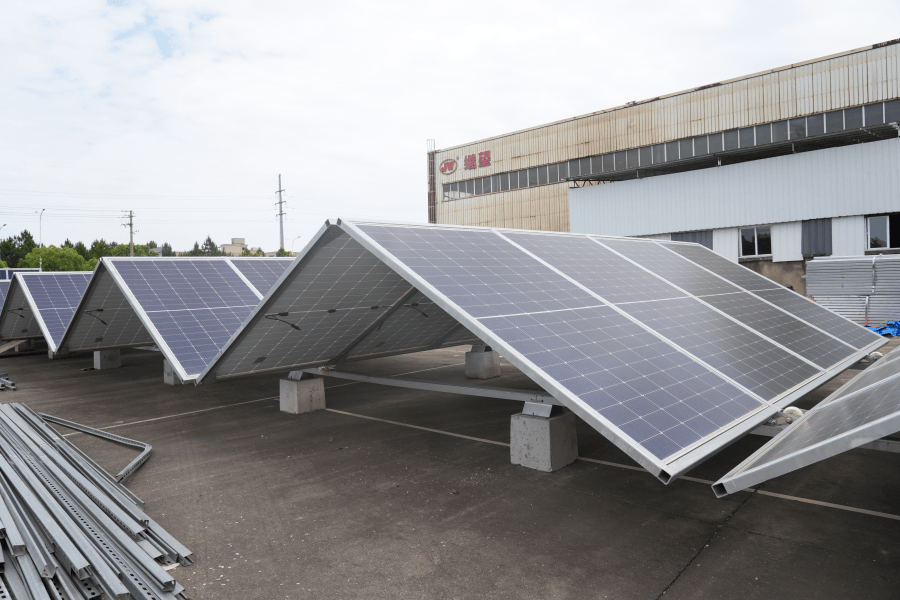
Table of Contents
- The Hidden Cost of a Harsh Environment
- Why C5-M Corrosion Protection Isn't a Luxury, It's a Necessity
- Optimization Goes Far Beyond the Enclosure
- Real-World Proof: A Case from the German Coast
- Making the Right Choice for Your Site
The Hidden Cost of a Harsh Environment
Let's be honest, when you're planning power for a construction site, the battery storage system's specs might not be the first thing on your mind. You're focused on deadlines, crew safety, and keeping those big tools running. I've been on enough sites to know the drill. The common approach? Grab a standard commercial or industrial BESS, maybe throw a temporary shelter around it, and hope for the best. After all, it's just for a year or two, right?
Here's the problem I've seen firsthand: construction sites are uniquely brutal. We're not talking about a clean, climate-controlled warehouse. We're talking about constant dust and abrasive particulates, wide temperature swings, high humidity, and often, salt-laden air if you're anywhere near a coast. A NREL report on BESS durability highlights that environmental stressors are a leading cause of long-term performance degradation and safety incidents. On a site, this degradation isn't just a future problem - it's a right-now problem. A system that can't handle the grit will see its cooling fans clog, leading to thermal runaway risks. Connectors corrode, increasing electrical resistance and creating hot spots. Suddenly, your "temporary" power solution becomes a source of daily headaches, unexpected downtime, and very real safety hazards.
Why C5-M Corrosion Protection Isn't a Luxury, It's a Necessity
This is where the industry jargon meets the muddy boots reality. You'll hear terms like C4 or C5-M. Let me break it down simply. The "C" stands for corrosion, and the number defines the severity. C5-M, as defined by the ISO 12944 standard, is the most severe category for industrial and offshore/maritime atmospheres with high salinity. It's the benchmark for environments that will eat standard equipment for breakfast.
For a BESS on a coastal construction site or one with significant industrial pollution, specifying a C5-M anti-corrosion design isn't about ticking a box on a spec sheet. It's about asset preservation. Honestly, the upfront cost is marginally higher than a standard unit. But the total cost of ownership? It plummets. You eliminate the constant maintenance, the fear of a catastrophic mid-project failure, and the massive liability of a fire on an active site. You're buying reliability when you absolutely cannot afford a blackout. That concrete pour can't wait for a service tech to clean your air filters.
Optimization Goes Far Beyond the Enclosure
Now, slapping a heavy-duty coat of paint on a steel container is a start, but it's maybe 30% of the optimization story. A truly site-optimized C5-M BESS is a holistic system. Here's what we look at from an engineering perspective:
- Thermal Management is King: Dust is the enemy of air-cooling. An optimized system uses sealed, liquid-cooled thermal management. This keeps the battery cells at their ideal temperature range consistently, regardless of external dust storms or heatwaves, dramatically extending lifespan and maintaining performance. It's not just about cooling; it's about precision.
- Electrical Component Hardening: Every busbar, relay, and sensor inside needs to be selected or treated for high-humidity, salty environments. This often means using specific alloys, conformal coatings on PCBs, and sealed connectors. I've seen projects where the container was fine, but a $50 sensor failed and took the whole system offline.
- Dynamic C-Rate for Real Work: Construction power demand is spiky - a crane lifts, welders fire up. The system's software must be tuned to handle these high-power (high C-rate) bursts efficiently without stressing the battery chemistry. It's about matching the discharge profile to the actual site load, not a theoretical average.
At Highjoule, when we build for C5-M sites, this integrated approach is baked in. Our design philosophy starts with the UL 9540 and IEC 62933 standards as a baseline, but then we layer on these site-hardened features. The goal is a low Levelized Cost of Energy Storage (LCOE) for the project's lifespan - not just a cheap purchase price. You save on fuel, maintenance, and replacement risk.

Real-World Proof: A Case from the German Coast
Let me give you a concrete example from a port infrastructure expansion in Northern Germany. The challenge was powering a 24/7 dredging operation and temporary site offices in a high-salinity, high-humidity environment. The client initially considered diesel generators, but noise regulations and carbon targets ruled them out. A standard BESS was deemed too risky.
We deployed a 1.2 MWh Highjoule C5-M optimized system. The key specs were the fully sealed, corrosion-resistant enclosure and a liquid-cooled thermal system. But the real optimization was in the operational setup. We integrated it with a small, temporary solar array to offset daytime base loads and programmed the charge/discharge cycles to handle the massive, intermittent draw of the dredge equipment.
The result? Over the 18-month project, the system operated with 99.7% availability. The on-site crew literally never had to perform internal maintenance - no filter changes, no corrosion cleaning. The client compared their fuel and generator rental costs against the BESS lease and operational savings, and the numbers were compelling. The system worked so well they leased it for their next coastal project.
Making the Right Choice for Your Site
So, how do you optimize? It starts during procurement. Don't just ask for a "rugged" BESS. Specify the environmental standard: "The BESS enclosure and internal components shall be designed for C5-M (ISO 12944) corrosion resistance." Ask pointed questions about thermal management: "Is the cooling system sealed against particulate ingress?" Discuss the software's ability to handle your specific load profile.
Look for a provider with field experience, not just a datasheet. Ask them for a case study in a similar environment. At Highjoule, our local deployment teams have seen every kind of site challenge across Europe and North America. That experience informs our product design and our on-site commissioning process - we know what to look for and how to set the system up for success from day one, ensuring it meets all local standards like UL or IEC right out of the gate.
The bottom line is this: Treating your construction site power system as a temporary, off-the-shelf item is a false economy. By specifying and optimizing for the true environment with a C5-M hardened BESS, you're not just buying batteries. You're buying peace of mind, predictable costs, and a powerful tool that works as hard as your crew does. What's the one environmental factor on your next site that keeps you up at night?
Tags: Construction Site Power UL Standard BESS C5-M Corrosion Energy Storage Optimization
Author
James Zhang
20+ years agricultural energy storage engineer / Highjoule CTO