
Optimizing Grid-forming BESS for Reliable Construction Site Power
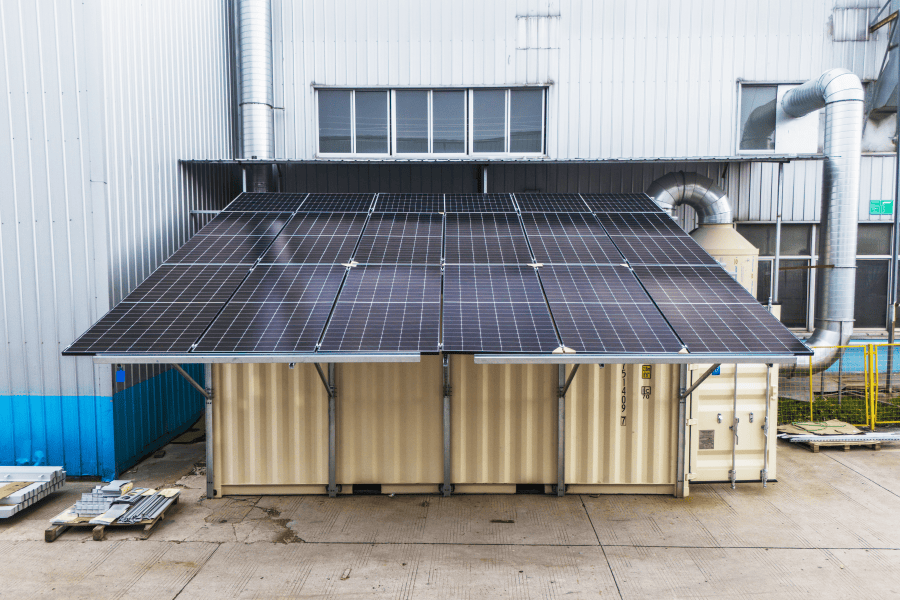
The Real-World Guide to Powering Your Jobsite: Optimizing Grid-Forming BESS for Construction
Hey there. Let's grab a coffee and talk about something that keeps project managers up at night: reliable power on a construction site. You know the drill C diesel generators roaring, fuel trucks coming and going, and that constant worry about delays if the power falters. Honestly, I've spent over two decades on sites from California to North Rhine-Westphalia, and I've seen this transition firsthand. More and more, savvy contractors are looking at Battery Energy Storage Systems (BESS) as a cleaner, smarter alternative. But not just any BESS. We're talking about grid-forming BESS C the kind that can create its own stable electrical grid, or "microgrid," right where you need it. The real question isn't just about buying one; it's about how to optimize it for the brutal, dynamic reality of construction. Let's break it down.
Quick Navigation
- The Hidden Costs of "Business as Usual" Power
- Why Getting BESS Wrong Hurts Your Bottom Line
- Optimizing Grid-Forming BESS: It's More Than a Box
- From Theory to Muddy Boots: A German Case Study
- Key Levers to Pull for Peak Performance
- Your Next Step: Asking the Right Questions
The Hidden Costs of "Business as Usual" Power
For decades, the default for remote or early-phase construction has been diesel gensets. They're familiar, they're loud, and they come with a massive hidden cost structure. We're not just talking about fuel, which, as the International Energy Agency (IEA) points out, remains volatile. It's the logistics: secure storage, refueling schedules, maintenance downtime, and the growing pressure from clients and municipalities to reduce emissions and noise. I was on a site in Texas where the noise from generators actually triggered a violation from a nearby residential area, causing a two-day work stoppage. That's the kind of risk you don't see on a simple fuel invoice.
Why Getting BESS Wrong Hurts Your Bottom Line
So, you think, "Great, let's go green with a battery system." But here's the rub: slapping a standard, grid-following BESS onto a construction site is a recipe for frustration. These systems are designed to sync with a strong, existing utility grid. On a site, you often have no grid, or a very weak one. The result? Voltage swings, instability, and sensitive equipment like cranes, welders, and precision tools can fault or shut down. I've seen a poorly sized system trip every time a large concrete pump kicked in. The delays in resetting and restarting work? They eat your projected savings from day one. It amplifies the core problem you were trying to solve.
Optimizing Grid-Forming BESS: It's More Than a Box
This is where the magic of a properly optimized grid-forming BESS comes in. Think of it as the digital, silent maestro of your site's power orchestra. Unlike grid-followers, a grid-former can start from black, establish stable voltage and frequency (like 60Hz/480V rock-solid), and manage the wild load swings typical of construction. Optimization is the key. It's not a commodity purchase; it's a tailored engineering solution that considers your specific site load profile, duration, climate, and safety imperatives.
At Highjoule, when we talk about optimization for construction, we're embedding our 20 years of field experience into the system's DNA from the start. It means designing with the right C-rate (the speed at which the battery can charge/discharge) to handle peak crane loads without breaking a sweat. It's about a thermal management system robust enough for Arizona heat or Canadian winter, because battery performance and lifespan depend on it. Ultimately, it's about lowering your real Levelized Cost of Energy (LCOE) for the project C the total cost of ownership, including fuel, maintenance, rental, and risk avoidance.

From Theory to Muddy Boots: A German Case Study
Let me give you a real example. We worked with a major civil engineering firm on a bridge construction project in North Rhine-Westphalia, Germany. The challenge: zero grid connection for the first 8 months, strict local noise ordinances, and a highly variable load profile from pile driving to lighting.
The Challenge: Their initial plan for multiple large diesel generators was rejected on environmental grounds. They needed a silent, zero-local-emission solution that could match diesel's reliability.
The Optimization & Deployment: We didn't just drop off a container. We analyzed their equipment schedule to model the worst-case load spikes. We deployed a UL 9540 and IEC 62933-compliant grid-forming BESS, but we optimized it with:
- Advanced Grid-Forming Controls: To ensure seamless transition between solar PV (added for day charging), the BESS, and a small backup genset for ultimate redundancy.
- Proactive Thermal Management: The system pre-cooled the battery pack based on forecasted load and ambient temperature, maintaining optimal efficiency.
- Localized Service & Remote Monitoring: Our EU-based team provided commissioning and had 24/7 visibility into system health, preventing issues before they caused downtime.
The Outcome: The site achieved a 90% reduction in diesel use, passed all noise compliance checks immediately, and the project manager reported zero power-quality-related work stoppages. The optimized BESS became the predictable heartbeat of the site.
Key Levers to Pull for Peak Performance
Based on projects like that one, here's my straightforward advice on what to focus on when optimizing your system:
- Don't Just Size for Capacity, Size for Power: It's the difference between a battery's total energy (kWh) and its instant power output (kW). Your peak load (like starting all tools at 7 AM) determines the power rating. Underspec this, and the system crashes. We always model for the "cliff edge" load scenario.
- Demand UL/IEC Compliance, Not Just a Sticker: For site safety, this is non-negotiable. Look for UL 9540 for the overall system and UL 1973 for the batteries. In Europe, IEC 62933 is key. This isn't bureaucracy; it's proven engineering that mitigates thermal runaway risk. Our designs are built around these standards from the ground up.
- Think in Terms of Total Lifetime Cost (LCOE): A cheaper unit with poor thermal management will degrade faster, losing capacity. That means you might need to rent a generator in Year 3 to make up the shortfall, blowing your savings. An optimized system with superior thermal and battery management maintains its performance, delivering a lower cost over its entire life on your site.

Your Next Step: Asking the Right Questions
So, where do you start? Forget about asking for a generic 500kW system. Start by having a conversation with your team and potential providers that digs into the real site conditions. What does your load profile truly look like? What's the single biggest power-hungry piece of kit? What are the local environmental and regulatory pressures? How will the system be maintained and monitored once it's energized?
Optimizing a grid-forming BESS for construction power is about marrying deep electrical engineering with on-the-ground construction logistics. It's what we've built our practice on at Highjoule. The goal isn't just to sell you a battery. It's to deliver predictable, silent, and resilient power that lets your team focus on building, not on managing power problems.
What's the most unpredictable load on your next project site? Let's talk about how to handle it.
Tags: Construction Site Power UL Standard BESS LCOE Energy Storage Grid-forming IEEE
Author
James Zhang
20+ years agricultural energy storage engineer / Highjoule CTO