
Optimizing Grid-Forming BESS for Remote Mining: A Practical Guide for Cost & Resilience
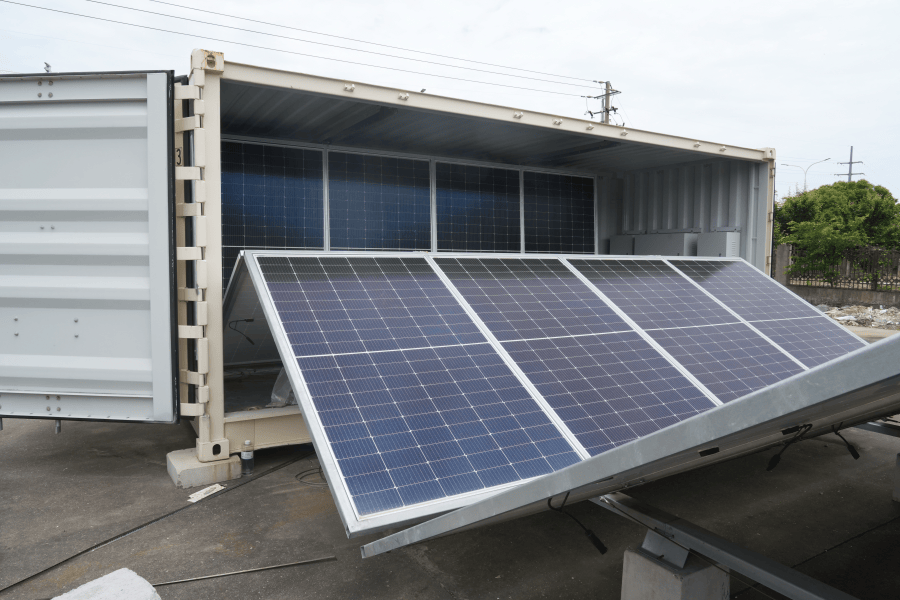
Table of Contents
- The Real Power Problem in Remote Operations
- When "Cheap Power" Gets Expensive: The Hidden Costs
- The Grid-Forming BESS: More Than Just a Battery Box
- The Nuts and Bolts: C-rate, Thermal Management & LCOE Explained
- Learning from the Field: A Nevada Mine's Transition
- Getting It Right: Deployment in Challenging Environments
The Real Power Problem in Remote Operations
Let's be honest. When we talk about powering a mining operation in a place like Mauritania, or really any remote site from the Australian outback to Nevada, the conversation usually starts with diesel. It's familiar, it's "reliable," and the CapEx seems straightforward. But after 20+ years on sites like these, I can tell you the real headache isn't just fuel cost. It's the fragility of the entire power system. One generator goes down, a voltage dip from a heavy crusher motor kicks in, and suddenly you're looking at hours of paralyzed production. That's millions in lost revenue, not just fuel bills. The core problem we're solving isn't just storage; it's creating a resilient, stable grid from the ground up where there is none - or where the existing one is on life support.
When "Cheap Power" Gets Expensive: The Hidden Costs
I've seen this firsthand. A site manager shows me the "low" price per kWh from their diesel gensets. But then we start adding: the astronomical cost of fuel logistics (getting that diesel to the middle of nowhere), the maintenance cycles that pull crews away from core mining work, the emissions compliance tango, and the sheer operational risk of a single point of failure. The International Energy Agency (IEA) has highlighted that in remote microgrids, fuel can constitute over 60% of the total operating cost. That's a volatile, uncontrollable line item. And when you pair that with intermittent solar - which makes perfect sense in Mauritania - you introduce new challenges of frequency stability and power quality that traditional, grid-following batteries just can't handle alone. You end up with a complex, expensive hybrid system that's still fragile.
The Agitation: It's a Reliability Tax
You're essentially paying a massive "reliability tax" by sticking with the old model. Every minute of downtime is a direct hit to your EBITDA. And with global pressure on ESG performance, the old diesel-heavy profile is a growing liability, not just an operational cost.
The Grid-Forming BESS: More Than Just a Battery Box
This is where the optimization of a grid-forming energy storage container changes the game. Think of it not as a backup, but as the digital heart of your site's power network. Unlike standard batteries that need an existing grid signal to sync to (grid-following), a grid-forming BESS creates its own stable voltage and frequency waveform. It acts like an anchor. It allows you to seamlessly blend solar PV, legacy diesel gensets, and the critical mine load into a robust, efficient microgrid. The optimization goal? To maximize renewable penetration, slash fuel use, ensure 24/7 power quality for sensitive equipment, and ultimately deliver the lowest possible Levelized Cost of Energy (LCOE) for the life of the mine.
At Highjoule, when we engineer a container for a harsh environment, we're not just stacking battery racks. We're pre-integrating the power conversion system (PCS) with advanced grid-forming controls, the thermal management system, and the fire suppression - all tested as one unified unit to UL 9540 and IEC 62933 standards. This "plug-and-play" resilience is what gets you online faster and sleeping better at night.
The Nuts and Bolts: C-rate, Thermal Management & LCOE Explained
Let's get practical. When we talk optimization, three technical terms are key, and I'll break them down as I would to a site manager over coffee.
- C-rate: Simply put, it's how fast you can charge or discharge the battery. A 1C rate means you can fully discharge in one hour. For mining, you need high C-rates (like 0.5C to 1C) to handle those big, sudden loads - think of a shovel digging in. But higher C-rates generate more heat and can stress the battery. Optimization is about right-sizing the C-rate for your specific load profiles, not just buying the highest available.
- Thermal Management: This is the unsung hero. In Mauritania's desert heat, or a cold Canadian winter, battery performance and lifespan plummet without precise temperature control. An optimized container uses a liquid-cooling system (far superior to air-cooling for high-power applications) to keep every cell within a tight, happy temperature band. Honestly, I've seen projects fail on this alone. It's why our standard design includes an IP56-rated, corrosion-resistant HVAC system built for desert sand and salt air.
- LCOE (Levelized Cost of Energy): The ultimate metric. It's the total cost of owning and operating the power asset over its lifetime, divided by the total energy produced. A grid-forming BESS optimized correctly lowers LCOE dramatically: it cuts fuel consumption, reduces genset maintenance, extends component life by providing stable power, and defers costly grid infrastructure upgrades. The NREL has excellent tools showing how storage reduces LCOE in microgrids. Their research confirms that storage is the linchpin for cost-effective renewable integration.

Learning from the Field: A Nevada Mine's Transition
Let me give you a real, anonymized example from a copper mine in Nevada, USA. Their challenge was identical: high diesel costs, unreliable utility connection, and pressure to add solar. They deployed a 4MW/8MWh grid-forming BESS container, integrated with a 5MW solar array and their existing gensets.
The BESS was configured to provide "black start" capability (restarting the gensets if everything fails) and to act as the grid former. The result? Diesel run-hours were cut by over 70%. The power quality for their processing plant improved so much they saw a reduction in motor failures. And because the container was pre-certified to UL standards, interconnection and permitting with the local utility was smoother. The key lesson? The BESS wasn't an add-on; it was the central control system that made the hybrid setup work efficiently and reliably.
Getting It Right: Deployment in Challenging Environments
So, how do you optimize for a place like Mauritania? It's in the details long before shipment. Site preparation is key - a level, compacted foundation. The container itself must be specified with corrosion-resistant coatings (C5-M grade for harsh industrial/coastal atmospheres) and dust filtration for cooling systems. We always advocate for a modular, containerized approach because it allows for future capacity expansion by simply adding another unit.
The real value we bring at Highjoule isn't just the hardware. It's the system modeling we do upfront, simulating your specific load and generation data to size the BESS correctly. It's the local service partner network for commissioning and maintenance, so you're not waiting for an engineer to fly in from another continent. We design for the lowest lifetime cost (LCOE), not just the lowest sticker price.
What's the one question you should be asking your BESS provider about deployment in a remote mining operation? Ask them about the mean time to repair (MTTR) and what their local service protocol looks like. The technology is proven. The optimization is in the execution.
Tags: UL Standard LCOE Optimization Grid-forming BESS Remote Microgrid Energy Storage for Mining
Author
James Zhang
20+ years agricultural energy storage engineer / Highjoule CTO