
How to Optimize Grid-forming Pre-integrated PV Container for Telecom Base Stations
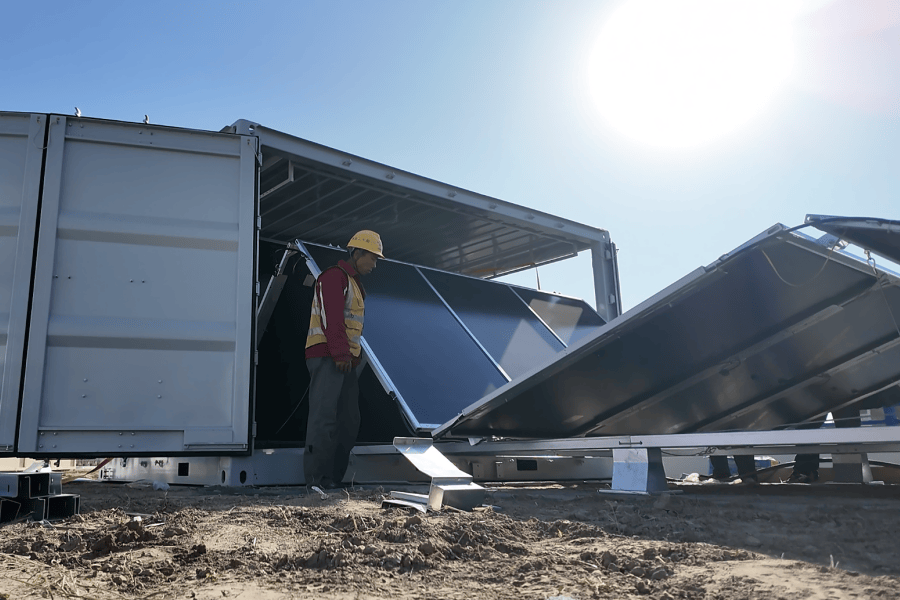
Table of Contents
- The Silent Problem at the Edge of the Grid
- Why "Optimization" Isn't Just a Buzzword for Your Base Station
- The Modern Solution: It's More Than Just a Box
- A Case in Point: Off-Grid Reliability in the Southwest
- Key Levers to Pull for True Optimization
- The Final Word: It's About Business Continuity
The Silent Problem at the Edge of the Grid
Honestly, if you're managing telecom infrastructure in North America or Europe, you're facing a pressure I see firsthand on site. The push for network expansion into remote areas, the mandate for 99.999% uptime, and the corporate sustainability goals C they all converge on one critical, often vulnerable, point: your base station's power. The traditional approach? Diesel gensets as backup. We all know the drill: high fuel costs, maintenance headaches, noise, emissions, and a carbon footprint that looks terrible on any ESG report. It's a reactive, expensive band-aid, not a smart power strategy.
Why "Optimization" Isn't Just a Buzzword for Your Base Station
So, the industry pivots to solar-plus-storage. A no-brainer, right? But here's where the real aggravation starts. I've been called to sites where a "standard" solar and battery setup was bolted together, and the performance is... underwhelming. Maybe the battery cycles too deeply daily, killing its lifespan. Perhaps the system can't handle the violent load swings when multiple transmitters kick in, causing micro-outages. Or, worst-case, the thermal management wasn't designed for an Arizona summer inside a sealed container, leading to safety shutdowns. You end up with a capital expense that doesn't deliver the promised operational savings or reliability. According to the National Renewable Energy Lab (NREL), improper system integration and controls are a leading cause of degraded BESS performance and higher-than-expected Levelized Cost of Energy (LCOE). That's the metric that truly matters for your CFO.
The Hidden Costs of a Non-Optimized System
- Premature Aging: Batteries stressed by poor cycling can see lifespan reduced by 30-40%.
- Diesel Dependence Persists: If the system can't form a stable grid on its own, the genset remains a crutch.
- Compliance Risks: Piecemeal systems can create gaps in safety certification (UL 9540, IEC 62443), a massive liability.
The Modern Solution: It's More Than Just a Box
This is where the concept of an optimized, grid-forming, pre-integrated PV container shifts from a product to a mission-critical asset. We're not talking about just stuffing panels, batteries, and inverters into a shipping container. Optimization is the deliberate, engineered harmony of all components from the ground up for one purpose: to provide utterly reliable, cost-effective, and autonomous power for telecom sites.
At Highjoule, when we build our GridMaster Pro series for telecom, we start with the end-goal: total energy independence in a harsh, unattended environment. The "pre-integrated" part means every component - the lithium-ion battery racks, the grid-forming inverters, the PV combiners, the HVAC, the fire suppression - are selected and tested to work as a single, cohesive system. This isn't done in a field on pour day; it's done in our controlled facility, following strict UL and IEC protocols. It eliminates the finger-pointing between vendors when something goes wrong. You have one system, one warranty, one point of contact.
A Case in Point: Off-Grid Reliability in the Southwest
Let me give you a real example. We deployed a system for a major carrier at a new cell tower site in a remote part of Nevada. The challenge was brutal: extreme temperature swings, zero grid connection, and a requirement for zero routine diesel use. The standard "solar with backup" model wouldn't cut it.
Our optimized container solution did three key things: 1. Right-Sized the Storage: We didn't just max out the battery kWh. We analyzed the load profile (including peak RF transmission loads) and sized the battery with an optimal C-rate - that's the speed at which it charges and discharges - to handle those surges without stress, extending its calendar life. 2. Grid-Forming as Standard: The inverter is the brain. Our grid-forming tech creates a stable, clean "grid" out of nowhere. When loads spike, the system responds instantaneously, maintaining voltage and frequency stability without a blink. The diesel genset? It's now only a deep-backup asset, not a weekly crutch. 3. Thermal Management Designed for the Desert: We didn't use an off-the-shelf HVAC unit. The cooling system is engineered for the specific heat rejection profile of the batteries and electronics inside the sealed container. It maintains an optimal 25C (3C) ambient for the battery racks even when it's 45C outside. This alone is the biggest factor in preventing premature capacity fade.
The result? The site has achieved over 99.9% renewable energy penetration in its first year, slashed its projected LCOE by 22% compared to a hybrid diesel-solar setup, and passed the client's own rigorous reliability audit with flying colors.

Key Levers to Pull for True Optimization
So, when you're evaluating a solution, how do you look past the specs sheet? Ask about these optimization levers:
- Advanced Battery Management (BMS) Logic: It should do more than prevent overcharge. Look for adaptive algorithms that learn site-specific load patterns and optimize charge/discharge cycles to minimize degradation, based on real-time temperature and state-of-health data.
- Cybersecurity by Design: With IEC 62443 and similar standards becoming critical for critical infrastructure, the system's communications and controls must have hardened security protocols built-in, not bolted on.
- LCOE as a Design Parameter: A good provider will model the total Levelized Cost of Energy for your site over 15-20 years. This includes capex, expected opex, battery replacement cycles, and fuel savings. Optimization means designing to minimize this number, not just the upfront price tag.
Our approach at Highjoule has always been to engineer with these levers in mind from day one. It's why we subject our containers to the full suite of UL standards - 9540 for the energy storage system, 1741 for the inverters, 1703 for the PV components. In Europe, it's the full IEC equivalent suite. This isn't just for compliance; it's a blueprint for safety and longevity that gives you, the operator, peace of mind.
The Final Word: It's About Business Continuity
Optimizing a grid-forming PV container for a telecom base station ultimately isn't an engineering exercise. It's a business continuity strategy. You're ensuring that your revenue-generating network stays online, your operating costs become predictable and falling, and your sustainability targets are met not with offsets, but with real, on-site action.
The technology is here, it's proven, and it's ready to deploy. The real question is, are you still patching together a power solution, or are you building a resilient, optimized energy asset for the next two decades of your network's life?
Tags: UL Standard LCOE Optimization Grid-forming BESS Pre-integrated PV Container Telecom Base Station Power
Author
James Zhang
20+ years agricultural energy storage engineer / Highjoule CTO