
Why Public Grid BESS Needs C5-M Anti-Corrosion Safety Standards
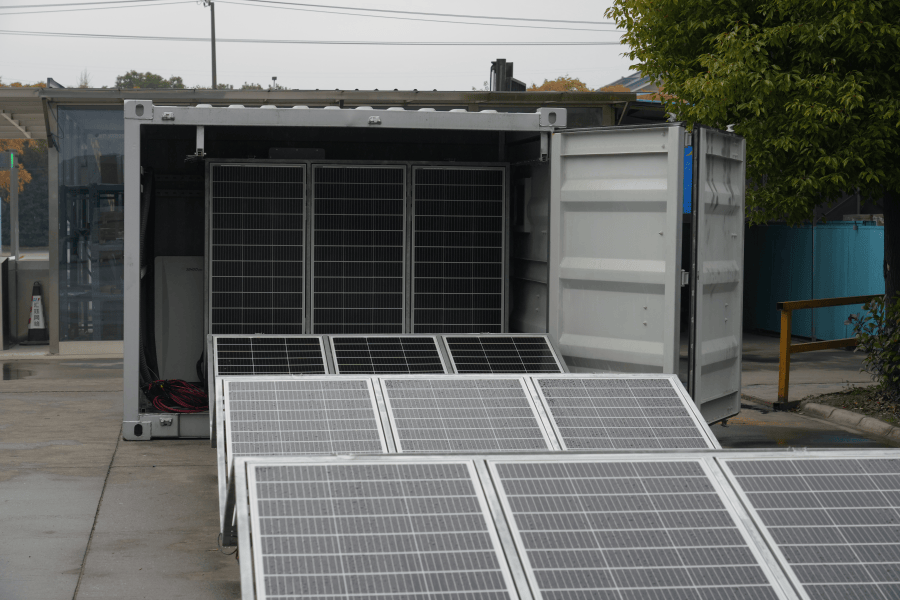
Beyond the Spec Sheet: The Real-World Safety Imperative for Grid-Scale Battery Containers
Hey there. Let's have a coffee chat about something that doesn't get enough airtime in boardroom presentations, but keeps engineers like me up at night: what happens to those massive battery containers after they're bolted to the ground for 15+ years. We talk a lot about cycle life and round-trip efficiency, but honestly, the shell that holds it all together - especially for public utility grids - is where the long-term battle for safety and ROI is won or lost. I've walked sites from coastal Texas to the industrial heartlands of Germany, and the environmental wear and tear is not a theoretical concern; it's a daily, grinding reality. Today, I want to break down why a specific set of rules - those Safety Regulations for C5-M Anti-corrosion Lithium Battery Storage Container for Public Utility Grids - aren't just bureaucratic checkboxes. They're the foundational wisdom for building resilient, safe, and bankable energy assets.
Quick Navigation
- The Hidden Cost on Every Site
- When Corrosion Meets Lithium: A Risk Multiplier
- The C5-M Standard: More Than a Paint Job
- Case in Point: A North Sea Lesson
- Implementing the Standard: An Engineer's Perspective
- The Bottom Line for Your Project
The Hidden Cost on Every Site
Public utility-scale BESS don't get placed in pristine, climate-controlled labs. They go where the grid needs them: near substations, industrial zones, or renewable generation hubs. These are often harsh environments. Think salt-laden air from offshore wind connections, chemical pollutants from nearby industry, or just the constant humidity in certain regions.
The problem starts small. A tiny breach in the container's exterior protection - a scratched coating, a compromised seal - allows corrosive agents in. This isn't just about aesthetics. Corrosion attacks structural integrity, electrical conduits, and thermal management systems. I've seen firsthand on site how a corroded cable conduit can lead to ground faults, or how a weakened structural bracket can misalign critical cooling ducts, creating hot spots. The National Renewable Energy Laboratory (NREL) has highlighted that balance-of-system (BOS) failures, which include enclosure and environmental protection failures, are a significant contributor to underperformance and increased operational costs over a project's lifetime.
This degradation directly attacks your Levelized Cost of Storage (LCOS). Unexpected maintenance, component replacement, and worst of all, unplanned downtime - these are the real costs that eat into the financial model. You didn't invest in a grid asset for it to be a maintenance headache in Year 5.

When Corrosion Meets Lithium: A Risk Multiplier
Now, layer in the core component: thousands of lithium-ion battery cells. These systems are designed with incredibly sophisticated Battery Management Systems (BMS) and thermal runaway prevention. But these safety systems assume the first line of defense - the container - is intact.
Corrosion weakens that defense. It can:
- Compromise Thermal Management: Blocked or leaking coolant lines due to internal corrosion are a direct path to thermal runaway. Consistent cooling is non-negotiable, especially when you're pushing cells with higher C-rates for grid services like frequency regulation.
- Create Electrical Fault Paths: Conductive corrosion products can bridge electrical isolation, leading to short circuits.
- Hinder Safety System Access: Corroded, seized valves or access panels can delay critical emergency response.
This is why safety regulations for these containers must be holistic. It's not just about preventing rust; it's about preserving the entire integrated safety ecosystem of the BESS for decades.
The C5-M Standard: More Than a Paint Job
This is where the C5-M anti-corrosion classification comes in. For folks not deep in materials science, let me simplify. The "C5" category (per ISO 12944) is the most severe industrial and marine environment category - think coastal areas with high salinity or industrial plants with high chemical pollution. The "M" stands for marine. This isn't a generic "weatherproof" claim.
Regulations built around C5-M compliance mandate a systematic approach:
- Material Selection: Specifying hot-dip galvanized steel or equivalent for structural frames.
- Surface Preparation: Mandatory abrasive blast cleaning to a specific surface profile - this is key for coating adhesion.
- Coating System: A multi-layer, high-thickness coating system (e.g., epoxy zinc-rich primer, epoxy intermediate, polyurethane topcoat) with a total dry film thickness often exceeding 300 microns. This is orders of magnitude more robust than standard industrial paint.
- Sealing & Design: Regulations enforce designs that avoid moisture traps, specify marine-grade seals for all doors and penetrations, and mandate the use of stainless steel fasteners.
At Highjoule, when we build a container for a utility project, this C5-M mindset is baked in from the first CAD drawing. We've learned that optimizing for this standard upfront - partnering with coating specialists, designing for proper drainage - saves our clients massive operational expenditures down the line. It's a core part of how we drive down the real-world LCOS.
Case in Point: A North Sea Lesson
Let me give you a concrete example from Northern Germany. A 50 MW/100 MWh BESS was deployed to support grid stability and integrate offshore wind. The site is classic C5-M: high winds, salt spray, and damp conditions.
The initial vendor proposed a standard industrial container with "enhanced" coating. The project's technical advisor, drawing on IEC and local German engineering standards (which align tightly with the principles of C5-M), insisted on full certification. The switch was made to a compliant design.
Three years in, the difference is stark. While neighboring non-compliant electrical equipment shows significant surface corrosion, the BESS container exterior looks nearly new. More importantly, internal inspections show zero ingress, and all safety systems - gas detection, thermal camera feeds, fire suppression access points - remain fully functional and accessible. The asset owner's O&M team sleeps better. This proactive adherence to the regulation's spirit prevented what would have been a costly mid-life refurbishment and preserved the system's safety integrity.
Implementing the Standard: An Engineer's Perspective
So, how do you make sure your project gets this right? It goes beyond just writing "C5-M" in the spec sheet.
1. Demand Certification, Not Just Claims: Require third-party certification (from bodies like UL or equivalent in Europe) for the entire enclosure system, not just the steel. The certification should cover the specific coating system applied in the factory under controlled conditions.
2. Think Holistically: The regulation should apply to all ancillary equipment too - the HVAC units, the transformer if integrated, the cable entry points. A C5-M container with a standard, corroded rooftop cooler is a half-measure.
3. Plan for Inspection: Design should include easy access points for periodic inspection of hidden areas, like underfloor channels and structural joints. This is part of a prudent, long-term asset management strategy.
Our role at Highjoule is to guide clients through this. We don't just sell a container; we provide the full technical documentation pack, the certification papers, and the lifecycle maintenance guidance that aligns with these stringent safety regulations. It turns a compliance requirement into a value-driver.

The Bottom Line for Your Project
For public utility grids, the safety mandate is paramount. The Safety Regulations for C5-M Anti-corrosion Lithium Battery Storage Container for Public Utility Grids represent a critical piece of that puzzle. They translate decades of industrial materials science into practical rules that protect billion-dollar investments and, more importantly, public trust.
It comes down to a simple question: Are you building a grid asset for the next 20 years, or just for the next commissioning ceremony? The choice in the container specification tells the real story. When you're evaluating your next BESS proposal, peel back the layers. Ask about the coating thickness, the fastener grade, the seal specifications. The answers will tell you everything you need to know about the vendor's commitment to long-term safety and performance.
What's the most surprising environmental challenge you've seen impact infrastructure at your sites?
Tags: UL Standard BESS Anti-corrosion Grid Storage Public Utility Safety Standards
Author
James Zhang
20+ years agricultural energy storage engineer / Highjoule CTO