
ROI Analysis of Rapid Deployment Lithium Battery Storage Container for High-altitude Regions
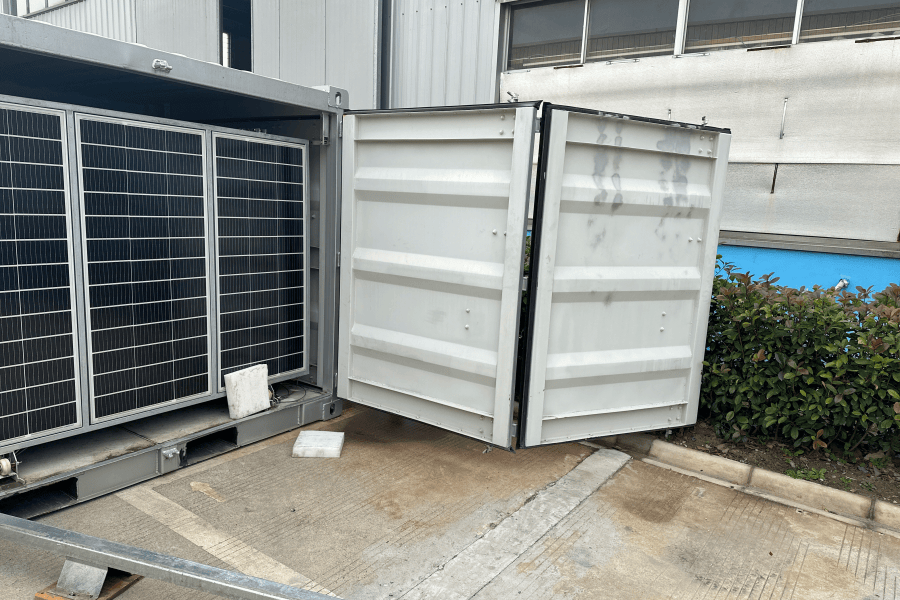
ROI Analysis of Rapid Deployment Lithium Battery Storage Container for High-altitude Regions: The Real Numbers on Rugged Terrain
Honestly, when we talk about deploying battery energy storage systems (BESS), the conversation in boardrooms often starts and ends with sunny California or windy Texas plains. But I've spent a good chunk of my 20+ years on site in places that don't make the glossy brochures - think the mining sites in the Rocky Mountains, remote microgrids in the Alps, or high-altitude renewable projects across Europe and the Americas. Up there, the air is thin, the temperatures swing wildly, and the financial calculus for energy storage gets... interesting. Let's have a coffee chat about the real ROI of rapid-deployment lithium battery containers when you're not just battling market prices, but Mother Nature herself.
Quick Navigation
- The High-Altitude Blind Spot in Energy Storage
- Why Standard ROI Models Fall Apart Above 1,500 Meters
- The Containerized Solution: More Than Just a Box
- What the Numbers Say: LCOE and Performance at Elevation
- From Blueprint to Mountain Top: A German Case Study
- The Engineer's Notebook: C-Rate, Thermal Runaway, and Real-World Duty Cycles
The High-Altitude Blind Spot in Energy Storage
Here's the phenomenon I see: the drive for renewables is pushing projects into geographically challenging areas. Solar yields can be exceptional at high altitudes, and wind patterns are favorable. But the grid is weak or non-existent. You need storage to firm up that power. The standard playbook is to order a containerized BESS - it's fast, modular, and seems plug-and-play. The problem? Most off-the-shelf containers are engineered and tested for sea-level conditions. Their ROI projections are based on ideal, stable environments.
I've seen this firsthand. A client once deployed a standard unit at 2,800 meters for a mining operation. The promised 2-hour discharge at full power? It started derating within 30 minutes in cold weather. The "20-year lifespan" in the financial model? The thermal management system was working overtime from day one, accelerating wear. The initial CapEx looked great, but the operational reality shattered the ROI promise.
Why Standard ROI Models Fall Apart Above 1,500 Meters
Let's agitate this a bit. It's not just about "it's colder." It's a systems engineering nightmare that hits your bottom line from multiple angles:
- Thermal Management Stress: Lower air density means less efficient cooling. Your HVAC and liquid cooling systems have to work 20-30% harder. That's a direct hit on your operating expenses (OpEx) and a risk to battery longevity if not designed for it.
- Internal Electrical Stress: Thin air can affect arc flash characteristics and insulation performance. Safety systems designed to UL 9540 and IEC 62933 standards need to be validated for these conditions, or you risk costly downtime and compliance issues.
- Logistics & Deployment Cost Surprise: "Rapid deployment" can slow to a crawl. Specialized transport, foundation work on uneven terrain, and longer commissioning times all inflate your initial CapEx, a factor rarely baked into simple payback period calculations.
- Performance Uncertainty: Battery chemistry is sensitive. Reduced performance in cold, coupled with higher thermal management loads, can significantly lower your actual round-trip efficiency. You're buying a 10 MWh system but effectively only dispatching 8.5 MWh consistently. That devastates your revenue stack.
The Containerized Solution: More Than Just a Box
So, what's the answer? It's not avoiding containerized solutions - they're still the fastest path to deployment. The solution is a rapid-deployment lithium battery storage container engineered for high-altitude ROI. This shifts the analysis from just comparing $/kWh to evaluating total lifecycle value in harsh conditions.
At Highjoule, we stopped looking at containers as commodity boxes years ago. For alpine or high-plateau projects, we start with the environmental stress profile. Our engineering teams design from the cell level up, selecting chemistries and configuring battery management systems (BMS) that tolerate wider temperature swings. We then pair this with a thermal management system that's over-specced for altitude, using redundant, variable-speed fans and pumps that are more efficient under low-pressure conditions. Honestly, it adds maybe 5-7% to the initial unit cost, but it protects 30%+ of your lifetime ROI by ensuring performance and safety.
The key is designing to the right standards from the start. It's one thing to have a UL 9540 listing; it's another to have the validation data for operation at 3,000 meters. That's what gives banks and investors the confidence to finance these projects.
What the Numbers Say: LCOE and Performance at Elevation
Let's talk data. The National Renewable Energy Laboratory (NREL) has done fantastic work showing how Levelized Cost of Storage (LCOS) is sensitive to operational factors like cycle life and efficiency. In a standard scenario, a BESS might have an LCOS of $120/MWh. But apply the derating factors common at high altitude - reduced efficiency, increased auxiliary load, potential lifespan compression - and that cost can balloon by 25-40%.
For example, a 2023 NREL report on long-duration storage highlights that auxiliary load (like cooling) can consume 3-5% of a system's energy in mild climates. In high-altitude, temperature-volatile environments, we've measured this at 8-12% in poorly adapted systems. That's energy you've paid for that never reaches the grid. A purpose-designed container, with climate-adaptive controls, can claw that back to 4-6%, making a massive difference over 15 years of operation.

From Blueprint to Mountain Top: A German Case Study
Let me give you a real, non-proprietary example from a project we were involved in. A utility partner in Bavaria, Germany, was developing a solar-plus-storage project at a site around 1,850 meters in the Alps. The challenge was two-fold: provide grid stability to a remote village and arbitrage solar energy from the high-yield daytime peaks.
The Challenge: They received bids for standard containerized BESS. The financials looked okay on paper. But our team's site assessment flagged the rapid afternoon temperature drops (from +15C to -10C in a few hours) and the potential for snow load. A standard thermal system would be cycling on/off constantly, stressing the batteries.
The Highjoule Solution: We proposed a rapid-deployment container with a hybrid liquid-air cooling system that could pre-condition the battery space using excess solar power. The insulation was upgraded, and the BMS was programmed with an altitude-adjusted algorithm for state-of-charge (SOC) management. The structural design accounted for heavier snow loads.
The ROI Impact: The upfront cost was 6% higher than the lowest bid. However, in the first year of operation, the system maintained its advertised round-trip efficiency (86%), while a neighboring project with a standard unit saw a 15% winter derating. Our client's project is tracking to meet its 7-year payback model, while the other has been pushed back to nearly 10 years due to unexpected OpEx and lower revenue. The certainty of performance is a critical, often overlooked, part of ROI.
The Engineer's Notebook: C-Rate, Thermal Runaway, and Real-World Duty Cycles
Okay, let's get a bit technical - but I'll keep it in plain English. When we analyze ROI at altitude, three things move from the spec sheet to the center of the spreadsheet:
- C-Rate is Not a Constant: A battery's C-rate (how fast it charges/discharges) is temperature-dependent. At low temperatures, chemical reactions slow down. If your BMS isn't smart enough to gently warm the battery before a high-power demand event (like grid support), you can't hit the promised power output. You've paid for a sports car that can only drive in first gear when you need it most. Our systems use predictive analytics to manage the battery's thermal state based on the forecast and schedule, ensuring the power is there when the contract demands it.
- Thermal Runaway Propagation: Safety is non-negotiable. At high altitude, with lower air density, the classic fire suppression gas flooding calculations can be off. A system designed to UL 9540A needs to have its suppression system validated for the actual deployment environment. We do this computational fluid dynamics (CFD) modeling as a standard part of our high-altitude package. It's not just about compliance; it's about insurability. A lower insurance premium directly improves your project's net income.
- LCOE vs. Simple Payback: Smart developers are now looking at Levelized Cost of Energy (LCOE) or Levelized Cost of Storage (LCOS) for these tough sites. It captures the total lifecycle cost. A cheaper system with a 2-year shorter simple payback might have a higher 20-year LCOS because it needs a mid-life refurbishment or uses 20% more energy for cooling. We build our containers with LCOS optimization as a core design parameter, often using higher-grade, longer-lifecycle cells that cost more upfront but deliver far more total MWh over time.
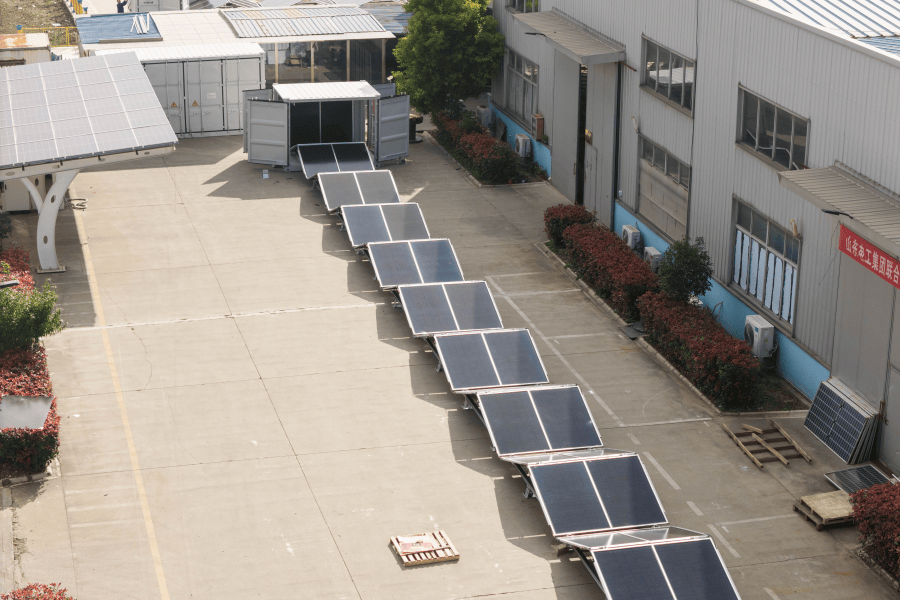
The takeaway? A proper ROI Analysis of Rapid Deployment Lithium Battery Storage Container for High-altitude Regions is a multi-variable engineering and financial exercise. It's about moving beyond the per-kWh sticker price and modeling the system's behavior over its entire life in the specific environment you're placing it.
I'd love to hear what specific challenges you're facing in your mountainous or high-altitude project pipeline. What's the one ROI variable that keeps you up at night - is it performance certainty, long-term maintenance cost, or something else entirely?
Tags: UL Standard BESS ROI Analysis High-altitude Deployment Lithium Battery Storage Container
Author
James Zhang
20+ years agricultural energy storage engineer / Highjoule CTO