
Optimize Telecom Base Station Power with High-voltage DC Hybrid Solar-Diesel Systems
Contents
- The Silent Cost Killer at Remote Base Stations
- Why Old-School Solutions Fall Short in 2026
- The High-Voltage DC Hybrid System: More Than Just a Buzzword
- From Blueprint to Reality: A Case Study in the Arizona Desert
- Pulling the Right Levers: Key Optimization Factors Explained
- Making It Work for Your Network: A Practical Path Forward
The Silent Cost Killer at Remote Base Stations
Honestly, if you're managing telecom infrastructure in North America or Europe, you know the drill. That base station on a hilltop or in a remote rural area is your lifeline for coverage. It's also a massive, silent money pit when it comes to power. I've been on site for dozens of these deployments over the years, and the story is almost always the same: a diesel generator growling away 24/7, or at best, a low-voltage solar setup that barely makes a dent in the fuel bill. The real problem isn't just the cost of diesel - it's the total cost of ownership. We're talking about constant maintenance runs, carbon tax implications in Europe, wildfire risks from overheated equipment in California, and the sheer logistical headache of keeping the lights on. The International Energy Agency (IEA) notes that telecoms can account for a significant portion of commercial diesel consumption in off-grid areas. That's a cost and a sustainability target no operator wants.
Why Old-School Solutions Fall Short in 2026
So why haven't we fixed this? Often, the "solution" is a piecemeal approach. A small solar array here, a lead-acid battery bank there, all tied to a low-voltage DC bus (like 48V). On paper, it's a hybrid system. In reality, it's inefficient and fragile. The low voltage means you need huge, expensive copper cables to handle the high current, leading to substantial power losses over distance. The battery bank is usually the first to fail - constantly cycled by the solar input and stressed by the generator's erratic charging. I've seen thermal runaway events firsthand in poorly managed low-voltage setups. They simply aren't built for the high-power, high-reliability demands of modern 5G equipment. They also make it nearly impossible to comply with stringent local standards like UL 9540 for energy storage or IEEE 1547 for grid interconnection in backup scenarios.
The High-Voltage DC Hybrid System: More Than Just a Buzzword
This is where the optimization conversation truly begins. A properly designed high-voltage DC hybrid system - think 400V to 800V DC - is a game-changer. It's not just about slapping on higher-voltage components. It's a fundamental re-architecture of the power plant. The core idea is elegant: integrate solar PV, a high-voltage battery energy storage system (BESS), and a diesel generator onto a single, high-voltage DC bus. The BESS becomes the heart of the system, with solar and generator acting as controlled charging sources. This setup minimizes the number of power conversions (AC-DC, DC-AC), which is where you typically lose 5-10% of your energy. Fewer conversions mean higher overall efficiency, sometimes pushing above 95% from panel to load.
For a company like Highjoule, designing for this isn't theoretical. Our containerized BESS units are built from the ground up for this high-voltage DC environment. We use UL 1973-certified battery modules and UL 9540-listed system designs, which is non-negotiable for site safety and insurance in the US market. The entire power conversion and management system is engineered to talk seamlessly with solar inverters and generator controllers on that common DC bus, something that's saved our clients countless integration headaches.
From Blueprint to Reality: A Case Study in the Arizona Desert
Let me give you a real example. We partnered with a regional telecom in Arizona to retrofit a critical but remote base station. The challenge? Fuel costs were through the roof, generator maintenance was weekly, and the existing lead-acid batteries needed replacement every 18 months. The site also had a high risk of overheating.
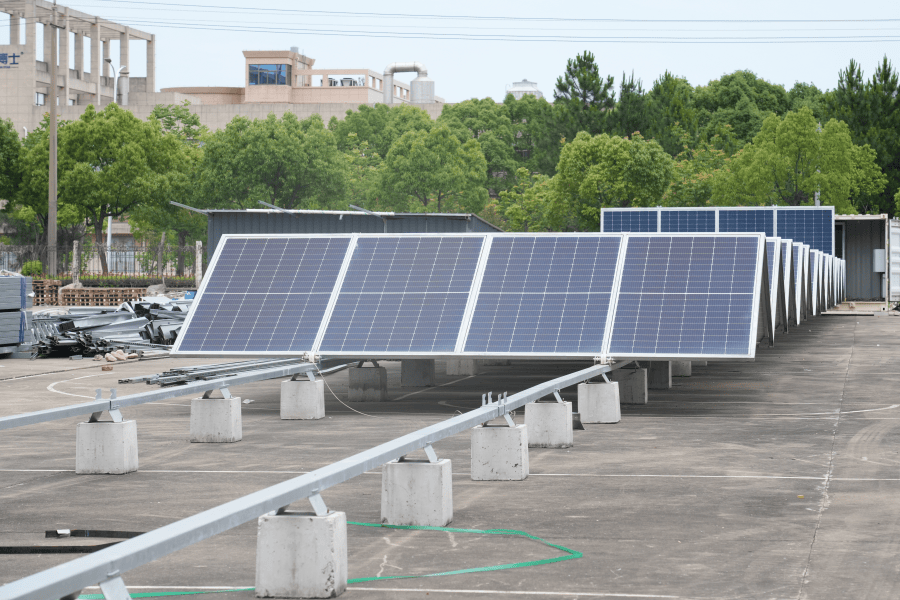
We deployed a 400V DC hybrid system with a 100 kW solar canopy, a 250 kWh Highjoule BESS (in a thermally managed, NEMA 3R enclosure), and the existing diesel gen-set as a backup. The BESS's advanced controller was the brain, prioritizing solar, then battery discharge, and only calling for the generator when the battery hit a low state-of-charge. The result? Diesel runtime dropped by over 92%. The high-voltage architecture reduced cable sizes and losses. But here's the on-the-ground insight everyone misses: the thermal management. Arizona heat kills batteries. Our system's liquid cooling and active climate control kept the battery at its optimal temperature range, which is the single biggest factor in extending its life. We're projecting a battery life of over 10 years in that harsh environment, directly slashing the long-term Levelized Cost of Energy (LCOE).

Pulling the Right Levers: Key Optimization Factors Explained
Optimizing such a system isn't a "set it and forget it" deal. It requires understanding a few key levers. Let's break them down simply:
- Battery C-rate and Sizing: The C-rate is basically how fast you can charge or discharge the battery relative to its size. For a base station, you need a battery that can handle high discharge rates (a high C-rate) to cover sudden load spikes when the generator is off. But you also need enough capacity (kWh) to cover the night. Oversizing is costly, undersizing kills the battery. The sweet spot is a battery, like in our units, designed for high cycle life at a moderate C-rate, sized precisely for the site's load profile.
- Intelligent Controller Logic: This is the secret sauce. A smart controller doesn't just switch between sources. It forecasts solar yield, learns load patterns, and manages the battery's state-of-charge to always keep a "reserve tank" for emergencies. It also exercises the generator periodically under load to keep it healthy, avoiding the classic failure mode of a gen-set that won't start when finally needed.
- Thermal Management as a Priority: I can't stress this enough. A battery's performance and lifespan are directly tied to its temperature. Passive air cooling often fails in extreme climates. An active thermal management system, which is standard in our designs, is an upfront cost that pays back tenfold in extended battery life and avoided safety incidents.
- Standards Compliance is a Feature: In the EU and US, compliance with IEC 62477 (power converters) and IEEE 2030.3 (BESS testing) isn't just red tape. It's a blueprint for interoperability and safety. Designing to these standards from day one, as we do, ensures your system can be permitted, insured, and serviced locally without endless customization.
Making It Work for Your Network: A Practical Path Forward
So, where do you start? The first step is always a detailed site audit - not just of power logs, but of physical space, environmental conditions, and future load growth (like adding more 5G radios). The goal is to right-size every component. The beauty of a modular high-voltage BESS is that you can often start with a core system and scale capacity later as needs change.
The optimization journey for your telecom base stations is really about shifting from a reactive, fuel-based cost center to a proactive, technology-driven asset. It's about choosing a system architecture that is inherently more efficient, pairing it with components built for durability under local conditions, and leveraging intelligent software to make it all work seamlessly. The question isn't really if you should optimize, but how soon you can start turning those remote sites from liabilities into models of resilience and efficiency. What's the one site in your network where the power costs keep you up at night?
Tags: UL Standard BESS Telecom Power Hybrid Systems Energy Cost Optimization
Author
James Zhang
20+ years agricultural energy storage engineer / Highjoule CTO