
Choosing LFP ESS Containers for Construction Sites: A Contractor's Guide
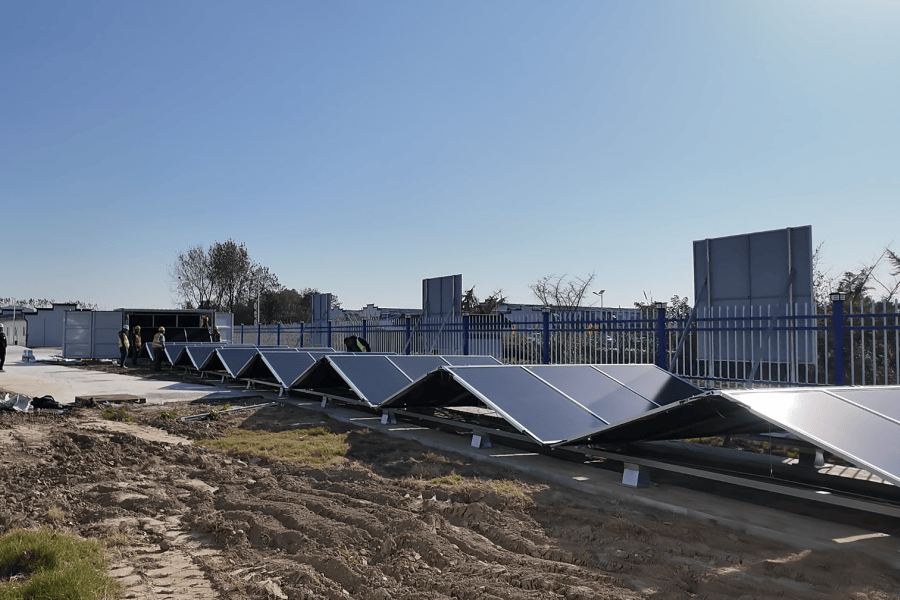
Table of Contents
- The Diesel Hangover on Modern Job Sites
- Safety: The Non-Negotiable in Energy Storage
- Why LFP Chemistry Wins for Temporary Power
- It's More Than Just the Battery Cell: The System View
- Real Numbers, Real Sites: The LFP ESS Case
- Making the Right Choice for Your Next Project
The Diesel Hangover on Modern Job Sites
Let's be honest. If you're managing a construction site in California or a infrastructure project in Germany, you know the drill. The constant hum (more like a roar) of diesel generators, the weekly fuel deliveries that disrupt logistics, the smell, and honestly, the rising fuel bills that seem to have a mind of their own. The International Energy Agency (IEA) points out that diesel generators remain a dominant off-grid power source, but their operational costs and emissions are under increasing scrutiny. It's a headache we've all accepted as part of the job. But what if that headache is now entirely optional?
The real pain point isn't just cost. It's predictability. A delayed fuel truck can idle an entire crew. Noise ordinances in semi-urban areas can limit your productive hours. And then there's the carbon footprint - something more and more project owners and local governments are mandating we track and reduce. I've been on sites where the generator is the single biggest source of local emissions and community complaints. It's a problem that's ripe for a smarter solution.
Safety: The Non-Negotiable in Energy Storage
This is where the conversation about Battery Energy Storage Systems (BESS) for construction power gets serious. When I talk to superintendents and site managers, their first question is never about kilowatt-hours. It's about safety. "Am I putting a potential fire hazard in the middle of my site?" It's a fair concern. Not all batteries are created equal, and the standards they're built to matter immensely.
In the US, you need to look for UL 9540 for the overall system and UL 1973 for the cells. In the EU, it's the IEC 62619 standard. These aren't just fancy acronyms; they're rigorous test protocols that simulate failure conditions. An industrial ESS container isn't just a box of batteries. It's an integrated power plant with a dedicated thermal management system, fire suppression, and robust controls. When we at Highjoule design our site power units, compliance with these standards is the absolute baseline, not an optional extra. Because on a crowded construction site, safety isn't a feature; it's the foundation.
Why LFP Chemistry Wins for Temporary Power
So, let's get into the core of the comparison of LFP (LiFePO4) industrial ESS container for construction site power. Lithium Iron Phosphate (LFP) chemistry has become the de facto choice for industrial and commercial storage, and for good reasons I've witnessed firsthand:
- Thermal Runaway Resistance: Honestly, this is the big one. LFP chemistry is inherently more stable than other lithium-ion types (like NMC). It has a much higher onset temperature for thermal runaway, giving you a critical safety buffer. On a dusty, vibration-filled construction site, that inherent stability is worth its weight in gold.
- Longevity & Cycle Life: Construction projects can last years. An LFP battery can typically handle 4000-6000 full charge/discharge cycles while retaining 80% of its capacity. This means the same container can be deployed on multiple projects, radically improving its total cost of ownership.
- Power Profile Fit: Site power needs are about steady, reliable output for tools, lighting, and trailers, not extreme bursts of energy for sports cars. LFP batteries excel at this steady discharge profile and can handle high C-rate demands (like starting larger equipment) when the system is properly engineered.
While other chemistries might pack more energy into a slightly smaller space, for temporary power, the trade-off towards LFP's safety and lifespan is a no-brainer for responsible operators.
It's More Than Just the Battery Cell: The System View
Comparing containers just on the battery cell is like comparing trucks just on the engine. The powertrain, chassis, and cab matter just as much. Here's what you need to scrutinize in the whole system:
- Thermal Management: Is it air-cooled or liquid-cooled? For a container sitting in the Texas sun or a Canadian winter, liquid cooling is far superior. It maintains optimal cell temperature, ensuring performance and longevity, regardless of the outdoor climate. I've seen air-cooled systems derate power output on a hot day just when the crew needs it most.
- Grid-Forming Capability: Can the ESS create a stable "grid" by itself? This is crucial for pure off-site applications. You don't want your sensitive equipment crashing every time a load switches.
- Ease of Integration: Can it plug-and-play with your existing site solar panels or a backup generator in a hybrid setup? The best units offer flexible AC and DC coupling options.
- Levelized Cost of Energy (LCOE): This is the key financial metric. It factors in the upfront cost, installation, maintenance, fuel savings, and lifespan. A robust LFP ESS might have a higher initial price than a diesel generator, but its LCOE over a 3-year project can be 40-60% lower when you factor in zero fuel and drastically reduced maintenance. The National Renewable Energy Laboratory (NREL) has extensive tools showing how storage LCOE beats traditional generation in many scenarios.

Real Numbers, Real Sites: The LFP ESS Case
Let me give you a non-hypothetical example. We worked with a contractor on a large utility-scale solar farm build-out in the Southwest U.S. Their challenge: powering a 100-person main laydown yard and offices, located miles from the grid, with a mandate to minimize diesel use.
The solution was a 500kW/1000kWh Highjoule LFP ESS container, paired with a 250kW solar canopy and a single, smaller diesel gen-set as a backup. The system was configured to run primarily on solar + storage, with the generator only auto-starting to top up the batteries after several cloudy days. The results after the first year?
- Diesel fuel consumption reduced by over 85%.
- Elimination of daily noise and fumes at the main yard.
- The project met its stringent carbon reduction goals for site operations.
- The container was designed for easy relocation and is now on its second project.
The ROI was clear, and the "soft" benefits - like improved worker satisfaction and community relations - were massive. This is the kind of practical outcome that moves the needle.
Making the Right Choice for Your Next Project
So, when you're evaluating the comparison of LFP (LiFePO4) industrial ESS container for construction site power, look beyond the brochure's peak power number. Ask your vendor:
- "Can you show me the full UL 9540 certification for this exact container model?"
- "What is the expected cycle life and capacity warranty under a construction site duty cycle?"
- "How does the thermal system perform in ambient temperatures from -20C to 45C?"
- "Do you provide a modeled LCOE comparison for my specific site load profile?"
The shift from diesel to battery-based temporary power isn't a fringe experiment anymore; it's a smart business and operational decision. The technology is proven, the standards are in place, and the financials work. The question isn't really if you should make the switch, but which system is robust and reliable enough to earn a place on your busy site. What's the first project on your board where quiet, clean, predictable power would change the game?
Tags: Construction Site Power UL Standard BESS LCOE Europe US Market Renewable Energy ESS Container LiFePO4
Author
James Zhang
20+ years agricultural energy storage engineer / Highjoule CTO