
Step-by-step Installation of Scalable Modular Pre-integrated PV Container for Remote Island Microgrids
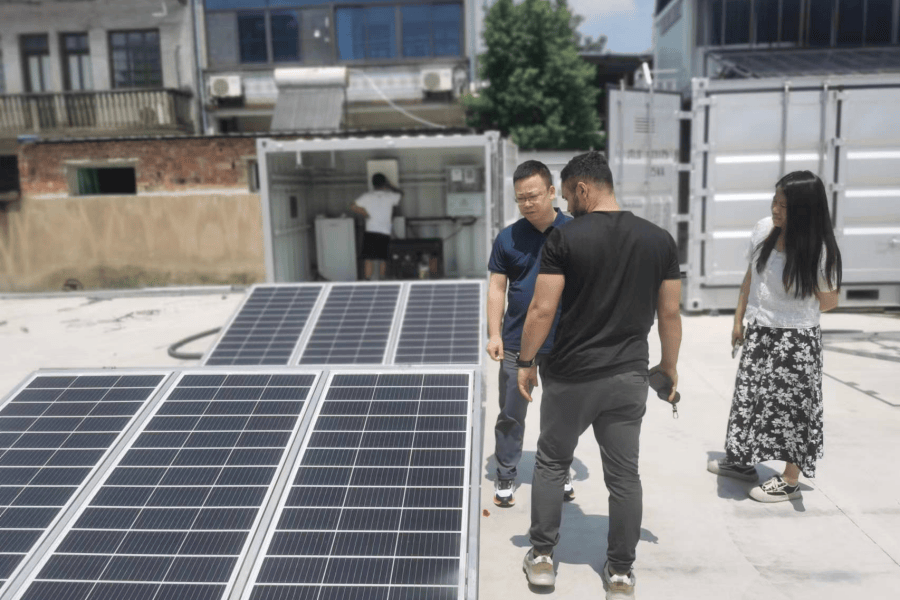
The Real-World Guide to Installing Scalable PV Container Solutions for Island Microgrids
Hey there. If you're reading this, you're probably looking at a remote island project C maybe in the Caribbean, off the coast of Scotland, or in the Pacific Northwest C and wondering how to get reliable, clean power from the sun to the community. Honestly, I've been there. On more sites than I can count, wrestling with logistics, local codes, and the sheer complexity of making things work far from the grid. Over two decades, I've seen the shift from bespoke, on-site engineering nightmares to something much smarter. Let's talk about what that looks like on the ground.
Quick Navigation
- The Island Energy Dilemma: More Than Just Sunshine
- Why "Traditional" Approaches Fall Short (And Cost You)
- The Modular, Pre-Integrated Container: A Game Changer
- The Step-by-Step: From Port to Power-On
- Key Technical Insights for Decision-Makers
The Island Energy Dilemma: More Than Just Sunshine
The promise is obvious: abundant solar resources, a desperate need to reduce diesel dependency, and a community eager for stability. The reality on the ground? It's a tangle of hidden costs and logistical headaches. The core problem isn't the idea of solar-plus-storage for island microgrids; it's the execution. You're dealing with limited skilled labor, volatile weather windows for installation, stringent and often unfamiliar local adaptations of IEC and IEEE standards, and freight costs that can sink a project's economics before it even starts. I've seen projects where the "balance of system" costs C all the wiring, enclosures, and on-site assembly C ended up being 40% of the CAPEX, not because of the equipment, but because of the remote location.
Why "Traditional" Approaches Fall Short (And Cost You)
Let's agitate that pain point a bit. The old way meant shipping dozens of separate components: battery racks, inverters, HVAC units, switchgear, all in different crates. On site, you'd need a small army of electricians, mechanical engineers, and programmers for weeks, just to bolt it all together and hope the systems integrate. A study by the National Renewable Energy Laboratory (NREL) highlighted that soft costs C like installation labor, permitting, and interconnection C remain disproportionately high for remote energy projects. Every extra day of on-site work is a day of paying for expensive travel and lodging for specialists, not to mention the risk of delays from missing parts or integration hiccups. The safety risks multiply too, with high-voltage connections being made in less-than-ideal field conditions.
I remember a project in the Aleutian Islands where a containerized solution wasn't used initially. We lost three weeks due to a single missing cable tray shipment. The client's Levelized Cost of Energy (LCOE) calculation was blown out of the water. That's the kind of firsthand experience that changes how you specify equipment.
The Modular, Pre-Integrated Container: A Game Changer
This is where the scalable, modular, pre-integrated PV container concept shifts the paradigm. Think of it not as a product, but as a deployment methodology. At Highjoule, we build complete power plants in a factory-controlled environment. The battery modules, PCS, thermal management system, fire suppression, and controls are all integrated, wired, and tested under one roof against UL 9540 and IEC 62933 standards. What arrives on the barge is essentially a "plug-and-play" energy asset. This isn't just about convenience; it's about de-risking the entire project timeline and budget.

The Step-by-Step: From Port to Power-On
So, what does this "step-by-step installation" actually look like? It's less construction and more commissioning.
1. Site Prep & Foundation (Weeks Before Shipment)
While the unit is being factory-tested, your local crew prepares a simple, level concrete pad with anchor points. No need for a large indoor facility. We provide the civil drawings. This parallel path is a massive time-saver.
2. Delivery & Placement (Day 1)
The container arrives. Using a standard crane or heavy-duty forklift, it's placed onto the pre-set foundations and anchored. I've seen this done in under four hours on a site in the Outer Hebrides.
3. External Interconnections (Days 2-3)
This is the main on-site work. Your electricians connect the pre-terminated, clearly labeled external cables: AC output to the main distribution panel, DC input from the solar array, and the utility/generator interconnection point. Because the internal high-voltage work is done, the safety profile and required skill level are significantly reduced.
4. Commissioning & Grid Sync (Days 3-5)
Our remote support team connects to the system's onboard SCADA. We guide the local team through the startup sequence, verify all safety protocols, and perform grid synchronization tests. The system is designed for remote monitoring, which is crucial for island sites where a technician isn't always on hand.
Contrast this with the 4-6 week site-built timeline. The difference is in the LCOE.
Key Technical Insights for Decision-Makers
Let's break down a few specs you should care about, in plain English.
- Scalability & Modularity: This isn't just about adding more containers (though you can do that). It's about the internal battery modules. A true modular design lets you swap or expand capacity in discrete chunks without taking the whole system offline. It future-proofs your investment.
- Thermal Management: This is the unsung hero. Island environments are harsh C hot, salty, humid. A poor thermal system degrades batteries fast. We use a closed-loop liquid cooling system that maintains optimal temperature uniformly, which is non-negotiable for hitting the 15+ year lifecycle and sustaining the advertised C-rate (the speed at which you can charge/discharge the battery safely). A high C-rate is useless if thermal throttling kicks in after 10 minutes.
- Safety & Compliance: Factory integration means every electrical arc flash study, every clearance, and every fire barrier is designed and validated to UL/IEC standards before it leaves. You're not hoping a field crew interprets the drawings correctly. This was a critical factor for a microgrid project we completed in California, where the local AHJ (Authority Having Jurisdiction) inspected the unit's UL certifications and factory test reports, speeding up the permitting process dramatically.

The move towards pre-integrated, modular containers is more than a tech trend. It's a direct response to the real economic and logistical barriers facing island communities and developers. It turns a complex construction project into a predictable logistics operation. At Highjoule, our focus has been on refining this approach not just for performance, but for total cost of ownership and local serviceability. The goal is to give you a system that works on day one and keeps working, simply.
What's the biggest logistical hurdle you're facing on your current remote project? Is it skilled labor, freight, or local compliance? Let's talk specifics.
Tags: UL Standard BESS LCOE Europe US Market PV Container Renewable Energy Microgrid IEEE Standards Island Energy
Author
James Zhang
20+ years agricultural energy storage engineer / Highjoule CTO