
Optimizing High-voltage DC Mobile Power Containers for Eco-Resort Energy Independence
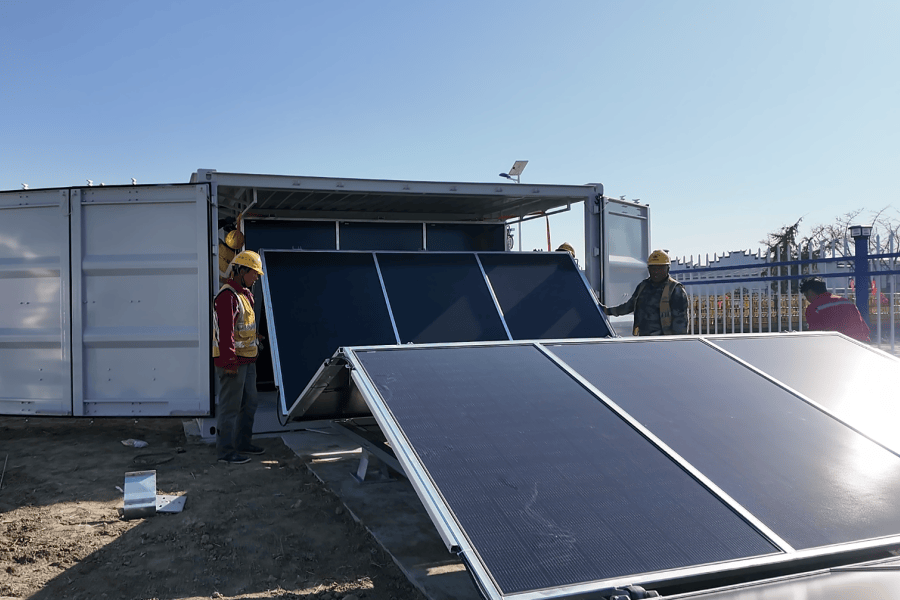
Beyond the Grid: A Practical Guide to Mobile Power for Eco-Resorts
Hey there. If you're reading this, you're probably looking at that beautiful, remote piece of land for your next eco-resort project, but the utility's quote for grid extension just made your heart sink. Or maybe you're operating an existing lodge and the diesel generator's roar is starting to clash with your sustainability promise. I've been on-site for these exact conversations, from the mountains of Colorado to the islands of Greece. Honestly, the challenge is universal: how do you deliver reliable, clean, and affordable power where the grid ends?
For years, the answer was a solar array paired with a low-voltage AC battery system. It works, but it often leaves money and performance on the table. Today, the game-changer for off-grid and weak-grid hospitality is the high-voltage DC mobile power container. But buying the container is just step one. The real value - and the secret to a positive ROI - lies in how you optimize it. Let's talk about how.
Quick Navigation
- The Real Problem: It's Not Just About Having Power
- Why "Plug-and-Play" Isn't Enough: The Cost of Getting It Wrong
- The Optimization Framework: Engineering for the Real World
- A Case in Point: From Theory to a Rocky Mountain Reality
- Pulling the Right Levers: C-rate, Thermal Management & LCOE Explained
- Your Next Step: Questions to Ask Your Vendor
The Real Problem: It's Not Just About Having Power
The dream is 24/7 renewable power. The reality? I've seen resorts where the battery system is either oversized (a massive capital sink) or undersized (leading to diesel backup running daily, which defeats the purpose). The core pain points boil down to three things:
- Hidden Lifetime Costs (LCOE): The upfront price tag is tempting, but a system with poor thermal management or a low cycle life will need replacement much sooner. The National Renewable Energy Lab (NREL) consistently shows that operational efficiency and longevity are the biggest drivers of Levelized Cost of Energy (LCOE) for storage.
- Safety & Insurance Hurdles: A container full of high-voltage DC energy is no joke. Local authorities and insurers in places like California or the EU will demand compliance with UL 9540 and IEC 62485 standards. A non-compliant system can stall your project for months.
- Operational Complexity: Your staff are hospitality experts, not grid engineers. A system that requires constant manual tweaking or has a clunky interface becomes a burden, not a solution.
Why "Plug-and-Play" Isn't Enough: The Cost of Getting It Wrong
Let's agitate that a bit. An unoptimized container might save you 10-15% on CapEx. But what does that mean on the ground? I recall a project in the Mediterranean where an undersized thermal system led to the BESS derating (slowing down) every afternoon during peak guest check-in and pool pump usage - exactly when power demand spiked. The resort had to fire up the genset anyway, burning through their supposed "savings" in diesel and maintenance within two seasons. The financial model fell apart because the system wasn't optimized for the specific load profile and climate.
The Optimization Framework: Engineering for the Real World
So, how do we optimize? It's not a magic button; it's a deliberate design philosophy. At Highjoule, we treat every mobile container as a mission-critical asset that needs to be tailored. Optimization starts before the container leaves our factory.
First, it's about right-sizing with intelligence. We don't just look at your total daily kWh consumption. We analyze your 24/7 load profile. Do you have a high-demand spa? Electric vehicle chargers for guests? Kitchen peaks? The battery's C-rate - basically, how fast it can charge and discharge - must match these peaks without stress. An optimized system uses a battery with an appropriate C-rate and couples it with smart inverters to handle those surges smoothly, extending battery life.
Second, safety by design, not by add-on. Every cell, module, and rack in our containers is built with UL and IEC standards as the baseline. This isn't just for compliance; it's for risk mitigation. It means faster permitting, easier insurance sign-off, and peace of mind that your resort's core energy asset won't become a liability.

A Case in Point: From Theory to a Rocky Mountain Reality
Let me give you a real example. A boutique eco-resort in Colorado was reliant on a microgrid with a 500kW diesel generator. Their goal was 95% renewable penetration. The challenge? Space was limited, winter temps dropped to -20C (-4F), and their summer occupancy created huge demand spikes.
We deployed a high-voltage DC mobile container, but the optimization was key: 1. Climate-Responsive Thermal System: We used a liquid cooling system with a glycol loop, pre-warming the batteries in winter using excess solar PV heat and actively cooling them in summer. This maintained optimal cell temperature, ensuring full capacity was available year-round. 2. Load Profile Programming: The energy management system (EMS) was programmed to anticipate the resort's patterns - pre-charging the battery before the evening dinner rush, for instance. 3. Grid-Forming Capability: The system was configured to form a stable "grid" for the resort independently, allowing the diesel gen to be completely offline, not just idling.
The result? Diesel fuel use dropped by over 90% in the first year. The container's optimized performance actually allowed for a smaller battery bank than initially scoped, saving upfront cost. The resort now uses its former fuel budget for guest experiences.
Pulling the Right Levers: C-rate, Thermal Management & LCOE Explained
Let's demystify some jargon you'll hear.
- C-rate (Simplified): Think of it as the "athleticism" of the battery. A 1C rate means the battery can fully charge or discharge in one hour. A 0.5C rate is more leisurely, taking two hours. For a resort with sharp load spikes (like everyone turning on A/C at once), you need a higher C-rate capability. But constantly running at a high C-rate wears the battery faster. Optimization means matching the battery's innate C-rate to your load profile and using smart controls to avoid unnecessary high-stress cycles.
- Thermal Management: This is the battery's climate control system. Batteries are like people - they perform best in a comfortable temperature range. Passive air cooling is cheaper but often inadequate for tightly packed containers in extreme climates. Active liquid cooling, like we used in Colorado, is more precise. It's a higher initial investment that pays back massively in extended battery life (often 20-30% longer) and consistent performance, directly lowering your LCOE.
- LCOE (Levelized Cost of Energy): This is your ultimate metric. It's the total lifetime cost of your energy system divided by the total energy it produces. A cheap, unoptimized system with a short life and high losses has a high LCOE. An optimized system with a higher upfront cost but superior efficiency, safety, and a 15+ year lifespan delivers a lower LCOE. That's the real win.

Your Next Step: Questions to Ask Your Vendor
So, when you're evaluating a high-voltage DC mobile power container, move beyond the spec sheet. Have a coffee with their engineering team and ask:
- "Can you model my specific load profile and show me how you'll size the C-rate and capacity?"
- "What is your thermal management approach for my site's extreme highs and lows, and what is the expected impact on cycle life?"
- "Can you provide the UL 9540 certification documents and the specific IEC standards your battery modules comply with?"
- "How does your EMS software work to automate optimization, and what does the operational interface look like for my staff?"
The right partner won't just sell you a container; they'll engineer a solution. At Highjoule, that's been our focus for nearly two decades - turning the complex challenge of off-grid power into a reliable, silent, and profitable backbone for businesses like yours. What's the one energy constraint in your project that keeps you up at night?
Tags: UL Standard BESS LCOE Energy Storage High-voltage DC Mobile Power Container Eco-Resort
Author
James Zhang
20+ years agricultural energy storage engineer / Highjoule CTO