
How to Optimize Liquid-cooled Solar Container for Construction Site Power
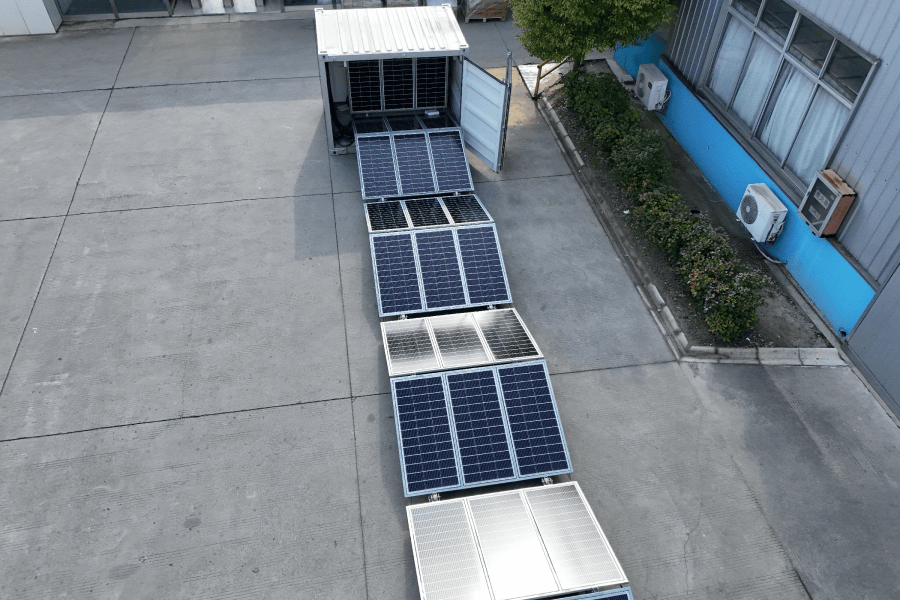
Table of Contents
- The Real Problem on Your Site: It's Not Just Power, It's Predictability
- The Hidden Cost of Unreliability
- The Liquid-Cooled Advantage: More Than Just Keeping Cool
- Your On-Site Optimization Checklist: From Spec to Operation
- Thinking Beyond the Box: System Integration & Long-Term Value
The Real Problem on Your Site: It's Not Just Power, It's Predictability
Let's be honest, if you're managing a construction project in North America or Europe right now, you've probably had this conversation. The grid connection is delayed, the diesel generator is guzzling fuel at insane prices, and the noise complaints from the neighboring community are piling up. You need reliable power for your equipment, site offices, and maybe even temporary charging for electric machinery. The promise of a solar-powered container C a "BESS in a box" C sounds perfect. But then you hear the stories: units throttling power output on a hot afternoon, lifespan concerns, or complex permitting hurdles. The problem isn't finding an energy storage system; it's finding one that delivers predictable, resilient, and cost-effective power from day one to project close-out, regardless of the weather or the grid's status.
The Hidden Cost of Unreliability
I've seen this firsthand on site. A temporary power system isn't temporary in its consequences. When a standard air-cooled battery container overheats and derates, it's not just an inconvenience. It means concrete pumps slowing down, critical path delays, and crews standing idle. The financial impact compounds rapidly. According to the National Renewable Energy Laboratory (NREL), thermal management is a primary driver of battery degradation; poor temperature control can accelerate capacity loss by a factor of two or more. That's a capital asset wearing out before your project is even finished.
Then there's safety. A construction site is a harsh environment C dust, wide temperature swings, and physical vibrations. An energy storage system built to office-grade cooling standards is a liability. You need industrial-grade resilience, with safety certifications like UL 9540 and IEC 62933 that aren't just paperwork but are baked into the design from the cell up. The risk isn't theoretical; it's about protecting your team, your project, and your company's reputation.
The Core Challenge: Taming the Thermal Beast
At the heart of this is something called the C-rate C basically, how fast you charge or discharge the battery. High power for heavy equipment demands a high C-rate, which generates significant heat. Air cooling often struggles to keep up uniformly, creating hot spots. These hot spots stress the battery cells, leading to that accelerated degradation I mentioned. It's a vicious cycle: you need high power, but drawing it shortens the system's life and increases your long-term cost of energy (LCOE).

The Liquid-Cooled Advantage: More Than Just Keeping Cool
So, how do you break this cycle? This is where optimizing for liquid-cooling becomes non-negotiable for demanding applications. Think of it not as an extra feature, but as the foundational element for true site power reliability. Unlike air, liquid is 25-50 times more effective at moving heat. A well-designed liquid-cooled system, like the ones we engineer at Highjoule, directly targets each battery cell or module, maintaining a consistent temperature across the entire pack.
The optimization benefits are massive:
- Higher, Sustained Power Output: No more derating on a 95F day. The system maintains its rated output, so your 500kW excavator gets the 500kW it needs, continuously.
- Longer Lifespan & Lower LCOE: By virtually eliminating thermal stress, you preserve the battery's health. This directly lowers your Levelized Cost of Energy C the total cost of ownership divided by the energy output. You get more MWh over the system's life, making the economics work.
- Density and Durability: Liquid cooling allows for a more compact design (higher energy density in the container) and is inherently better at sealing out dust and contaminants - a huge plus for construction environments.
Your On-Site Optimization Checklist: From Spec to Operation
Optimizing a liquid-cooled container isn't just about buying the right box. It's a process. Based on our deployments from Texas to Bavaria, here's what you should focus on:
- Demand Profile Analysis: Work with your provider to map your actual power needs. What's the peak simultaneous load? What equipment has high in-rush currents? This defines the necessary C-rate and cooling capacity.
- Climate-Adaptive Design: Specify a system designed for your local extremes. A unit for Arizona needs different cooling specs than one for Norway. The best systems automatically adapt coolant flow and temperature setpoints.
- Compliance as a Baseline: Insist on UL 9540 (USA) and IEC 62933 (EU) certifications. This isn't just regulatory; it's your assurance of a tested safety architecture. At Highjoule, our containers are designed to these standards from the ground up, which honestly streamlines local authority approval.
- Operational Simplicity: On a busy site, no one has time for a complex control system. Look for an intuitive interface that shows state of charge, power flow, and any alerts clearly. Remote monitoring capability is a game-changer for proactive maintenance.
Thinking Beyond the Box: System Integration & Long-Term Value
Finally, the real optimization happens when you see the container as part of a system. How does it integrate with your on-site solar PV? Is the control system smart enough to prioritize solar consumption, reduce generator runtime, and even provide backup power seamlessly? A well-integrated system turns a power source into a strategic asset.
I remember a project in Germany where we deployed a liquid-cooled Highjoule system for a large logistics hub construction. The challenge was zero grid access for the first phase and strict local emissions laws. By pairing the container with a large solar canopy, we created a microgrid. The liquid cooling handled the highly variable loads from cranes and welding stations without issue, and the intelligence of the system minimized diesel use by over 90%. The client didn't just get through the grid delay; they saved significantly on fuel costs and met their sustainability targets.
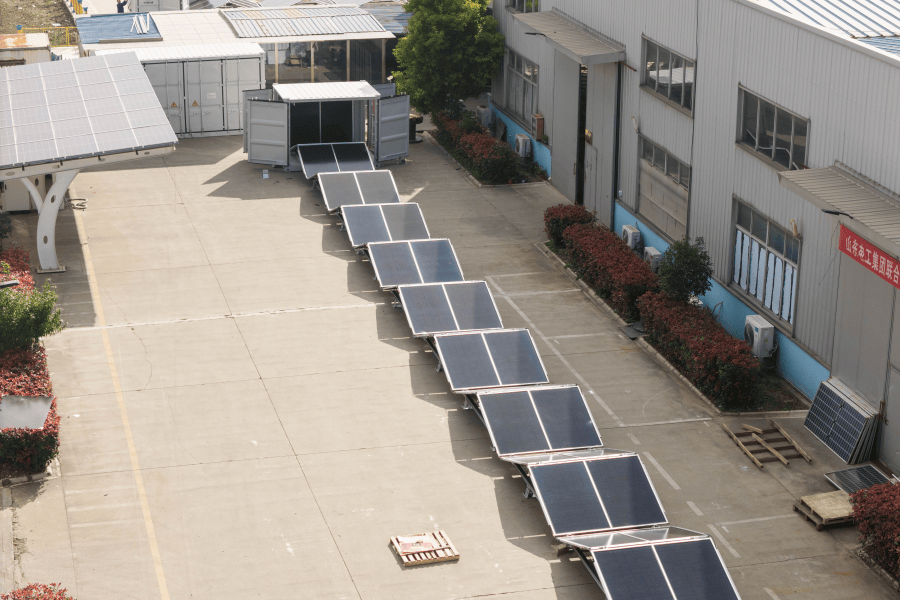
The takeaway? Optimizing a liquid-cooled solar container for construction power is about prioritizing thermal management to unlock reliability, safety, and total cost savings. It's an upfront engineering decision that pays dividends every single day of your project. What's the one power reliability issue on your current or upcoming site that keeps you up at night?
Tags: Construction Site Power UL Standard BESS LCOE Energy Storage Thermal Management Microgrid
Author
James Zhang
20+ years agricultural energy storage engineer / Highjoule CTO