
Optimizing Rapid 1MWh Solar Storage for Rural Electrification & Global Lessons
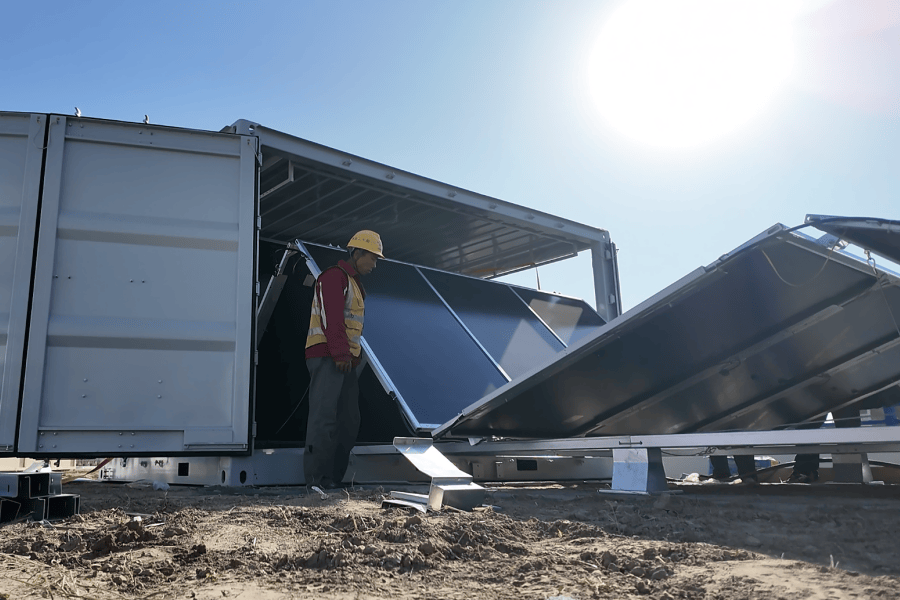
Beyond the Islands: What Rapid 1MWh Solar Storage in the Philippines Teaches Us About Solving Core Grid Challenges Everywhere
Honestly, when we talk about deploying a 1MWh solar storage system for rural electrification in a place like the Philippines, my colleagues in California or Germany might initially think, "That's a different world." But after 20+ years on sites from Texas to Thailand, I've seen this firsthand: the core challenges of getting clean, reliable power where it's needed fast are strikingly similar, whether you're in a remote barangay or supporting a critical facility in the Midwest. The pressure is always the same: do it safely, do it cost-effectively, and for heaven's sake, do it quickly before budgets balloon or communities wait. The "rapid deployment" model being refined in markets like the Philippines isn't just a niche solution; it's a stress test for the technologies and strategies we need everywhere.
Quick Navigation
- The Real Pain Point: It's Never Just About the Megawatt-Hour
- Why "Speed" Kills Your Budget (And How to Fix It)
- The Rapid Deployment Blueprint: Lessons from the Field
- Making It Real in Your Market: Safety, Standards, and Simplicity
The Real Pain Point: It's Never Just About the Megawatt-Hour
Here's the thing everyone in our industry knows but rarely says outright over a coffee: procuring the battery containers is often the easy part. The real monster hiding in the project plan is the "soft costs" and integration hell. I'm talking about endless site-specific engineering, navigating a maze of local utility interconnection rules, and the logistical nightmare of staging multiple components from different vendors. A study by the National Renewable Energy Laboratory (NREL) highlighted that balance-of-system and soft costs can account for over 50% of the total installed cost of a storage system. That's insane! You think you're buying a solution, but you're actually buying a full-time project management headache.
This gets magnified in off-grid or weak-grid rural settings, but let's not kid ourselves - it's the same beast in a commercial/industrial context. A warehouse in Ohio needing backup power or a microgrid for a data center in Ireland faces parallel delays: permitting, custom civil works, complex electrical studies. The time from "order placed" to "energy flowing" is where profits evaporate and ROI models get shaky.
Why "Speed" Kills Your Budget (And How to Fix It)
Agitation? Let me agitate. Time is literally money in storage projects. Every week of delay means additional financing costs, lost revenue from energy arbitrage or demand charge savings, and mounting labor expenses. For a 1MWh system, a one-month delay can easily wipe out the projected savings for an entire quarter. The traditional "design-from-scratch" approach for every single site is a luxury we can no longer afford, especially with grid modernization pressures and incentive deadlines looming.
The solution isn't working harder; it's working smarter by adopting a productized, pre-engineered deployment model. This is the core genius behind optimizing rapid deployment for projects like rural electrification. It means moving away from being a custom fabricator for every job and toward being a precision assembler of proven, standardized modules. Think of it like this: we're not building a one-off house; we're efficiently assembling a fleet of ultra-reliable, code-compliant power plants that all share the same DNA.

The Rapid Deployment Blueprint: Lessons from the Field
So, what does this "rapid deployment" optimization actually look like on the ground? It's a blend of philosophy and hardcore engineering. Let's break down a few key pillars, drawing directly from what we've learned deploying systems in challenging environments that demand speed and resilience.
Pre-Integration is King
The goal is maximum functionality in a container that leaves the factory. That means the battery racks, thermal management system (the HVAC that keeps your cells at the perfect temperature), fire suppression, power conversion systems (PCS), and even the medium-voltage transformer if possible, are all integrated, tested, and talking to each other before shipment. At Highjoule, our approach is to ship what we call a "Grid-Ready" unit. This reduces on-site installation work by up to 70%, turning weeks of electrical hookup into days of connection and commissioning.
Thermal Management: Not an Afterthought
I need to geek out for a second here because this is critical. A battery's performance, lifespan, and safety are dominated by its operating temperature. A poorly managed system degrades faster and is at higher risk. In a rapid deployment model, you can't have a complex, site-built cooling solution. We use a closed-loop, liquid-cooling system that's integral to the container design. It's more consistent and efficient than air-cooling, especially in the wide temperature swings you see in continental US climates or tropical Philippines alike. This isn't just a tech spec; it directly lowers your Levelized Cost of Energy (LCOE) by ensuring the asset lasts for its full cycle life.
Designing for the "C-Rate" Sweet Spot
Decision-makers often ask about system size (MWh), but the power (MW) capability - defined by the C-rate - is just as crucial. For rural electrification and many C&I applications, you don't always need a 4-hour system discharging at a blistering pace (a high C-rate). You need sustained, reliable power. Optimizing often means selecting a battery chemistry and system design with a moderate C-rate (like 0.5C) that's perfectly matched to the solar profile and load demands. This avoids over-engineering, reduces stress on the cells, and again, cuts cost. It's about right-sizing the physics for the duty cycle.
Making It Real in Your Market: Safety, Standards, and Simplicity
All this talk of speed means nothing without an unwavering commitment to safety and compliance. This is where the rubber meets the road for the US and EU markets. A rapid deployment system isn't a shortcut on standards; it's the result of baking those standards into the product from day one.
Every system we design, whether destined for an off-grid community or a German industrial park, is built to the core benchmarks: UL 9540 for the energy storage system, UL 1973 for the batteries, and IEC 62619 for the international market. The beauty of a pre-engineered solution is that this certification is for the product, not just a one-off project. It gives authorities having jurisdiction (AHJs) and utilities confidence, which in turn speeds up permitting - the single biggest delay in many Western projects.
Let me give you a tangible example. We deployed a 1.2MWh system for a critical agricultural processing facility in California's Central Valley. Their challenge was classic: high demand charges, unreliable grid during fire season, and a tight timeline to capitalize on a state incentive. By using a pre-integrated, UL 9540-certified container, we bypassed months of custom engineering review with the utility. The site work was essentially preparing a level pad and pulling the medium-voltage line to the point of interconnection. From delivery to commissioning was under three weeks. The client got their backup power and demand charge savings before the peak season hit. That's the model in action.
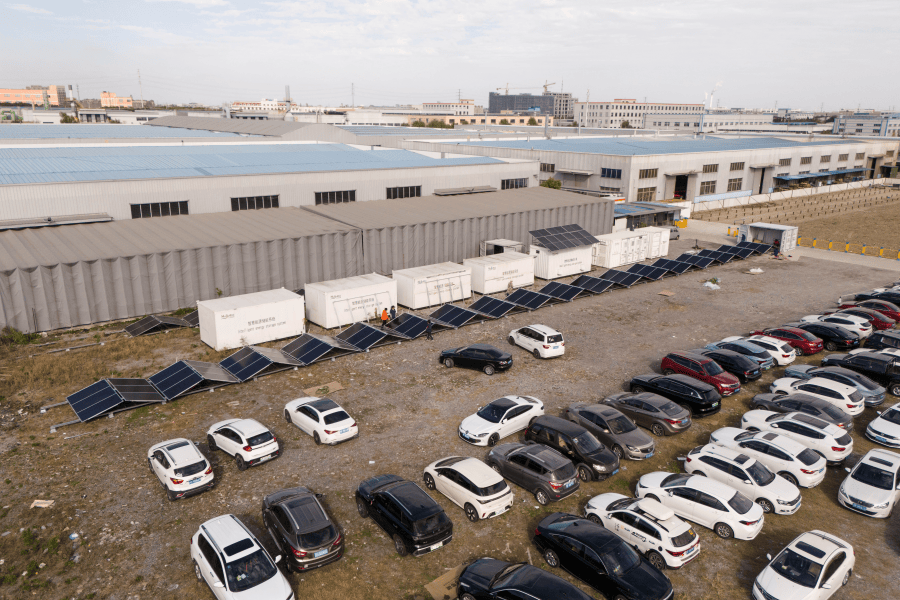
The principles honed for "How to Optimize Rapid Deployment 1MWh Solar Storage for Rural Electrification in Philippines" are a blueprint for resilience everywhere. It's about shifting complexity from the muddy, unpredictable construction site to the controlled, repeatable factory floor. It's about delivering not just a battery, but a predictable outcome: lower lifetime cost (LCOE), guaranteed safety, and most importantly, power that comes online when you need it, not months after you planned for it.
What's the biggest delay you're facing in your current storage project plan? Is it interconnection, permitting, or the physical build-out? The answer might point you toward where a standardized approach could save you the most.
Tags: UL Standard BESS LCOE Rapid Deployment Rural Electrification Solar Storage
Author
James Zhang
20+ years agricultural energy storage engineer / Highjoule CTO