
Optimizing Rapid Deployment Industrial ESS for EV Charging Station Power
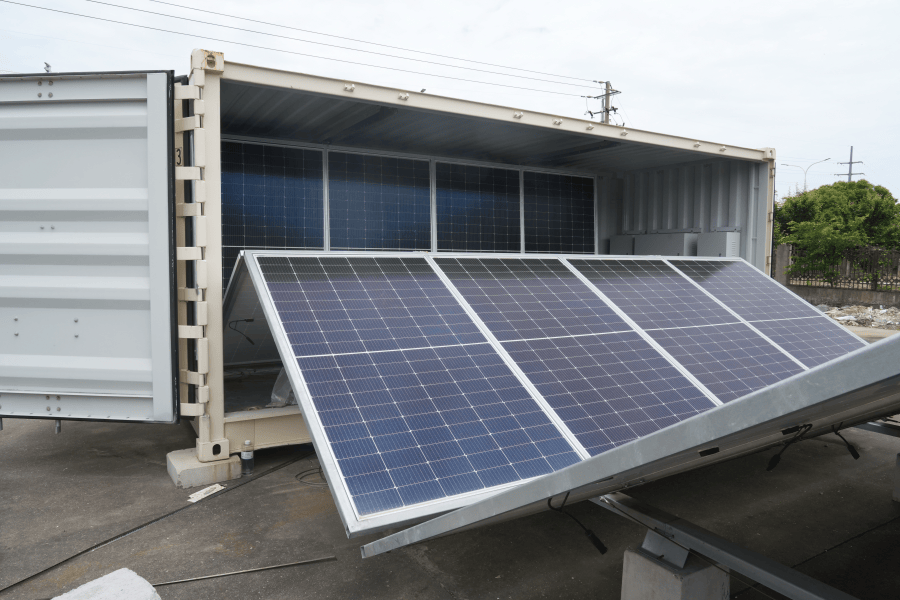
Powering the Fast Lane: A Real-World Guide to Industrial ESS for EV Charging
Hey there. Let's be honest, if you're looking into energy storage for EV charging stations, you're probably caught between two powerful forces: the urgent need to deploy charging capacity yesterday, and the daunting reality of grid constraints and sky-high demand charges. I've been on-site for more of these deployments than I can count, from California truck stops to German logistics hubs, and the story is often the same. Today, I want to cut through the noise and talk practically about how to optimize a rapid deployment industrial ESS container for EV charging stations. It's not just about buying a battery box; it's about engineering a reliable, cost-effective power plant for the electric future.
Quick Navigation
- The Real Grid Problem Isn't Just Capacity
- Why "Rapid Deployment" ESS Changes the Game
- The On-Site Optimization Playbook
- A Case in Point: The California Logistics Hub
The Real Grid Problem Isn't Just Capacity
We all know the grid is congested. Getting a connection for a multi-megawatt EV charging depot can take years and millions in upgrade costs. But the deeper pain point I see firsthand is volatility. When four heavy-duty trucks plug in simultaneously at 1 MW each, that's a massive, instantaneous spike in demand. The local transformer doesn't just groan; it can cause voltage dips that affect other businesses. And your utility bill? Those demand charges can turn a profitable charging operation into a loss-maker overnight.
This isn't theoretical. The National Renewable Energy Lab (NREL) highlights that high-power charging can increase a site's peak demand by 300% or more. You're not just paying for the energy you use; you're being penalized for that brutal, short-term peak all month long. An industrial ESS container acts like a shock absorber, but only if it's optimized correctly. A poorly sized or managed system is just a very expensive paperweight.
Why "Rapid Deployment" ESS Changes the Game
The promise of a pre-integrated, containerized ESS is speed. You get a "power plant in a box" that's shipped, connected, and commissioned in weeks, not years. But here's the agitating part: rapid deployment does not mean "set it and forget it." The "rapid" part gets it on the ground. The "optimization" part is what makes it pay for itself.
I've seen containers show up with fantastic specs on paper, but their internal battery management isn't calibrated for the violent charge-discharge cycles of a busy charging station. Or their thermal management can't handle a 45C (113F) day in Texas with full sun on the container and batteries discharging at a continuous 2C rate. That's where the real engineering comes in.
The On-Site Optimization Playbook
So, how do we optimize? Let's talk like engineers over coffee. It boils down to three things: Right-Sizing, Right-Managing, and Future-Proofing.
1. Right-Sizing: It's About Power, Not Just Energy
Everyone focuses on megawatt-hours (MWh, the energy). For EV charging, the megawatt (MW, the power) rating is often more critical. This is where C-rate matters. Simply put, a battery's C-rate tells you how fast it can charge or discharge relative to its capacity. A 1C rate means a 2 MWh battery can deliver 2 MW of power for one hour. For high-power charging, you need a high sustained C-rate. But pushing batteries constantly at high C-rates generates heat and stresses the cells. Optimization means selecting cell chemistry and designing the system architecture for these high-power bursts, not just long-duration storage. At Highjoule, we often design hybrid systems within the container - blending different battery types to balance peak power capability with cycle life and cost.
2. Right-Managing: The Brains and The Brawn

Thermal Management is non-negotiable. In a sealed container with batteries working hard, heat is the enemy. An optimized system has an advanced liquid cooling system that can handle peak loads and ambient extremes, keeping every cell within a tight temperature band. This extends lifespan and prevents safety shut-downs right when you need power most.
Then there's the Energy Management System (EMS). A good EMS isn't just a dashboard; it's an autonomous financial optimizer. It must predict charging demand (maybe integrating with station scheduling software), understand your utility rate structure in real-time, and decide when to draw from the grid, when to discharge the battery, and when to charge the battery cheaply. Its goal? Minimize your total Levelized Cost of Energy (LCOE) for the charging service - the all-in cost of every kilowatt-hour you deliver.
3. Future-Proofing: Compliance and Scalability
In the US and EU, you sleep well at night knowing your system is built to UL 9540 and IEC 62443 standards. These aren't just checkboxes; they're rigorous frameworks for safety and cybersecurity that we design into every Highjoule container from day one. Optimization also means designing for easy scalability. Maybe you start with two containers today. An optimized layout and electrical design lets you plug in a third next year with minimal downtime and cost.
A Case in Point: The California Logistics Hub
Let me give you a real example. We worked with a fleet operator in the Inland Empire, California. Their challenge: power twelve 360kW chargers for electric trucks without a $2 million grid upgrade and insane demand charges. They needed a solution in under six months.
We deployed two 1.5 MW / 3 MWh pre-fabricated ESS containers. Here's how optimization played out on-site:
- Sizing: We modeled their fleet schedules and sized for power first to cover simultaneous charging peaks, then added energy capacity for demand charge management.
- Management: The integrated EMS was programmed with the local utility's specific (and complex) tariff. It pre-charges the batteries overnight at super off-peak rates and strategically discharges during the afternoon peak and charging rushes, slicing their demand charge by over 80%.
- Deployment: Because the containers were pre-certified (UL 9540A, IEEE 1547), interconnection approval was faster. We were providing grid services in under 14 weeks from contract signing.
The result? They avoided the grid upgrade, their charging electricity costs dropped, and the system provides backup power for their facility. That's the optimized outcome.
Making It Work For Your Project
Honestly, the biggest mistake I see is treating the ESS as a commodity purchase. It's a core piece of energy infrastructure. When you're evaluating solutions, ask the hard questions:
- "How is the thermal system designed for sustained high C-rate discharge in my climate?"
- "Can your EMS model my specific utility tariffs and show me the projected LCOE impact?"
- "Show me the certification reports (UL, IEC) for this exact container configuration."
Our approach at Highjoule is to start with these questions. We bring 20 years of field experience into designing containers that aren't just rapidly deployed, but are rapidly profitable and reliable. We handle the complex integration so you can focus on running your charging business.
So, what's the specific demand charge tariff you're trying to tackle? I'd love to hear about the unique puzzle your site presents.
Tags: UL Standard BESS Rapid Deployment Energy Storage Microgrid Industrial ESS EV Charging
Author
James Zhang
20+ years agricultural energy storage engineer / Highjoule CTO