
How to Optimize Scalable Modular BESS for Construction Site Power: A Practical Guide
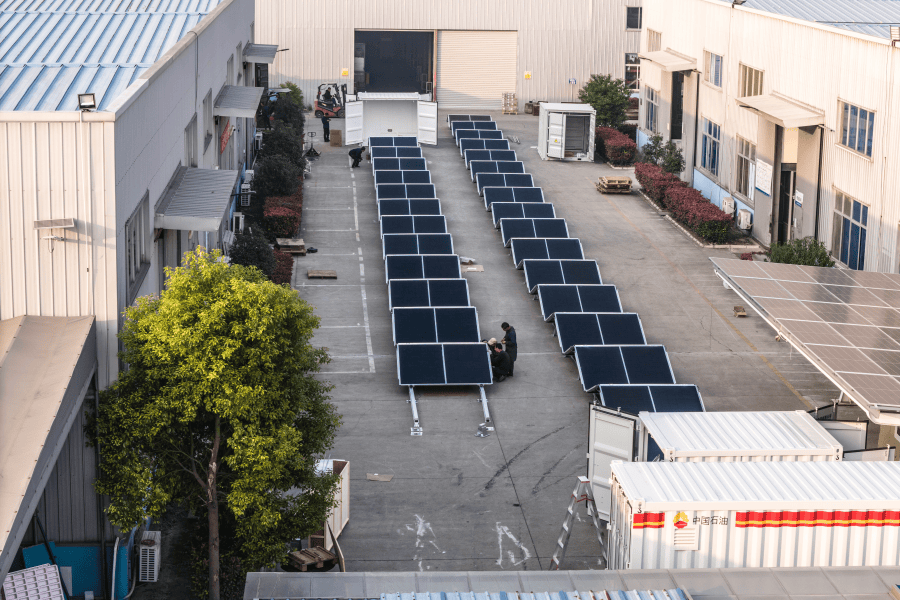
Table of Contents
- The Real Power Problem on Your Construction Site
- Why Traditional Solutions Fall Short (And Cost You More)
- Modular BESS: The On-Site Power Game Changer
- Optimization in Action: The 4 Key Considerations
- A Real-World Case Study: From Grid Delay to On-Site Power
- Making the Right Choice for Your Project
The Real Power Problem on Your Construction Site
Let's be honest. If you're managing a construction project in California, Texas, or anywhere across the EU, you know the drill. The site is ready, the crews are scheduled, but the permanent grid connection? That's still six months out, tied up in permits and utility queues. Or maybe you've got the connection, but the peak demand charges are eating your budget alive every time you fire up the heavy equipment. I've seen this firsthand on site after site C the scramble for temporary diesel generators, the noise, the fumes, the constant refueling logistics, and the sheer unpredictability of it all.
It's more than an inconvenience; it's a direct hit to your project's bottom line and timeline. The International Energy Agency (IEA) has highlighted the construction sector's reliance on temporary, carbon-intensive power as a significant hurdle for both cost control and decarbonization goals. You're stuck between the rock of project delays and the hard place of spiraling, unpredictable energy costs.
Why Traditional Solutions Fall Short (And Cost You More)
Diesel gensets have been the default for decades. But in 2025, they're a liability. Beyond the carbon footprint C which more and more project specs and local regulations are penalizing C let's talk about the hidden costs. The fuel price volatility alone can blow a budget. Then add in the maintenance, the noise compliance issues in residential areas, and the fact that they're often oversized for base load and undersized for peak demand, leading to inefficiency.
I was on a project in Germany's North Rhine-Westphalia where the genset fuel costs came in 40% over budget due to a price spike. The project manager was pulling his hair out. That's the agitation point: traditional power turns a fixed-cost item into a high-risk, variable-cost gamble. It also does nothing to help with that other monster: demand charges from the grid. When you need a short, powerful burst for equipment, the utility sees a massive spike and charges you a premium for it, month after month.
Modular BESS: The On-Site Power Game Changer
This is where a well-optimized, Scalable Modular Battery Energy Storage System (BESS) changes everything. Think of it not just as a battery, but as a silent, mobile power plant you can drop on-site in a matter of days. The core idea is flexibility. Instead of one massive, fixed battery, a modular system uses pre-engineered, containerized or skid-mounted "blocks" of energy storage.
Why does this matter for construction? Because your power needs evolve. Phase 1 might just need power for site offices and lighting (a low load). Phase 3 might involve heavy crane and welding operations (a huge, intermittent load). A modular BESS lets you start with what you need and scale up by literally adding more modules as the project progresses. Then, when the project ends, you can redeploy the entire system or parts of it to the next site. This drastically improves your Levelized Cost of Energy (LCOE) C that's the total lifetime cost of the power you're using. You're not paying for capacity you don't need, and the asset has a long, useful life across multiple projects.

Optimization in Action: The 4 Key Considerations
So, how do you optimize a modular BESS for construction? It's not just about buying boxes. From my 20 years in the field, here's what truly matters:
- Right-Sizing with Scalability in Mind: We don't just look at peak load. We analyze your equipment schedule, duty cycles, and the potential for solar pairing. Do your cranes have regenerative braking that can feed energy back? That changes the math. The goal is to specify a base system that covers 80% of your needs, with a clear, plug-and-play path to add more power (kW) and energy (kWh) modules.
- Thermal Management is Non-Negotiable: Construction sites are harsh. Batteries hate extreme heat and cold. An optimized system has a robust, independent thermal management system built into each module. This isn't just a fan; it's a liquid-cooled or advanced climate-control system that keeps cells at their ideal temperature range. This is the single biggest factor in long-term battery health and safety, something Highjoule engineers to the highest UL and IEC standards.
- Understanding C-rate for Equipment Demands: This is a technical term made simple. C-rate is how fast you can pull energy out of the battery. A high C-rate battery is like a sports car C it can deliver a huge burst of power quickly, perfect for starting a large motor. A low C-rate battery is like a long-haul truck C great for steady power over time. For construction, you often need a blend, or a system designed for high pulses. An optimized BESS is configured so its C-rate capability matches the surge demands of your specific equipment, preventing downtime.
- Grid Interaction & Safety by Design: Whether you're in a remote location or tied to a soft grid, the system must have built-in grid-forming capabilities. This means it can create a stable, clean "grid" by itself for the site. And safety isn't just a checkbox. It's integrated design: from cell-level fusing and continuous gas monitoring to the physical robustness of the container itself. It must meet local fire codes (like NFPA 855 in the US) and have the right certifications (UL 9540, IEC 62933) from day one.
A Real-World Case Study: From Grid Delay to On-Site Power
Let me give you a concrete example. We worked with a developer on a commercial complex project in Northern California. The utility connection was delayed by 8 months. Instead of leasing diesel gensets for the duration, they opted for a modular BESS solution from Highjoule.
The Challenge: Provide reliable, 24/7 power for site offices, material fabrication, and intermittent heavy equipment (a 300 kW crane) for 8 months, with the ability to later use the system for peak shaving once the grid was live.
The Optimized Solution: We deployed two 500 kWh modular containers with a high C-rate design. They were paired with a small, temporary solar array to offset daytime base loads. The system was configured for dual-mode operation: off-grid island mode initially, with a seamless switch to grid-tied peak shaving mode later.
The Outcome: The project stayed on schedule. They eliminated an estimated 120,000 liters of diesel consumption and the associated refueling costs. When the permanent grid connected, the system was reconfigured in a day to start cutting the site's peak demand charges, delivering a continuous ROI. The flexibility was the key.

Making the Right Choice for Your Project
Optimizing a modular BESS isn't a one-size-fits-all spreadsheet exercise. It requires a partner who understands both the technology and the brutal realities of a construction timeline. You need a provider whose systems are pre-certified to your region's standards, so permitting doesn't become a new bottleneck.
At Highjoule, we've built our product line around this principle of scalable, site-tough flexibility. Our modules are designed to be interconnected, have military-grade environmental protection, and come with the software to manage energy flow based on your real-time priorities C whether that's cost savings, emissions reduction, or pure reliability.
The question isn't really if battery storage is viable for construction. The question is, how much can it save your next project in time, fuel, and headaches? What's the one power reliability issue on your current site that keeps you up at night?
Tags: UL Standard BESS LCOE Europe US Market Construction Power Modular Energy Storage Renewable Energy
Author
James Zhang
20+ years agricultural energy storage engineer / Highjoule CTO