
How to Optimize Scalable Modular Industrial ESS Container for Industrial Parks
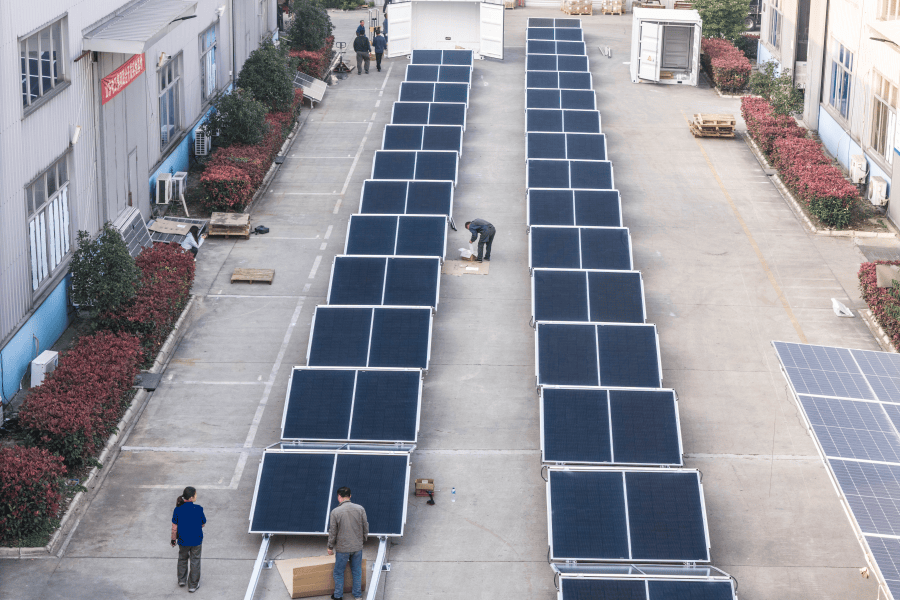
Table of Contents
- The Real Problem Isn't Just Power, It's Predictability
- The Hidden Costs of Getting It Wrong
- The Modular, Scalable Answer: More Than Just a Box
- Making It Work: The Nuts and Bolts of Optimization
- A Case in Point: From Blueprint to Reality
- Your Next Steps: Beyond the Spec Sheet
The Real Problem Isn't Just Power, It's Predictability
Let's be honest. If you're managing an industrial park in Ohio or overseeing a manufacturing campus in Bavaria, your primary headache isn't a lack of energy solutions. It's volatility. One minute you're leveraging a great time-of-use rate, the next you're hit with a demand charge that wipes out a quarter's profit margin. Or, you've invested in solar to cut costs and meet ESG goals, only to find you're curtailing (essentially throwing away) excess energy because the grid can't take it back. The IEA notes that grid integration remains a top challenge for renewable energy growth worldwide. That's the core problem: industrial energy costs and carbon footprints are becoming unpredictable, and traditional infrastructure isn't agile enough to cope.
The Hidden Costs of Getting It Wrong
I've seen this firsthand on site. A client once bought a "cheap" containerized system, viewing it as a simple capital expense. The agitation begins post-installation. The system's thermal management couldn't handle a Midwestern heatwave, leading to forced derating - just when they needed peak shaving the most. Their "savings" vanished. Then, during an expansion, they realized the system was a monolithic block. Adding capacity wasn't modular; it required a whole new, separate container, doubling balance-of-system costs - new transformers, switchgear, footprint. The Levelized Cost of Energy (LCOE), the true measure of lifetime cost, skyrocketed. Worse, some components weren't fully UL 9540 certified, creating insurance and permitting nightmares that delayed the project for months. This isn't just about buying hardware; it's about buying future risk or future flexibility.

The Modular, Scalable Answer: More Than Just a Box
So, how do you optimize a scalable modular industrial ESS container? The solution isn't a single product, it's a philosophy of design. Think of it like building with high-performance LEGO blocks. Instead of one giant battery, an optimized system uses standardized, factory-integrated modules (battery, BMS, thermal control) inside a container. This is the key. You start with what you need today - say, a 500 kWh unit for peak shaving. When your park expands or your solar PV doubles, you don't buy a new container. You add pre-engineered modules within the existing footprint, or slot in another identical container that talks seamlessly to the first. This is how you truly optimize for scalability: minimizing lifetime LCOE by protecting your initial infrastructure investment.
Core Optimization Pillars
- Design for Density & Cooling: An optimized container maximizes energy density without compromising safety. We use channel-based air or liquid cooling that follows the cell's C-rate demands. C-rate, simply put, is how fast you charge or discharge the battery. High C-rate for intense grid services creates more heat. The thermal system must be designed to handle that continuously, not just at peak. Honestly, this is where most off-the-shelf designs fail in the field.
- Standards as a Foundation, Not an Afterthought: True optimization means UL 9540, IEC 62619, and IEEE 1547 compliance is baked into the module design from day one. It shouldn't be a costly retrofit. This isn't just about compliance; it's about faster permitting, lower insurance premiums, and unquestioned safety for your assets and people.
- Grid-Forming Intelligence: For parks moving toward microgrids, the inverter's capability is crucial. An optimized container includes inverters that can "form" a grid (black start capability), not just follow one, providing incredible resilience.
Making It Work: The Nuts and Bolts of Optimization
Let's get practical. Optimization happens in three layers:
1. The Hardware Layer: It starts with cell selection matched to the duty cycle. For frequent, shallow cycles, different cells are optimal vs. infrequent, deep discharge. The module design must have integrated monitoring for voltage, temperature, and gas detection. At Highjoule, our modules come with this as standard, and the data is accessible via a single pane of glass.
2. The Software & Controls Layer: Hardware is dumb without smart software. The system must integrate with your energy management system (EMS) and the local utility's signals. Can it automatically switch between demand charge management, solar self-consumption, and frequency response based on real-time economics? That's where the ROI is generated. According to NREL, advanced controls can increase BESS value by up to 40%.
3. The Deployment Layer: This is my world. Optimization means the container is pre-commissioned in the factory. On site, it's a "plug-and-play" connection to the medium-voltage switchgear. We've cut deployment time by 60% using this method. It also means designing service aisles and clear access for module replacement, if ever needed, without taking the whole system offline.
A Case in Point: From Blueprint to Reality
Take a project we completed last year for a food processing cluster in California's Central Valley. Their pain points were classic: huge refrigeration load causing demand spikes, new CAISO rules for grid interconnection, and a desire to add solar.
Challenge: They needed immediate peak shaving but had a 3-year expansion plan. They needed a system that could start at 1 MWh and grow to 4 MWh without redesigning the electrical yard or redoing permits.
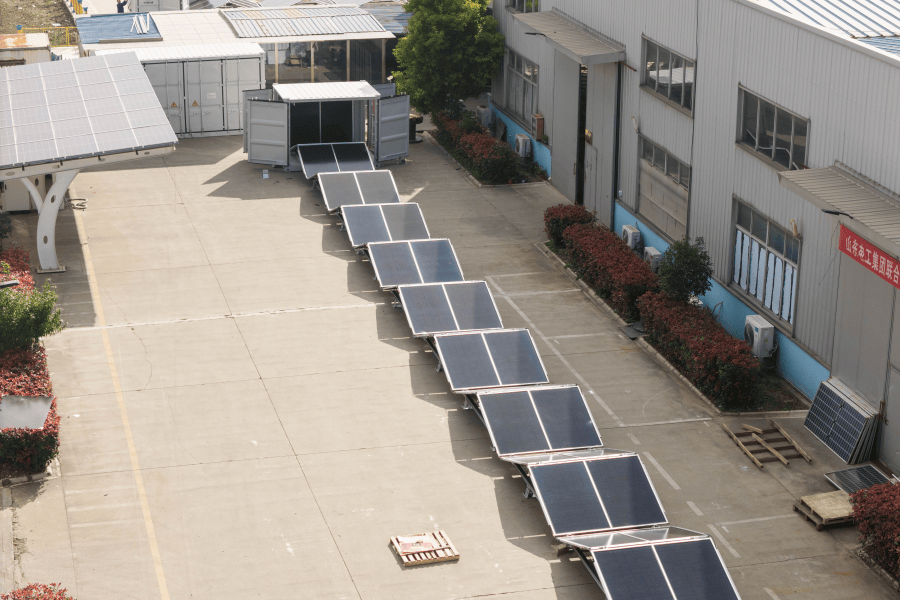
Our Optimized Solution: We deployed a single 40-foot UL 9540-certified container with a 1 MWh capacity but with a master electrical design and physical space reserved for three additional modular battery racks. The container's cooling and power conversion systems were already sized for the full 4 MWh. The software was pre-configured for the additional modules.
Outcome: Phase 1 went live in 8 weeks for permitting (the UL certification was a key accelerator). They're now saving $120,000 monthly on demand charges. Next year, when their new processing line comes online, we'll ship three pre-assembled rack modules. They'll be installed over a weekend with minimal disruption. That's optimized scalability. The park manager sleeps better knowing the energy budget is predictable.
Your Next Steps: Beyond the Spec Sheet
So, when you're evaluating how to optimize a scalable modular industrial ESS container, move beyond the kWh and dollar quotes. Ask different questions: What's the true LCOE over 15 years if I scale up? Can you show me the UL 9540 certification for this specific configuration? How does the thermal management design handle a 1C continuous discharge at 95F ambient? Walk me through the software's grid-forming capability and cybersecurity (like IEC 62443). What does the module-level service procedure look like?
The right partner won't just sell you a container. They'll co-engineer a flexible asset that evolves with your industrial park. What's the one energy volatility challenge you wish you could solve tomorrow?
Tags: UL Standard BESS LCOE Industrial Energy Storage IEEE 1547 Modular ESS
Author
James Zhang
20+ years agricultural energy storage engineer / Highjoule CTO