
Optimizing Scalable Modular Pre-integrated PV Containers for Your Eco-Resort

Contents
- The Quiet Struggle: Powering Paradise Isn't Easy
- Beyond the Brochure: The Real Cost of "Green" Power
- The Modular Answer: It's More Than Just a Box
- Your Optimization Playbook: From Spec Sheet to Sunset Cocktails
- A Partner, Not Just a Product
The Quiet Struggle: Powering Paradise Isn't Easy
Let's be honest. When a guest books a stay at an eco-resort, they're dreaming of pristine nature, not power inverters. But you and I, we live in the real world behind the brochure. I've been on-site from the Caribbean to California, and the challenge is almost universal: how do you deliver 24/7, reliable, truly clean power in locations where the grid is weak, non-existent, or wildly expensive?
The classic approach - oversizing a solar array and hoping for the best - falls apart at dinner time. Cloud cover rolls in, demand spikes (everyone wants the A/C and hot water after a day hiking), and suddenly you're staring down the barrel of a noisy, fume-belching diesel generator. It shatters the guest experience and your sustainability goals in one go. This isn't a hypothetical; it's the daily tension for resort operators. The core problem isn't just generating solar energy; it's storing and dispatching it intelligently to match a resort's unique, often unpredictable, load profile.
Beyond the Brochure: The Real Cost of "Green" Power
So, you decide to look at battery storage. The traditional, stick-built BESS (Battery Energy Storage System) on-site can feel like building a small power plant from scratch. I've seen projects where the balance-of-system costs - the concrete pad, the complex HVAC, the labor-intensive wiring, the safety enclosures - ballooned to nearly 40% of the total CAPEX. Then there's the timeline. Coordinating multiple trades in a remote location? A 6-month install can easily stretch to 12.
And the pain doesn't stop at commissioning. Let's talk LCOE - the Levelized Cost of Energy. This is your true cost per kWh over the system's life. If your batteries are mismatched to your solar profile or have poor thermal management (causing them to degrade faster), your LCOE skyrockets. According to a National Renewable Energy Laboratory (NREL) analysis, improper system sizing and integration can increase LCOE by 20-30% over a decade. That's profit straight off your bottom line. The risk isn't just financial, either. Safety is paramount. You need a system that doesn't just meet local codes but exceeds them, with certifications like UL 9540 and IEC 62619 being the non-negotiable table stakes, especially in the US and EU markets.
The Modular Answer: It's More Than Just a Box
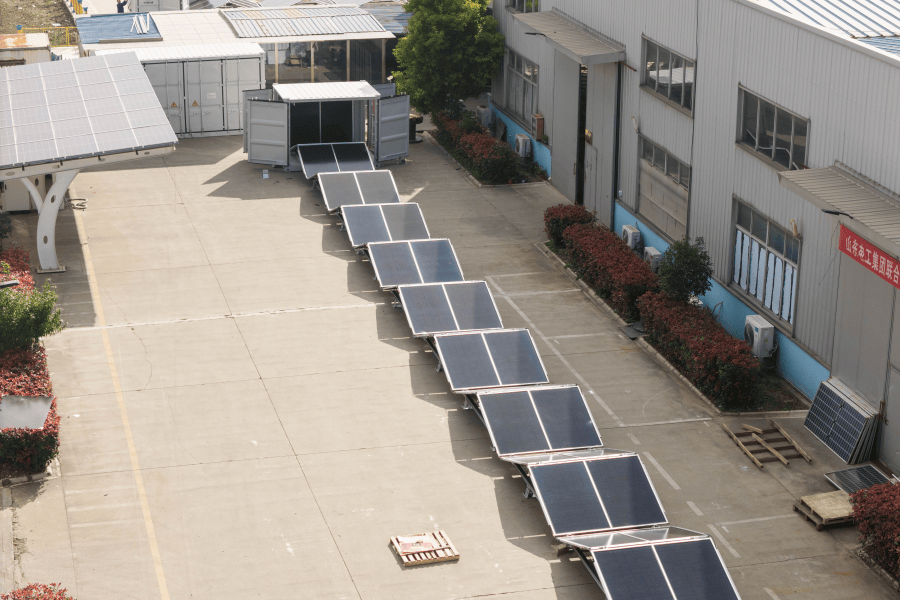
This is where the scalable, modular, pre-integrated container shines - but only if it's optimized. Think of it not as a commodity product, but as the beating heart of your resort's energy ecosystem. At Highjoule, we view these containers as a platform. The "pre-integrated" part is crucial: it means the batteries, inverter, thermal management, and safety systems are factory-tested as a single unit. Honestly, the difference this makes on-site is night and day. I remember a project in the Greek islands where we had a 500 kWh container powered up and syncing with the solar field in under 72 hours after delivery. The alternative would have been months of on-site assembly.
The magic is in the optimization for your specific context. A resort's energy needs are not the same as a factory's. You have morning peaks (kitchens, laundry), afternoon lulls (guests are out), and massive evening peaks. Your system's C-rate - basically, how fast it can charge and discharge energy - needs to handle these rapid swings without stressing the battery cells. A system optimized for slow, steady grid services will wear out prematurely in your application.
Your Optimization Playbook: From Spec Sheet to Sunset Cocktails
So, how do you optimize? It starts with a conversation, not a catalog. Here's what we've learned from deploying these systems from Texas glamping sites to alpine lodges:
- Right-Size with Scalability in Mind: Don't overbuy Day 1. A modular design lets you start with a 250 kWh container that covers your critical loads (kitchen, admin) and add identical 250 kWh blocks as your resort expands. This keeps initial CAPEX in check and future-proofs your investment. We model this using real weather data and your anticipated occupancy to find the sweet spot.
- Demand Thermal Management Excellence: This is the unsung hero. Batteries degrade fastest when they're too hot or too cold. A cheap, undersized HVAC unit buried in the container will cost you a fortune in lost battery life. We insist on N+1 redundant cooling systems with precise climate zones. It adds a bit to the upfront cost but dramatically lowers your LCOE by ensuring the batteries last their full 15+ year lifespan.
- Insist on Grid-Forming Capability: For true energy independence, your system should be able to "form" a stable microgrid if the main grid goes down. This isn't standard on all containers. This feature allows the BESS to seamlessly take over and keep the lights (and credit card machines) on without a flicker, creating a "grid" for your solar to feed into. It's a game-changer for resilience.
- Software is the Brain: The hardware stores energy; the software makes it profitable. Your system needs an intelligent energy management system (EMS) that can prioritize solar self-consumption, shave peak demand charges if connected to the grid, and even schedule charging/discharging based on occupancy forecasts. It should have a simple dashboard your facilities manager can use, not just our engineers.
Take a project we completed for a boutique eco-lodge in Colorado. Their challenge was winter reliability - heavy snow, grid outages, and a desire to be fossil-fuel-free. We deployed a modular, UL 9540-certified container solution with a high C-rate battery chemistry suited for rapid discharge to handle heating loads. The integrated EMS prioritizes heat pumps during cold snaps. The result? They've eliminated their propane backup, and the owner sleeps soundly during blizzards. The system paid for itself in avoided fuel costs and demand charges in under 5 years.
A Partner, Not Just a Product
Optimizing a modular container solution isn't a one-time purchase. It's a long-term partnership for the life of your asset. At Highjoule, our job starts with understanding your resort's rhythm and doesn't end at commissioning. We provide localized support and proactive monitoring because I know from being on-site: a fault alarm at 2 a.m. on a holiday weekend needs a response, not an auto-reply email.
The goal is to make your energy infrastructure as reliable and invisible as the sunrise your guests came to see. So, what's the biggest energy pain point keeping you up at night - is it peak demand charges, diesel dependency, or simply achieving that next level of sustainability for your brand?
Tags: UL Standard BESS LCOE Modular Energy Storage Microgrid Eco-Resort Solar Energy
Author
James Zhang
20+ years agricultural energy storage engineer / Highjoule CTO