
How to Optimize Tier 1 Cell Mobile Power Containers for Construction Site Power
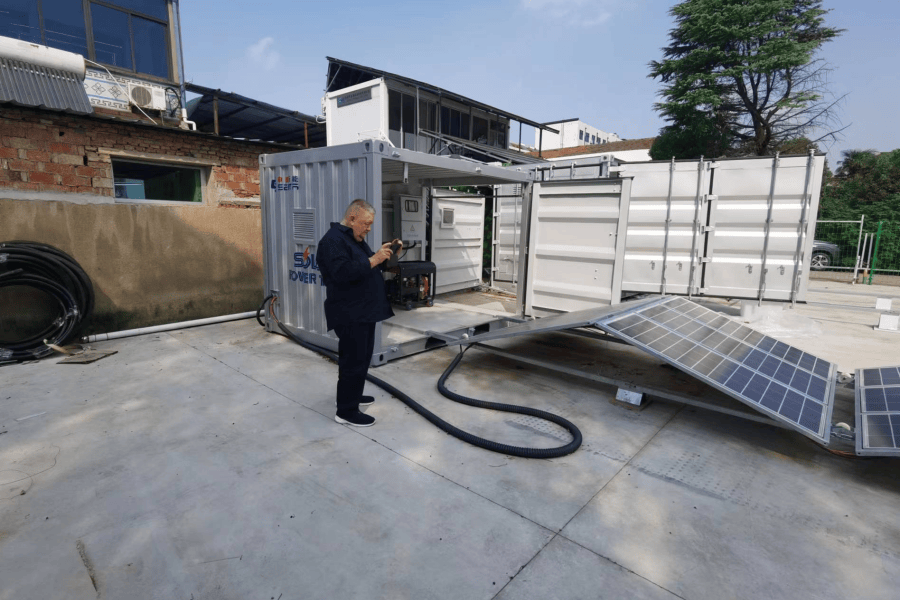
Table of Contents
- The Real Problem on Your Construction Site
- Why "Good Enough" Power Isn't Good Enough
- The Mobile Power Container: More Than Just a Big Battery
- The Technical Heart: Optimizing Tier 1 Cells for the Real World
- A Real-World Story: Powering a Texas Highway Project
- So, What's the Next Step for Your Project?
The Real Problem on Your Construction Site
Let's be honest. If you're managing a remote or large-scale construction project in the US or Europe, you know the power headache all too well. The diesel generators are roaring, fuel costs are a constant line item that's hard to predict, and the noise... well, let's just say the neighbors aren't fans. But the bigger issue, the one I've seen stall projects firsthand, is reliability. You need consistent, clean power for your critical equipment - cranes, welders, site offices, material processing. A generator hiccup can mean hours of downtime, missed deadlines, and budget overruns that make everyone nervous.
It's not just about convenience anymore. More and more, local regulations - think California's air quality rules or European emission standards - are putting the squeeze on traditional diesel use. You're caught between needing reliable power and meeting stricter environmental and noise mandates. That's the real pinch point.
Why "Good Enough" Power Isn't Good Enough
Now, you might be thinking, "We've looked at battery solutions before." And that's where the aggravation often amplifies. A lot of mobile power units on the market are built with a "one-size-fits-none" approach. They take commodity cells, pack them in a box, and call it a day. The problem? Construction sites are brutal. Temperature swings, dust, vibration, and demanding charge/discharge cycles - what I call the "construction C-rate" - will eat a standard battery system for lunch.
The financial pain is real. According to the National Renewable Energy Laboratory (NREL), fuel and maintenance for temporary power can consume up to 15-25% of a remote project's operational budget. Even worse, a system failure due to poor thermal management or cell degradation can lead to project delays costing tens of thousands per day. You're not just buying a battery; you're buying risk management.
The Mobile Power Container: More Than Just a Big Battery
This is where a properly optimized Tier 1 battery cell mobile power container changes the game. Think of it not as a replacement for a generator, but as the intelligent, silent heart of a hybrid or primary power system. The goal isn't just to store energy, but to deliver site-ready power: stable, silent, emissions-free, and, crucially, predictable in its cost and performance.
The magic word here is "optimized." It means the system is engineered from the ground up for the specific stresses of a construction environment. At Highjoule, when we build our mobile container solutions, we don't start with the container. We start with the site conditions - the dust, the heat of a Arizona summer, the cold of a German winter - and work backwards.
The Technical Heart: Optimizing Tier 1 Cells for the Real World
Everyone talks about "Tier 1" cells, and for good reason. They come from manufacturers with proven, automotive-grade quality and traceability. But slapping Tier 1 cells into a container isn't optimization. Here's what we focus on, in plain English:
- Thermal Management is Everything: Cells degrade fast if they're too hot or too cold. A site in Nevada can see 45C (113F) ambient temperature. Our systems use liquid cooling that's actually designed for zero-maintenance in dusty conditions - something I learned was critical after seeing air filters clog in a week on a Midwest wind farm project. This keeps the cells in their happy zone, extending life by years.
- Understanding the "Construction C-rate": C-rate is basically how fast you charge or discharge the battery. A crane lifting a heavy load creates a sudden, high power demand (a high "discharge" C-rate). Our battery management system (BMS) is tuned for these spikes, drawing power smoothly without stressing the cells. It's the difference between a sprinter having a heart attack and a marathon runner pacing themselves.
- LCOE - The Real Cost Metric: Levelized Cost of Energy (LCOE) is what finance folks care about. It's the total cost of owning and operating the system over its life, divided by the energy it produces. By optimizing cell life through better thermal control and smart cycling, we drive down the LCOE. You might pay a bit more upfront, but the total cost over 5-10 years is significantly lower than diesel or a poorly built battery system. It's an asset, not a consumable.

And none of this works without a fortress of safety and compliance. Every system we ship is built to the relevant UL (like UL 9540 for energy storage systems), IEC, and IEEE standards. This isn't just a checkbox for us; it's what lets you, the project manager, sleep at night knowing the insurance and safety officers are satisfied.
A Real-World Story: Powering a Texas Highway Project
Let me give you a concrete example. We deployed a 1 MWh mobile power container for a major highway expansion project in West Texas. The challenge: powering a remote concrete batch plant and worker facilities, far from the grid, with a mandate to reduce diesel use by 70%.
The system was paired with a small, efficient natural gas generator (as a backup/charger). The container, with its Tier 1 NMC cells and our proprietary cooling system, handled the daily baseload and the peak demands from the batch plant mixer. Honestly, the site manager's first comment after a month was about the silence - they could actually hear radio communications.
The result? They cut diesel fuel deliveries from weekly to monthly, met their emissions targets, and - this is key - had zero power-related downtime in the first 8 months of operation. The predictable power cost also helped them lock in their budget more accurately. The system wasn't just a power source; it was a risk mitigation tool.
So, What's the Next Step for Your Project?
Optimizing a mobile power container isn't about buying the most expensive cells. It's about the total system integration - the BMS, the thermal design, the ruggedization, and the deep understanding of how power gets used on a live site. It's about moving from a capital expense that depreciates to an operational asset that delivers predictable value.
My advice? When you evaluate solutions, ask the hard questions: "How is the thermal system designed for my specific climate?" "Can you show me the LCOE model for my duty cycle?" "What's your on-site support and maintenance protocol if I'm in a remote location?" The answers will tell you everything you need to know.
What's the biggest power reliability challenge you're facing on your upcoming project?
Tags: Construction Site Power UL Standard BESS Mobile Power Container Tier 1 Battery Cell Energy Storage Optimization IEEE
Author
James Zhang
20+ years agricultural energy storage engineer / Highjoule CTO