
Manufacturing Standards for Air-Cooled BESS: Why They Matter for Data Center Backup
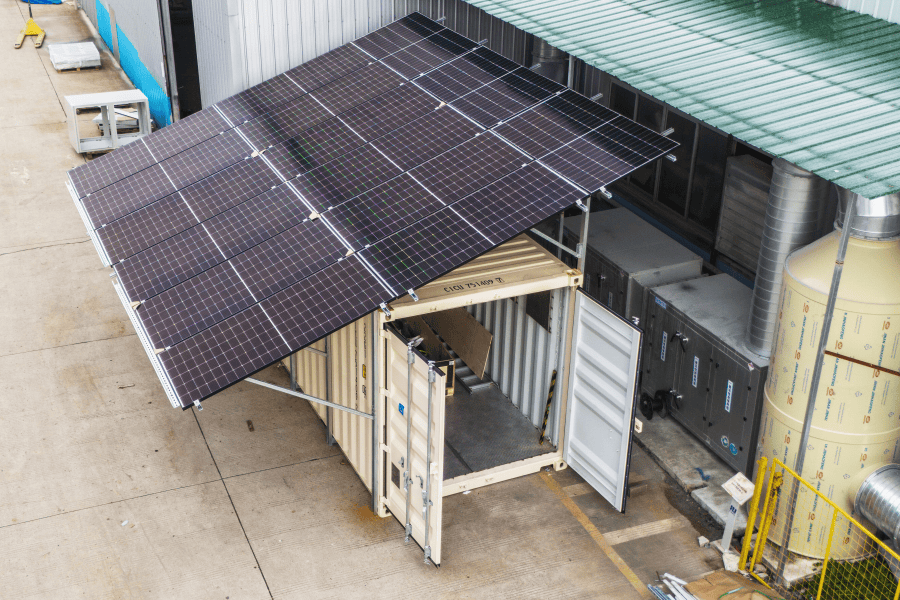
Table of Contents
- The Silent Weak Link in Data Center Resilience
- When Good Batteries Go Bad: The Agitation of Unseen Risks
- The Blueprint for Confidence: Manufacturing Standards as the Core Solution
- Beyond the Spec Sheet: What Truly Matters in a Standard
- A Case in Point: The North Carolina Hyperscale Project
- Your Next Step: Questions to Ask Your BESS Provider
The Silent Weak Link in Data Center Resilience
Let's be honest. When you're planning a data center backup power system, the conversation is dominated by the big-ticket items: the PV array capacity, the inverter specs, the switchgear. The battery container itself? It's often treated as a simple metal box, a afterthought. I've been on sites from Silicon Valley to Frankfurt, and this is the quiet, pervasive oversight I see. The focus is on the cells inside, but the container that houses, protects, and cools them is what makes or breaks the system's long-term viability. A poorly manufactured enclosure isn't just a housing issue; it's a single point of failure for your entire backup strategy.
When Good Batteries Go Bad: The Agitation of Unseen Risks
Here's the hard truth from the field. Premium battery cells operating in a sub-standard environment will underperform, degrade faster, and can even become a liability. I've seen this firsthand. An air-cooled system that lacks proper internal air ducting and sealing (a manufacturing detail) creates hot spots. One cell bank runs 10C hotter than its neighbor. That thermal imbalance accelerates aging, reduces effective capacity, and in a worst-case scenario, can lead to thermal runaway. According to a NREL study, improper thermal management can slash cycle life by up to 50%. That's not an efficiency loss; that's a direct hit to your project's financial model, blowing your projected Levelized Cost of Energy (LCOE) out of the water.
Then there's safety. A data center is a mission-critical asset. Your backup power system must be a fortress, not a vulnerability. Containers that aren't built to withstand local seismic codes, or whose electrical busbars aren't properly insulated and spaced per UL 9540 and IEC 62485 standards, introduce unacceptable risk. It's not about meeting a checklist; it's about ensuring that when the grid fails during a storm, your BESS activates flawlessly and safely, every single time.

The Blueprint for Confidence: Manufacturing Standards as the Core Solution
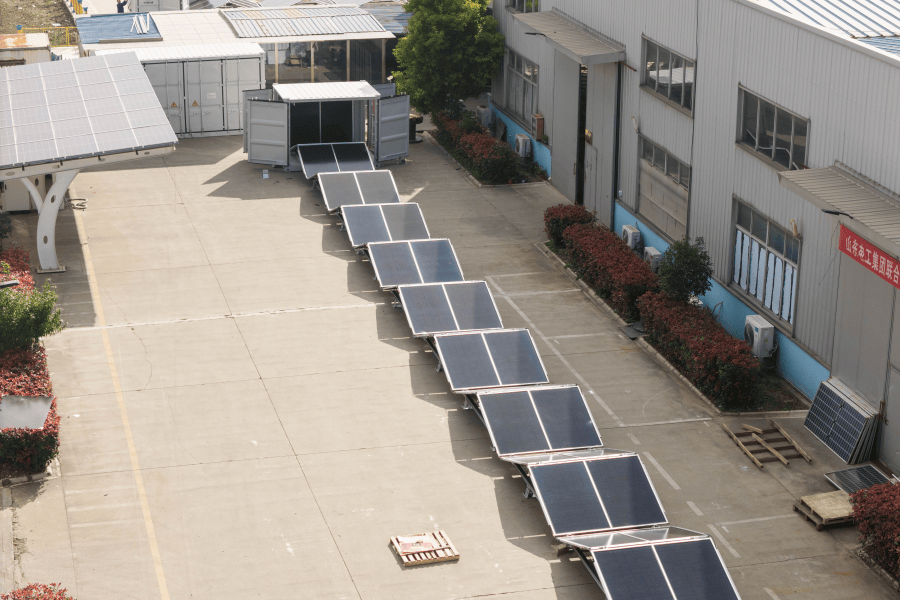
This is where rigorous Manufacturing Standards for Air-cooled Pre-integrated PV Container for Data Center Backup Power transition from bureaucratic paperwork to your most valuable asset. Think of them as the comprehensive DNA of the container. They don't just specify steel gauge; they govern the entire integrated system. At Highjoule, our framework is built on a hybrid of UL, IEC, and IEEE standards, tailored for the pre-integrated reality. This means the container is tested and certified as a unified power system, not just a collection of parts. It covers everything from structural weld integrity and corrosion protection for the exterior, to the fire rating of internal materials, the fail-safe logic of the Battery Management System (BMS) communication, and the precision of the air-handling system.
Key Pillars of a Robust Standard
- Structural & Environmental (IEC 61969, IEEE 693): Ensures the container can handle wind, snow, and seismic loads specific to your deployment zone in, say, California or Germany.
- Electrical Safety & Integration (UL 9540, IEC 62485): The heart of safety. Dictates clearances, insulation, fault current ratings, and how the power conversion system (PCS) interfaces with the battery racks.
- Thermal Management Performance: Beyond just having fans. Standards should specify maximum temperature differentials across racks (e.g., 5C) and define airflow patterns that prevent short-circuiting, ensuring uniform cell aging.
- Factory Integration & Testing (IEC 61439): Mandates that all internal components are assembled, wired, and fully functionally tested in a controlled factory environment before shipment. This slashes on-site commissioning time from weeks to days.
Beyond the Spec Sheet: What Truly Matters in a Standard
Let's demystify some jargon. When we talk about C-rate (the charge/discharge speed), a good manufacturing standard ensures the container's cooling and electrical busbars are designed for the sustained C-rate you need, not just a peak burst. A 2C-rated battery in a 1C-rated enclosure will overheat. Simple as that.
On Thermal Management: Air-cooling gets a bad rap sometimes, but for many data center applications, it's the most cost-effective and reliable solution - if done right. The standard must enforce computational fluid dynamics (CFD) modeling during design to prove airflow efficacy, not just assume it. I've reviewed models where a simple internal baffle redesign, driven by standard requirements, improved cooling efficiency by 30%.
And LCOE? This is where it all comes together. A container built to high standards has higher upfront cost but radically lower lifetime cost. It protects your battery investment, minimizes downtime for maintenance (everything is accessible and standard-compliant), and delivers predictable performance over 15+ years. That's how you achieve the low LCOE that makes the business case work.
A Case in Point: The North Carolina Hyperscale Project
Let me share a recent experience. We deployed a 4 MW/16 MWh pre-integrated, air-cooled BESS for a hyperscale data center campus in North Carolina. The challenge? High humidity, strict local fire codes, and a need for the system to be fully operational within an aggressive 90-day window from contract signing.
Our manufacturing standards were the project's backbone. Because the container was pre-integrated and tested to UL 9540 in our factory, on-site work was just placement, external cabling, and commissioning. We avoided the typical nightmare of assembling racks, PCS, and cooling modules in a muddy field. The built-in humidity control system (per the environmental standard) kicked in immediately. The local inspectors were familiar with the UL certification mark, which streamlined approvals. The system was online in 11 weeks, providing critical backup and peak shaving. The client's team now has a system they can operate with confidence, knowing every bolt and busbar has a traceable standard behind it.
Your Next Step: Questions to Ask Your BESS Provider
So, when you're evaluating a solution, move beyond the battery datasheet. Drill into the container's manufacturing standards. Ask your provider:
- "Can you show me the specific clauses in UL 9540 or IEC 62485 that this container design is certified to comply with?"
- "What is the proven temperature uniformity (delta-T) across the battery racks under full load, and how is that validated?"
- "Is the entire container, as a system, tested and certified, or are you just using certified components in an uncertified assembly?"
- "How do your standards address my specific local requirements, like seismic Zone 4 in California or VDE regulations in Germany?"
At Highjoule, we welcome these questions. Because we know that the strength of the box is what guarantees the power inside it. Your data center's resilience deserves nothing less. What's the one reliability concern keeping you up at night regarding your backup power?
Tags: UL Standard BESS LCOE Energy Storage Data Center Backup IEC Standard Air-Cooled Container Manufacturing Standards
Author
James Zhang
20+ years agricultural energy storage engineer / Highjoule CTO