
Coastal BESS Maintenance Guide: Salt-Spray Protection for 20ft Containers
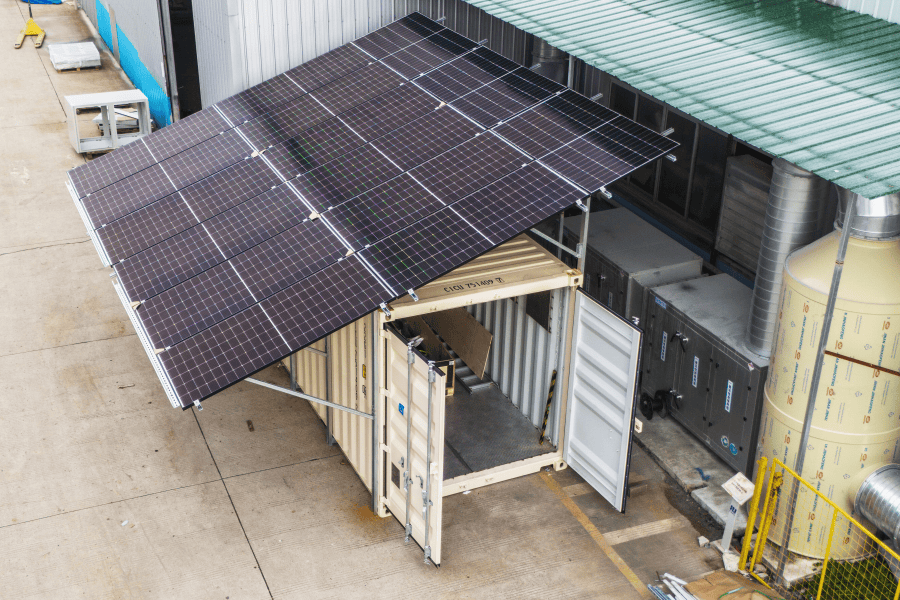
That Salty Air is Eating Your BESS. Here's How to Stop It.
Honestly, if I had a dollar for every time I walked onto a coastal site and saw that telltale white, powdery crust on electrical enclosures, I'd be retired on a beach myself. The irony, right? We deploy these sophisticated Battery Energy Storage Systems (BESS) to harness clean energy, and then Mother Nature hits us with one of the oldest corrosive agents in the book: salt spray. It's a silent budget killer and a major operational risk, especially for those robust-looking 20ft High Cube containers we all rely on. Over two decades from Texas to Taiwan, I've seen firsthand how a standardized, diligent maintenance approach isn't just "nice to have" - it's the single biggest factor in determining your project's long-term LCOE and safety. Let's talk about what really matters on the ground.
Quick Navigation
- The Hidden Cost of Coastal Air
- Why "Marine Grade" Isn't Enough
- Your Actionable Coastal Maintenance Framework
- Learning from the Field: A North Sea Case
- The Engineer's Perspective: Beyond the Checklist
The Hidden Cost of Coastal Air
Here's the problem we often see in the US and Europe: a project gets commissioned, everything passes UL 9540 or IEC 62933, the container is rated IP55 or better, and the team breathes a sigh of relief. The assumption is that the "hard part" is over. But coastal environments are a different beast. Salt-laden moisture is pervasive and conductive. It doesn't just sit on the surface; it creeps into micro-gaps, accelerates galvanic corrosion between dissimilar metals, and creates leakage paths on printed circuit boards. I've opened up inverter cabinets after just 18 months near a coast to find components that look a decade old. The result? Unplanned downtime, costly component replacements, and in the worst cases, safety incidents from compromised electrical isolation. You're not just maintaining a container; you're defending against a constant, aggressive chemical attack.
Why "Marine Grade" Isn't Enough
We lean on standards, and that's good. But standards are often the starting point for survivability, not the complete guide for 25-year operational health. The National Renewable Energy Lab (NREL) has highlighted that "harsh environments" can increase O&M costs for renewables by 30-50% compared to benign inland sites. Think about that for your LCOE (Levelized Cost of Energy) calculations. A 20ft container might have stainless steel hinges and an epoxy-coated exterior, but what about the busbar connections inside? The HVAC condenser coils? The waveguide vents on the battery racks? These are the spots where salt accumulates, and a generic "annual service" just won't cut it. The agitation is real: without a targeted plan, you're accepting accelerated asset degradation as a cost of doing business near the water. We can do much better.
Your Actionable Coastal Maintenance Framework
So, what's the solution? It's a shift from reactive to hyper-proactive, embodied in a tailored Maintenance Checklist for 20ft High Cube Solar Container for Coastal Salt-spray Environments. This isn't a theoretical document; it's a battle plan derived from tear-downs and failure analyses. At Highjoule, our site deployment packs include this as a living document, because we know our containers in Florida face different challenges than those in the German Baltic coast.
The core of the checklist focuses on frequency and specificity:
- Weekly/Monthly Visual & Sensor Checks: This is about catching issues early. We're looking for the first signs of corrosion on external cable glands, door seals, and cooling fan vents. Monitoring relative humidity inside the container is critical - a sudden spike can indicate seal failure.
- Quarterly Detailed Inspections: This is hands-on. Power down, safe isolation, and open her up. The checklist guides technicians to:
- Inspect and clean condenser coils with a non-corrosive solution.
- Check for corrosion on battery rack grounding points and busbar connections (applying a fresh layer of anti-oxidant compound is standard).
- Verify the integrity of cabinet gaskets and desiccant breathers.
- Bi-Annual Deep Dive: This includes thermal imaging scans under load to identify hot spots caused by corroded connections, and detailed megger testing of insulation resistance, which salt deposits can severely degrade.
The goal is to make maintenance predictable, thorough, and efficient, turning a potential liability into a managed, low-cost routine.
Learning from the Field: A North Sea Case
Let me give you a real example. We had a 2.5 MW/5 MWh system using three 20ft containers supporting a microgrid on a North Sea island. The client reported intermittent alarm faults after the first winter. Our standard checklist hadn't accounted for the sheer wind-driven salt load. On site, we found the air intake filters for the thermal management system were clogged with a salt-dust mixture, reducing airflow and causing the batteries to run warm, which triggers alarms. Worse, the salt had bypassed the filter and started coating the evaporator fins of the chiller.
The fix was simple but specific: we upgraded to a more frequent filter replacement schedule (monthly instead of quarterly) and added a fresh-water rinse protocol for the external condenser coils every two months during the storm season. We also specified a protective coating for the internal evaporator coils during the next service. This small adaptation to the checklist - born from on-site observation - solved the alarms and prevented long-term damage to the HVAC, the heart of any BESS thermal management. It's this kind of localized, practical detail that generic manuals miss.

The Engineer's Perspective: Beyond the Checklist
As an engineer, the checklist is the tool, but the understanding is what drives its effective use. Let me break down two key concepts:
Thermal Management & C-rate: Salt-clogged cooling reduces efficiency. Your system might be designed for a 1C discharge rate, but if the cooling is hampered, the BMS will likely derate it to 0.8C or less to prevent overheating. You're not getting the power you paid for. Consistent maintenance keeps the thermal system at peak, ensuring you can hit those performance specs when the grid needs it most.
The LCOE Connection: Every unplanned service truck roll, every early battery string replacement, every major inverter repair - it all adds to your operational expenditure. A disciplined, preventative maintenance plan flattens that cost curve over time. It's the difference between a project that just meets its ROI and one that exceeds it by years. By embedding this mindset from day one, Highjoule ensures our clients' projects aren't just compliant on paper, but are economically resilient in the real world.
Ultimately, that 20ft container is more than a box; it's a climate-controlled ecosystem for a very expensive asset. Protecting it from salt spray isn't about polishing the paint - it's about safeguarding your financial and operational model. What's the one spot on your current site inspection you might be overlooking?
Tags: UL Standard LCOE Optimization BESS Maintenance Europe US Market Renewable Energy Salt-Spray Protection
Author
James Zhang
20+ years agricultural energy storage engineer / Highjoule CTO