
Black Start Mobile BESS for Coastal Resilience: Salt-Spray Protection & Grid Recovery
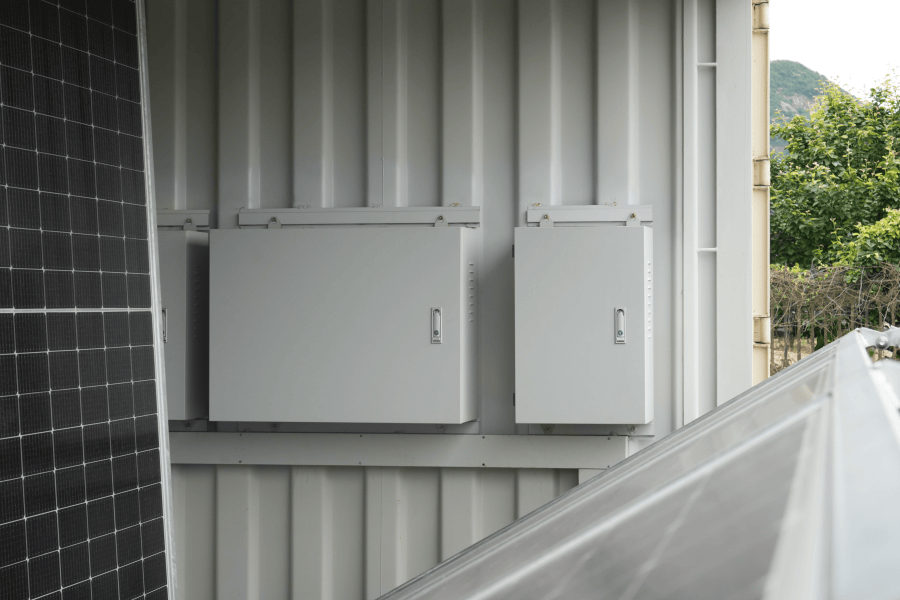
Table of Contents
- The Coastal Grid Challenge: More Than Just a Pretty View
- The Hidden Cost: When Salt Air Meets Critical Infrastructure
- Beyond Backup: The Black Start Imperative for Modern Grids
- The Mobile, Ruggedized Container: A Solution Born from Necessity
- Decoding the Specs: What "Coastal & Black Start Ready" Really Means
- From Blueprint to Beachfront: A Glimpse at Real-World Deployment
- Making the Business Case: It's About More Than Just Capex
The Coastal Grid Challenge: More Than Just a Pretty View
Let's be honest, if you're managing critical infrastructure along a coastline - be it a port, a data center, a manufacturing plant, or even a community microgrid - you've got a unique set of headaches. The view might be fantastic, but the operating environment is frankly brutal. I've been on-site after storms from the Gulf Coast to the North Sea, and the pattern is always the same: salt, moisture, and wind are a relentless trio working to degrade equipment faster than anyone inland can imagine. The push for renewables complicates this further. As the International Energy Agency (IEA) notes, coastal regions are prime locations for wind and solar, but integrating these variable sources requires flexible, resilient storage (IEA, Energy Storage Report). The problem? Most standard battery energy storage systems (BESS) aren't built for this specific, harsh reality.
The Hidden Cost: When Salt Air Meets Critical Infrastructure
Here's the agitation part, straight from the field. Standard industrial equipment, even with some IP rating, isn't designed for constant salt-spray exposure. I've seen control panel internals coated in a fine, conductive layer of salt dust in under 18 months. Connectors corrode. Thermal management systems (the lifeline of any BESS) clog and lose efficiency. This isn't just an maintenance nuisance; it's a direct threat to system availability, safety, and your total cost of ownership. A failure during a grid outage or a period of high energy prices isn't merely an inconvenience - it's a direct financial and operational hit. The asset you bought for resilience becomes a point of vulnerability.
Beyond Backup: The Black Start Imperative for Modern Grids
This brings us to a critical capability often overlooked: black start. Most think of storage as "backup power" - it keeps the lights on when the grid goes down. But true resilience, especially for industrial campuses or microgrids, means being able to restart independently from a complete shutdown. Can your system go from a dead state to forming a stable voltage and frequency to re-energize the local network and maybe even support the main grid's recovery? That's black start. It's a non-negotiable feature for any mission-critical coastal facility, yet it demands specific power electronics, control logic, and, crucially, a storage unit you can absolutely rely on in the worst conditions.

The Mobile, Ruggedized Container: A Solution Born from Necessity
So, what's the solution? At Highjoule, our answer evolved from talking to folks like you over two decades. It's not just a "BESS in a box." It's a Technical Specification of Black Start Capable Mobile Power Container for Coastal Salt-spray Environments. That's a mouthful, but every word is deliberate. "Mobile" means we can deploy it where you need it, fast, without a permanent foundation. "Power Container" signifies a fully integrated, plug-and-play system. And the rest? That's the crucial engineering spec that separates a durable asset from a liability.
Decoding the Specs: What "Coastal & Black Start Ready" Really Means
Let me break down what we build into these units, in plain English. First, the salt-spray defense. We're talking about enclosures that far exceed standard IP54. Think corrosion-resistant coatings on all external and internal metalwork, stainless-steel fasteners, and climate control systems with specialized filtration to keep salt-laden air out of the battery and power conversion compartments. The thermal management is designed for high humidity and salt, preventing condensation and corrosion inside the loop - a common failure point I've witnessed in generic units.
Now, for black start. The key here is the power conversion system (PCS). It needs to act as a grid former, not just a follower. Our design incorporates this from the ground up, with the controls and software to safely sequence the re-energization of your local circuits. We also pay close attention to the battery's C-rate - the speed at which it can discharge power. For black start, you need a sufficiently high C-rate to handle the high inrush currents of starting up other equipment, but balanced against overall cycle life. It's a careful dance we optimize based on your specific load profiles.
And none of this is theoretical. Every component and the final assembly is designed and tested to relevant UL (like UL 9540 for energy storage) and IEC (e.g., IEC 61439 for assemblies, IEC 60068 for environmental testing) standards that matter to the North American and European markets. Compliance isn't a checkbox for us; it's the baseline for safety and performance.
From Blueprint to Beachfront: A Glimpse at Real-World Deployment
Let me give you a concrete example. We deployed a mobile, black-start capable container for a food processing plant in the U.S. Gulf Coast. Their challenge: hurricane season. A grid outage would spoil inventory worth millions and halt production for days. A standard diesel genset could backup, but couldn't black start their entire chilled facility smoothly. Our container sits on a hardened pad near their main substation. It's routinely exposed to salt air and driving rain. The spec we're discussing here meant that after the last major storm, while they were dealing with other damage, the BESS container required only a basic visual check and was ready to perform its black start sequence, which it did flawlessly. They avoided spoilage and were back at partial capacity hours before the grid was fully restored. That's the practical value.
Making the Business Case: It's About More Than Just Capex
When we chat with CFOs and operations heads, the conversation always turns to Levelized Cost of Energy (LCOE) - the total lifetime cost per kWh. A cheaper, less robust unit has a lower upfront cost (capex) but a much higher operational and risk cost over 10-15 years. Factoring in reduced maintenance, higher availability during peak price events, avoided downtime, and the value of grid services like frequency regulation, a properly specified mobile container often wins on total LCOE. It's an asset, not an expense.
Honestly, the industry is moving past the era of one-size-fits-all storage. Your environment dictates your needs. So, what's the one operational risk in your coastal location that keeps you up at night? Is it the speed of recovery, or the relentless wear from the environment? Maybe it's time we spec a solution that addresses both.
Tags: UL Standard BESS Coastal Energy Storage Black Start Grid Resilience Salt-Spray Protection Mobile Power Container
Author
James Zhang
20+ years agricultural energy storage engineer / Highjoule CTO