
Remote Island Microgrid BESS Maintenance Checklist: A 215kWh Cabinet Guide
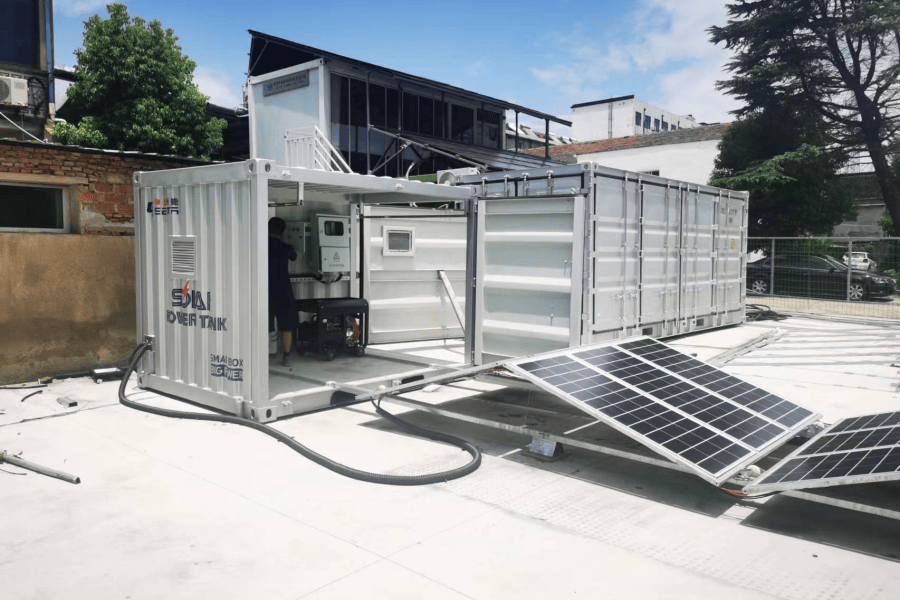
Your Remote Island Microgrid Deserves Better Than a "Set and Forget" BESS
Honestly, I've had this conversation over coffee more times than I can count. A project manager, maybe in the Caribbean or off the coast of Scotland, tells me about their new 215kWh cabinet-based energy storage system. It's the heart of their island's microgrid, finally enabling reliable solar and wind power. The excitement is palpable. Then I ask the question: "What's your operational and maintenance plan for the next decade?" That's when the coffee gets a little colder.
The reality I've seen firsthand on site is that for remote, off-grid communities, the real challenge begins after the ribbon-cutting ceremony. That sleek container isn't just an asset; it's a commitment. And without a clear, actionable maintenance roadmap, the promise of energy independence can quickly become a logistical and financial headache.
Quick Navigation
- The Hidden Cost of "Out of Sight, Out of Mind"
- When Small Issues Become Island-Wide Blackouts
- Building Your Maintenance Foundation: The Checklist Mindset
- The Core 215kWh Cabinet Maintenance Checklist
- Beyond the Checklist: An Expert's Field Notes
The Hidden Cost of "Out of Sight, Out of Mind"
Here's the common phenomenon: a remote island microgrid project secures funding, deploys a containerized BESS solution (like a 215kWh cabinet system), and celebrates the switch from expensive, polluting diesel. The initial performance is great. But the operational team is often small, wearing multiple hats, and may not have deep battery expertise. Maintenance gets reduced to a quick visual check, if that. The system is perceived as a black box that just works.
This approach misses a critical point. According to a National Renewable Energy Laboratory (NREL) analysis, proactive operations and maintenance (O&M) can improve the overall lifecycle value of a BESS by up to 20-30%. Neglecting it doesn't just risk failure; it silently erodes your return on investment through accelerated degradation and unplanned downtime.
When Small Issues Become Island-Wide Blackouts
Let me agitate that pain point with a real story from a project in the Greek Isles. A 250kWh system, not too different from our 215kWh cabinet discussion, was supporting a small tourist island. The remote monitoring flagged a slight imbalance in one battery module string. It was deemed "non-critical" and the next scheduled maintenance was six months away. A faulty cell connector, worsened by the salty marine environment and thermal cycling, eventually led to a thermal runaway event. The result? A total system shutdown during peak tourist season, a frantic airlift of a technician, and a repair bill that dwarfed what a simple, scheduled inspection would have cost.
The impact isn't just technical. It's about community trust. When the microgrid fails, the diesel generators roar back to life. Your hard-won environmental and economic benefits vanish overnight. The Levelized Cost of Energy (LCOE) - the true measure of your project's cost - skyrockets when you factor in these crisis responses.
Building Your Maintenance Foundation: The Checklist Mindset
The solution isn't about hiring an army of PhDs. It's about discipline, clarity, and having the right tools. At Highjoule, after deploying systems from the high desert of California to the fjords of Norway, we learned that the most resilient microgrids run on two things: clean energy and a good checklist.
A proper Maintenance Checklist for a 215kWh Cabinet Energy Storage Container is your first line of defense. It transforms vague worry into structured action. It ensures that your local technician, who might be a brilliant electrician but new to BESS, doesn't miss a crucial step. It's the bridge between the high-level UL 9540 and IEC 62485 safety standards on the datasheet and the reality of a windy, humid Tuesday on your island.
The Core 215kWh Cabinet Maintenance Checklist
Based on UL/IEC/IEEE compliance requirements and two decades of field tweaks, here's the framework we advocate for. Think of this as your essential baseline.
Daily / Remote Monitoring Checks
- System Status & Alarms: Verify all systems show "Normal" via SCADA/remote portal. Acknowledge and log any warnings (don't just silence them!).
- Performance Metrics: Note overall system efficiency, total kWh cycled, and any deviation from expected state of charge (SOC) patterns.
- Thermal Management: Confirm cabinet intake/exhaust temperatures are within spec. Remote thermal camera feeds are a godsend here.
Monthly Visual & Basic Inspections (On-site)
- Cabinet Exterior & Site: Check for corrosion, seal integrity, pest intrusion, and clear ventilation paths.
- Thermal & HVAC: Listen for unusual fan noises. Feel for hot spots on cabinet exteriors (safely). Check condenser filters if applicable.
- Electrical Rooms: Sniff for unusual odors (ozone, burning). Visually inspect DC and AC disconnects, busbars for discoloration.
Quarterly Comprehensive Inspection
- Torque Check: Critical! Use a calibrated torque wrench on DC busbar connections per manufacturer specs. Loose connections are a top fire risk.
- BMS Data Review: Analyze historical data for cell voltage deviations, trending insulation resistance, and balancing activity.
- Cleaning: De-dust cabinet interiors, HVAC units, and air filters with appropriate, non-conductive tools.
- Functional Test: Verify the operation of emergency stops and fire suppression system indicators.
Annual Professional Service
This is where a partner like Highjoule comes in. Our field teams perform what your local crew shouldn't:
- Detailed infrared thermography scan under full load.
- Capacity and round-trip efficiency test (verifying the C-rate capability and overall health).
- Firmware updates and cybersecurity review of the management system.
- Full compliance audit against the latest local and international codes.
Beyond the Checklist: An Expert's Field Notes
A checklist is a map, but experience tells you how to read the terrain. Here's my insight after hundreds of site visits:
1. Thermal Management is Your #1 Priority. People obsess over battery chemistry, but for longevity, temperature is king. Every 10C above 25C can halve cycle life. In a sealed 215kWh cabinet, that heat has to go somewhere. We design our Highjoule containers with redundant, N+1 cooling loops and strict environmental controls because I've seen a single failed fan strand an entire system. It's not an area to cut corners.
2. Understand Your C-Rate in Practice. The spec sheet might say "1C continuous." But on an island, you might need to discharge at a high C-rate to start a large water pump or meet a sudden cloud-induced solar drop. Frequent high C-rate discharges stress the cells and generate more heat. Your maintenance checklist should include reviewing how often and how deeply you're hitting these high power levels - it directly informs your replacement timeline.
3. LCOE is a Living Metric. Your Levelized Cost of Energy isn't fixed at financial close. Proactive maintenance, which might cost 2-3% of the system capex annually, is the single best lever to keep that LCOE low over 15 years. It prevents the massive, unpredictable costs that blow budgets apart. When we structure our service agreements, we align them with LCOE optimization, not just part swaps.
The goal isn't to create more work. It's to create predictability. A well-maintained 215kWh cabinet isn't just a battery; it's the silent, reliable bedrock of your community's energy future. So, what's the first item you'll add to your checklist this quarter?
Tags: UL Standard BESS LCOE Remote Island Microgrid Energy Storage Maintenance
Author
James Zhang
20+ years agricultural energy storage engineer / Highjoule CTO