
High-Altitude BESS Maintenance: A Smart BMS Checklist for Reliability
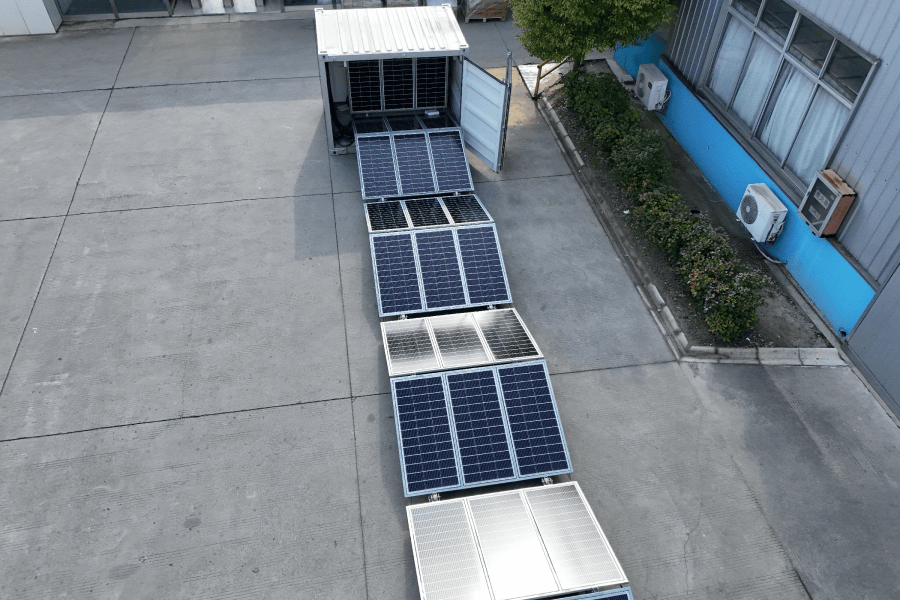
Table of Contents
- The Silent Problem: Why "Set-and-Forget" Fails at High Altitude
- What the Data Says: The Cost of Ignoring Physics
- From Checklist to Confidence: The Smart BMS as Your Remote Engineer
- A Real-World Case: Mining in the Rockies
- Key Maintenance Points Your Smart BMS Should Monitor
- Beyond the Hardware: The Service Mindset for Remote Sites
The Silent Problem: Why "Set-and-Forget" Fails at High Altitude
Honestly, if I had a coffee for every time I've heard a client say, "It's just a battery system, it should run itself," especially for remote, off-grid sites, I'd be overcaffeinated for a decade. We all love the promise of renewable energy C clean, independent power. But when that promise is tied to a critical operation on a mountain top, a remote telecom tower, or an alpine resort, the stakes change completely. The real, often unspoken, pain point isn't just deploying the system; it's ensuring it survives and thrives in an environment that actively works against it. High altitude isn't just a location; it's a harsh operating condition.
I've seen this firsthand on site: a beautifully engineered Battery Energy Storage System (BESS) starts strong, but after a season or two, performance dips. Not a dramatic failure, just a slow, costly decline in reliability. The culprit? Rarely one big thing. It's the cumulative effect of thinner air on cooling, wider temperature swings stressing electronics, and the quiet, accelerated aging of components not rated for the environment. For an off-grid site, a 20% loss in effective capacity isn't an inconvenience; it's a potential operational shutdown. The maintenance challenge shifts from routine to critical, and getting a technician up there is a project in itself, both time-consuming and expensive.
What the Data Says: The Cost of Ignoring Physics
Let's talk numbers. A study by the National Renewable Energy Laboratory (NREL) highlights that temperature is the leading external factor influencing battery degradation. Now, combine that with high-altitude conditions where daytime solar gain heats enclosures rapidly, but nights plunge temperatures below freezing. This thermal cycling is brutal. We're not talking about a gentle swing; it's a daily hammer blow to internal components, solder joints, and the battery chemistry itself.
The financial impact is clear in the Levelized Cost of Storage (LCOS). If your system degrades 30% faster than expected due to environmental stress, your effective cost per stored kilowatt-hour skyrockets. That beautiful off-grid business case starts to unravel. Furthermore, many standard components, from fans to certain capacitors, have altitude deratings. Ignoring these in your maintenance planning is like ignoring the "check engine" light on a steep mountain pass C eventually, it catches up with you, usually at the worst possible time.
From Checklist to Confidence: The Smart BMS as Your Remote Engineer
So, is the answer flying a crew to a remote site every month? Absolutely not. That's unsustainable. The solution is shifting from reactive, physical checklists to proactive, digital ones powered by a Smart Battery Management System (BMS). This isn't just a fancy monitor; it's your on-site, 24/7 engineering sentinel. The core value of a Maintenance Checklist for a Smart BMS Monitored Off-grid Solar Generator for High-altitude Regions isn't the paper it's printed on; it's the intelligent, automated tracking of the parameters that matter most in thin air.
At Highjoule, when we design systems for the Rockies, the Alps, or the Andes, the BMS is the brain of the operation. It's programmed not just to protect the battery but to continuously "check off" items on a virtual maintenance list: Is thermal gradient across the battery rack within spec? Is the internal humidity level stable despite external swings? Are cell voltage imbalances trending in a way that suggests connection corrosion? This data is your early warning system.
A Real-World Case: Mining in the Rockies
Let me give you a concrete example. We deployed a containerized BESS for an off-grid mining exploration camp in Colorado, sitting at about 11,000 feet. The challenge was twofold: powering sensitive drilling equipment reliably and doing it with zero daily diesel C a hard sustainability and cost goal. The standard maintenance schedule was a non-starter due to site access.
Our solution centered on a UL 9540-certified system with a Smart BMS configured for high-altitude priorities. We focused on:
- Pressurized & Thermally Managed Enclosure: To combat low air density, we use slightly over-pressurized cooling with filters and continuous BMS monitoring of internal vs. external pressure differential and temperature at multiple points.
- Component Derating Validation: The BMS doesn't just measure current; it calculates the C-rate in real-time, ensuring we never stress the cells beyond their derated capacity for the ambient conditions, a key factor in longevity.
- Correlation of Data: The real magic is in correlation. Last winter, the BMS alerted us not to a low cell voltage, but to a slight increase in the resistance of a specific module terminal. Cross-referenced with humidity sensor data, it suggested early-stage corrosion from condensation. We dispatched a crew on our next scheduled visit with the exact part and location, fixing it in an hour. Without that smart checklist, it would have failed months later, halting operations.

Key Maintenance Points Your Smart BMS Should Monitor
Based on that experience and others, here's what your virtual, high-altitude maintenance checklist must include. Your Smart BMS should be configured to log, trend, and alert on these parameters:
| Parameter | Why It's Critical at High Altitude | Smart BMS Action |
|---|---|---|
| Thermal Gradient (|T) | Thinner air reduces cooling efficiency. Hot spots accelerate degradation. | Map temperatures across the rack. Alert if gradient exceeds 5C, indicating fan failure or blocked airflow. |
| Internal Enclosure Humidity | Large day-night swings can cause condensation inside, leading to corrosion and ground faults. | Monitor absolute humidity. Trigger desiccant system or small heater to maintain dew point below component temperature. |
| Cell/Balancing Currents | Increased cell imbalance can signal connection loosening due to thermal cycling. | Trend the energy used by the balancing circuit. A rising trend is a pre-failure indicator. |
| AC Ripple & Harmonic Content | Inverter performance can be affected by lower air density cooling. Excessive ripple heats battery cells. | Sample DC current for AC components. Alert on ripple current exceeding cell manufacturer spec. |
| Insulation Resistance (IR) | Moisture ingress and dust can lower IR, creating shock and fire risks. | Perform automated, regular IR tests (during low-power periods) and trend results over time. |
Turning Data into Decisions
The checklist above isn't manual. It's automated insight. For instance, understanding Thermal Management here isn't just about max temperature; it's about rate of change and uniformity. A smart system might pre-cool the enclosure before a predicted high solar gain day, optimizing efficiency. This proactive adjustment, guided by the checklist parameters, directly optimizes your LCOE by extending system life and preventing downtime.
Beyond the Hardware: The Service Mindset for Remote Sites
Finally, the most important line item on any high-altitude checklist is serviceability. At Highjoule, our design philosophy for these projects is "remote first." This means modular components that can be swapped quickly by a technician with standard tools, extensive onboard diagnostics accessible via secure satellite link, and regional staging of critical spares. Our service team doesn't just respond to alarms; they review the trended checklist data from your Smart BMS monthly, providing a health report that predicts maintenance needs, not just reacts to them.
The goal is to make the unpredictable environment of a high-altitude site a managed, understood variable. Your off-grid power shouldn't be a source of anxiety, but a foundation of reliability. So, the next time you're planning a remote deployment, ask your provider: "What's on your digital maintenance checklist for the smart BMS, specifically for my site's altitude?" The depth of their answer will tell you everything you need to know about their real-world experience.
What's the single biggest maintenance surprise you've encountered with remote energy systems?
Tags: UL Standard BESS Energy Storage Off-grid Solar High-Altitude BMS Maintenance Remote Monitoring
Author
James Zhang
20+ years agricultural energy storage engineer / Highjoule CTO