
Essential 215kWh PV Storage Maintenance for Reliable EV Charging Hubs
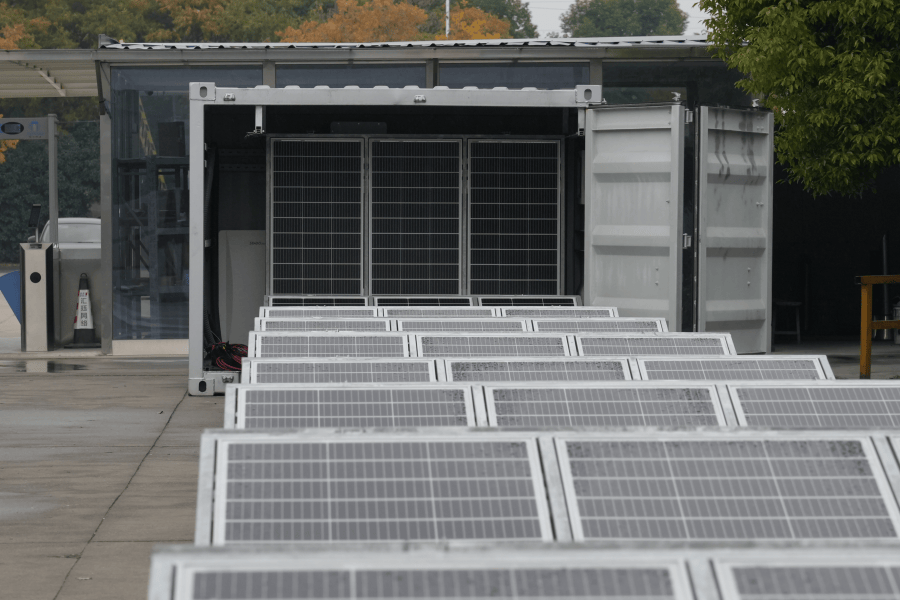
Keeping the Juice Flowing: Your Practical Guide to Maintaining a 215kWh PV Storage System for EV Charging
Honestly, over the years, I've had more cups of coffee with frustrated facility managers than I can count. The conversation often starts with excitement about their new solar-powered EV charging hub, but sometimes it shifts to the headaches of keeping it running. That shiny 215kWh cabinet storage system is the heart of the operation - it's what turns intermittent sunshine into reliable, on-demand power for electric vehicles. But here's the thing many learn the hard way: deploying it is just the first step. The real magic, and the real challenge, is in the ongoing care.
Quick Navigation
- The Silent Problem: When "Set and Forget" Fails
- What a Good Maintenance Checklist Really Covers
- A Tale from California: The Cost of a Missed Check
- Thermal Management: It's Not Just About Cooling
The Silent Problem: When "Set and Forget" Fails
The dream is a resilient, off-grid-capable charging station that slashes energy costs and attracts eco-conscious customers. The reality I've seen firsthand on site can be different. Without a disciplined maintenance regimen, small issues snowball. A slight imbalance in a battery string might go unnoticed for months, gradually reducing capacity. Dust accumulation on a fan intake can quietly raise operating temperatures. A loose DC connection can start as a minor voltage drop and end as a thermal event.
This isn't just about a single station going offline. For a commercial host, that's lost revenue per charging stall. For a fleet operator, it disrupts the entire daily schedule. The National Renewable Energy Lab (NREL) has pointed out that proactive operations and maintenance (O&M) is the single biggest factor in long-term battery health and project financials. Ignoring it directly hits your Levelized Cost of Energy (LCOE) - that's the all-in lifetime cost of the energy your system delivers. Let that number creep up, and your ROI timeline stretches out.
What a Good Maintenance Checklist Really Covers
So, what should you be looking for in a proper Maintenance Checklist for a 215kWh Cabinet Photovoltaic Storage System for EV Charging Stations? It's more than just "inspect batteries." It's a holistic system health audit. A robust checklist, aligned with UL 9540 and IEC 62485 safety standards, breaks down into a few critical areas:
- Visual & Mechanical Integrity: Checking for cabinet seal integrity (keeps moisture and pests out), verifying torque on electrical connections (vibration can loosen them), and inspecting for any corrosion or physical damage.
- Thermal & Environmental Systems: This is huge. It means cleaning or replacing air filters, verifying cooling fan and pump operation, and confirming ambient temperature and humidity sensors are reading accurately. The system's brain needs accurate data to make good decisions.
- Electrical Performance & Safety: Logging DC and AC voltage/current, verifying isolation resistance (a key safety metric), and checking the performance of all protective devices like circuit breakers and fuses.
- Battery Management System (BMS) Health: Reviewing alarm logs, verifying cell voltage and temperature balance across all modules, and confirming the state-of-charge (SOC) calibration is accurate. A mis-calibrated SOC is like a fuel gauge that lies.
- Cycling & Efficiency Data: Analyzing round-trip efficiency over the last period. Has it dropped from 95% to 88%? That's a 7% loss of energy - and profit - every cycle. Also, reviewing charge/discharge patterns (C-rate) against the design assumptions.

A Tale from California: The Cost of a Missed Check
Let me share a quick story from a project we supported in Southern California. A retail site had a 215kWh system supporting four DC fast chargers. Their internal team was doing basic visual checks, but they weren't equipped to analyze BMS data. Over six months, the system's reported capacity slowly drifted down. They assumed it was normal degradation.
When we were called in for an annual service, our checklist led us to a simple but critical find: one of the eight battery clusters had a communication cable that was partially disconnected. The BMS was "guessing" the state of that entire cluster. The system was derating itself unnecessarily, leaving about 30kWh of perfectly good capacity on the table. For that site, that was hours of lost charging revenue every day. We fixed the cable, recalibrated the system, and restored full capacity. The lesson? A checklist that includes data validation is worth its weight in gold.
Thermal Management: It's Not Just About Cooling
Everyone talks about keeping batteries cool, and they're right. But from an engineering perspective, thermal management is really about uniformity. A 5C difference between the top and bottom of a cabinet might not trigger an alarm, but it will cause the cells to age at different rates. This imbalance reduces total usable capacity and, in the worst case, can lead to premature failure of the warmest cells.
A good maintenance protocol uses thermal imaging cameras (like in the picture above) during inspection to spot these gradients. It's about ensuring the designed airflow path is unobstructed. At Highjoule, our cabinet designs for the 215kWh class use a forced-air channeled system specifically to minimize this delta-T. But even the best design needs clear vents and clean filters to work as intended.
Making It Actionable: A Partner, Not Just a Product
The ultimate goal of any checklist is to turn insight into action. A finding of "high cell imbalance" should automatically trigger a next step: "Perform manual equalization charge and monitor for 3 cycles." A note of "dirty intake filter" should lead to "Replace and note next scheduled replacement date."
This is where choosing a provider with deep field experience matters. When we at Highjoule Technologies deliver a system, we don't just hand over a generic manual. We provide a site-specific maintenance plan that aligns with local codes - be it the NEC in the U.S. or the relevant DIN standards in Germany. Our remote monitoring platform even flags potential issues based on trends, often suggesting a maintenance action before it becomes a problem. It's about building resilience into your energy asset.
So, the next time you look at your EV charging storage system, ask yourself: Is my checklist a true health diagnostic, or just a paperwork exercise? The difference defines the lifetime value of your investment.
What's the one maintenance surprise you've encountered with your on-site energy storage? I'd love to hear about it.
Tags: UL Standard BESS EV Charging Infrastructure Energy Storage ROI Solar PV Maintenance
Author
James Zhang
20+ years agricultural energy storage engineer / Highjoule CTO