
Maintenance Checklist for IP54 Outdoor BESS: A Data Center Backup Power Must-Have
Contents
- The Silent Risk in Your Backup Power Plan
- Why "Set It and Forget It" Fails in Outdoor BESS
- Your Framework for Peace of Mind: The IP54 Outdoor BESS Checklist
- Beyond the Checklist: Expert Insights from the Field
- Building Resilience is a Process, Not a Purchase
The Silent Risk in Your Backup Power Plan
Honestly, if you're managing a data center in the US or Europe and you've invested in an outdoor photovoltaic storage system for backup, you're already ahead of the curve. You've tackled the CAPEX, navigated the local grid codes, and got that container or enclosure sitting pretty outside. The hard part's done, right? Well, from my 20+ years on sites from California to North Rhine-Westphalia, I can tell you the real test begins after the commissioning party ends. The single biggest oversight I see? A lack of a rigorous, standardized Maintenance Checklist for IP54 Outdoor Photovoltaic Storage System for Data Center Backup Power. It's the silent risk that turns a capital asset into a liability overnight.
Why "Set It and Forget It" Fails in Outdoor BESS
Let's agitate that point a bit. An outdoor IP54-rated system isn't a server in a controlled room. It's exposed to thermal cycling, dust, moisture, and - depending on your location - everything from sea salt spray to desert sand. The National Renewable Energy Lab (NREL) has pointed out that improper operations and maintenance can increase the levelized cost of storage (what we call LCOE) by up to 30% over the system's life. That's a massive financial hit from something preventable.
I've seen this firsthand. A client in Southern Germany had a system that performed flawlessly for 18 months. Then, a minor coolant line fitting in the thermal management system, loosened by repeated freeze-thaw cycles, developed a slow leak. It wasn't dramatic, no alarms triggered immediately. But the gradual rise in operating temperature accelerated cell degradation. By the time they noticed a drop in runtime during a simulated outage, they were facing a 40% loss of usable capacity and a six-figure battery replacement bill. Their mistake? They treated the BESS like a fire extinguisher - only checking it during annual drills. The problem wasn't the IP54 rating; it was the lack of a proactive plan behind it.

The High Stakes of Data Center Downtime
For data centers, this isn't just about battery health. It's about business continuity. The Ponemon Institute pegs the average cost of a data center outage at nearly $9,000 per minute. When your primary backup is a complex electrochemical system sitting outside, "hoping it works" is not a strategy. You need a process that gives you confidence, a checklist that turns uncertainty into a scheduled, manageable task.
Your Framework for Peace of Mind: The IP54 Outdoor BESS Checklist
So, what's the solution? It's moving from reactive to proactive with a living document - your maintenance checklist. This isn't a generic piece of paper. For an IP54 outdoor system powering a data center, it needs to be brutal specific. Here's a distilled version of the framework we advocate for at Highjoule, built from thousands of service hours across UL and IEC-compliant projects.
Core Pillars of Your Maintenance Protocol
- Environmental Integrity (The "IP54" Check): Monthly visual inspection of seals, gaskets, and cabinet integrity. Check for dust ingress paths or water staining. This is your first line of defense.
- Thermal Management System Audit: Quarterly. Verify coolant levels, pump operation, and cleanliness of air intake/exhaust vents. Listen for unusual fan noises. A 10C increase above spec can halve battery life.
- Electrical & Safety Performance: Monthly log of DC/AC insulation resistance. Quarterly torque check on DC busbars (thermal cycling loosens them!). Biannual functional test of all breakers and isolation devices.
- Battery Health Deep Dive: Quarterly battery management system (BMS) data review for voltage, temperature, and impedance deviations across cell strings. Annual capacity test (a full discharge/charge cycle under load) to validate the nameplate kWh.
- Grid Interaction & Controls: Monthly verification of communication links between the BESS, your data center SCADA, and the grid. Simulate a grid-loss event quarterly to ensure seamless transition to backup mode.
This checklist isn't just a to-do list; it's a historical record. It helps you spot trends - like a specific cell block slowly drifting out of balance or a gradual increase in auxiliary power consumption - before they become failures.
Beyond the Checklist: Expert Insights from the Field
Now, let's get into some nuances you won't find in every manual. These insights come from getting my hands dirty on site.
1. Understand Your C-Rate in Real Life: Your system specs a certain C-rate (charge/discharge power). But in backup for data centers, you're likely dealing with a "step load" - when servers switch to battery, the power demand hits instantly. A high C-rate capability is crucial, but your maintenance must verify the system can deliver that punch repeatedly without excessive voltage sag or overheating. The annual capacity test under a simulated step load is non-negotiable.
2. Thermal Management is Everything: People obsess over cell chemistry, but I obsess over the HVAC and liquid cooling systems. In Texas, I've seen condensate drain lines clog, leading to internal humidity spikes. In Scandinavia, heater pads for battery cabinets fail. Your checklist must be climate-aware. Honestly, at Highjoule, we design our outdoor enclosures with redundant thermal management loops precisely because of these field lessons, but even the best design needs vigilant upkeep.
3. The LCOE Killer is Neglect: Levelized Cost of Energy (LCOE) is your true total cost. A rigorous checklist directly fights the two things that spike LCOE: unexpected capex (early replacement) and lost revenue (downtime or reduced backup duration). It's the cheapest insurance you can buy.
A Quick Case in Point: Northern Virginia Data Center Campus
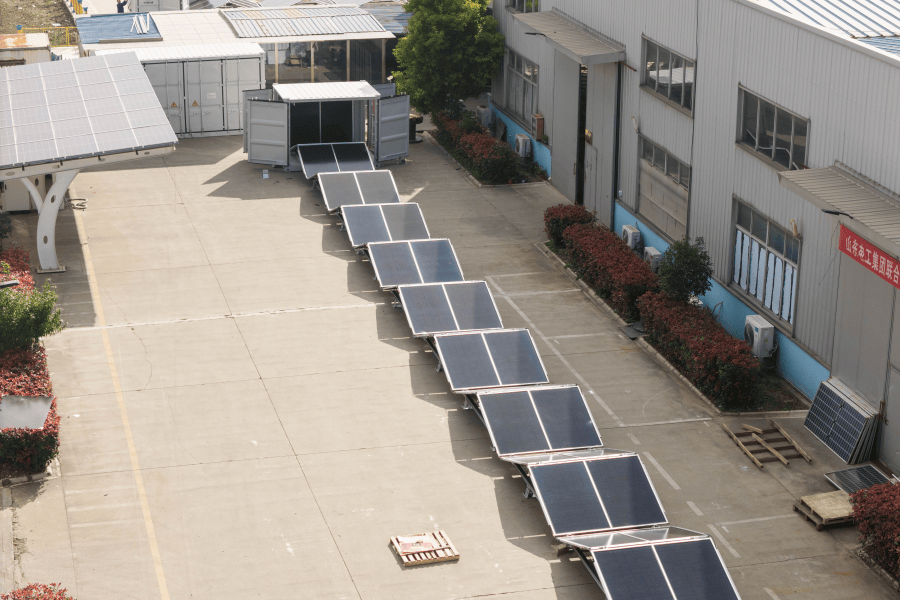
We partnered with a hyperscaler here deploying multiple 2 MW/4 MWh IP54 outdoor BESS units for backup and peak shaving. The challenge? Humid summers and tight service windows. We co-developed a predictive maintenance checklist with them. Using monthly drone thermography for external hot-spot detection and quarterly internal data reviews, they identified a failing inverter cooling fan in one unit weeks before it would have caused a derating. The swap was scheduled during low-load, with zero impact on backup readiness. That's proactive O&M in action.
Building Resilience is a Process, Not a Purchase
Investing in an outdoor BESS for your data center is a smart, strategic move. But the resilience you're buying isn't contained just in the lithium cells or the steel enclosure. It's engineered through consistent, informed care. A Maintenance Checklist for IP54 Outdoor Photovoltaic Storage System for Data Center Backup Power is the blueprint for that care.
Does your current checklist cover the critical, climate-specific, and system-specific points we discussed? Or is it a generic document that leaves you hoping for the best? The difference between the two is what separates a cost center from a reliable, resilient asset. What's the one item on your maintenance log that's caused the most surprising find?
Tags: UL Standard BESS LCOE Data Center Backup Power Thermal Management IP54 Outdoor Enclosure Maintenance Checklist
Author
James Zhang
20+ years agricultural energy storage engineer / Highjoule CTO