
Benefits and Drawbacks of 20ft High Cube 1MWh Solar Storage for Rural Electrification in Philippines
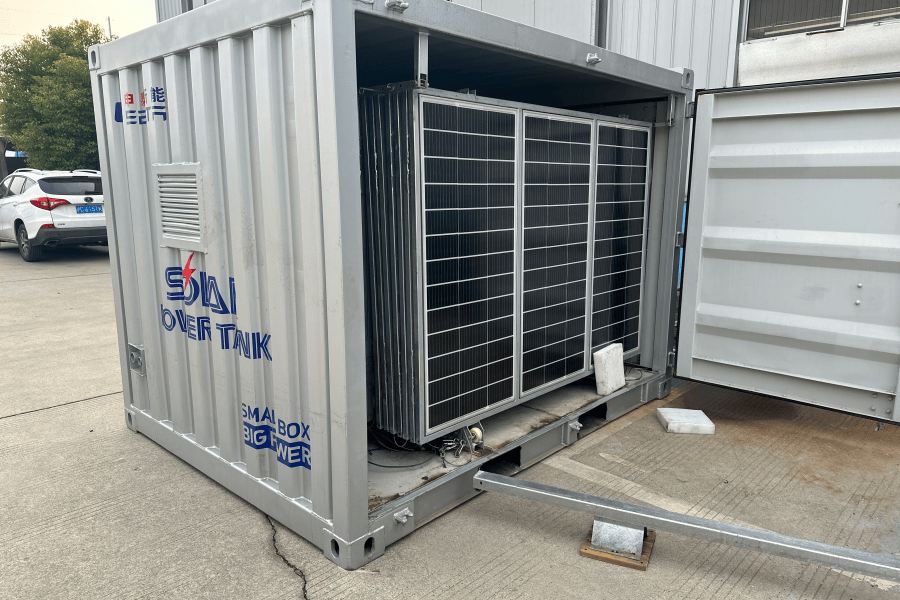
When "Plug-and-Play" Power Meets Reality: A Hard Look at 1MWh Containerized BESS
Honestly, if I had a dollar for every time a client asked me about "containerized solutions" for their off-grid or microgrid project, I could probably retire. The idea is seductive: a 20-foot box shows up, you connect it to some solar panels, and boom C you've got a stable, clean power plant. I've seen this firsthand on site from California to rural Germany. But here's the thing we in the industry, especially those of us making decisions for commercial and industrial scale, need to grapple with: not all containers are created equal, and the trade-offs are real. The conversation around the Benefits and Drawbacks of 20ft High Cube 1MWh Solar Storage for Rural Electrification in Philippines is actually a perfect case study for any project planner in the US or Europe. It forces us to ask the right questions about scalability, safety, and true Levelized Cost of Energy (LCOE) in a standardized package.
Jump to Section
- The Allure: Why the 20ft 1MWh Model is So Compelling
- The Hidden Costs & Operational Realities
- Safety: The Non-Negotiable in Western Markets
- A Case Study Perspective: Learning from Deployment
- Making It Work: The Expert's Checklist
The Allure: Why the 20ft 1MWh Model is So Compelling
Let's start with the benefits, because they are significant. For remote electrification, whether it's an island in the Philippines or a mining operation in Australia, the 20ft High Cube 1MWh unit is a game-changer in logistics and speed. It's a standardized shipping container. That means it fits on a truck, a train, or a ship without special permits (usually). The deployment time is drastically reduced compared to building a bespoke BESS building. According to a NREL analysis on modular energy systems, standardized designs can cut on-site construction time by up to 60%.
From a financial modeling perspective, it offers predictability. You're buying a known quantity with a defined energy capacity. For a project developer pitching to investors, that's gold. It simplifies the CAPEX model. Also, the high energy density packed into that footprint is a testament to how far lithium-ion tech, especially LFP chemistry, has come. We're talking about storing enough energy to power hundreds of homes for several hours, all in a box.
The Hidden Costs & Operational Realities
Now, let's agitate the problem a bit. This is where my 20+ years of kicking the tires on site comes in. The biggest drawback isn't the upfront cost; it's the total cost of ownership and operational flexibility.
First, thermal management. A 1MWh battery pack generates a lot of heat, especially at higher C-rates (that's the charge/discharge speed). Cramming that into a 20ft container requires a massive, and I mean massive, HVAC system. That HVAC unit isn't just for comfort; it's critical for battery longevity and safety. It's also a single point of failure and a constant power drain. I've seen sites where the auxiliary load for cooling alone eats up 3-5% of the stored energy. That directly hits your round-trip efficiency and LCOE.
Second, scalability can be tricky. Need 1.2MWh? Tough luck, you're buying a second container. You end up with a "lumpy" capacity expansion. For a growing industrial facility or a community microgrid, this isn't optimal. You either overspend upfront or face a complex integration project later.
Third, maintenance access. A high-density pack in a confined space can make routine inspections and cell-level maintenance a logistical puzzle. If the design hasn't factored in proper service aisles and access panels, you're looking at higher O&M costs down the line.
Safety: The Non-Negiable in Western Markets
This is the deal-breaker for the US and EU markets. A container destined for a remote village might not face the same regulatory scrutiny as one sitting next to a school in Ohio or a factory in Bavaria. For us, standards like UL 9540 for the overall system and UL 1973 for the cells are not just nice-to-haves; they're insurance and financing prerequisites.
The container itself must be more than a steel box. It needs:
- Proper Ventilation & Gas Detection: In the rare event of thermal runaway, venting paths and detection systems are crucial to direct hazardous gases away and trigger shutdowns.
- Fire Suppression: A standard sprinkler system won't cut it for a lithium battery fire. You need a specialized agent and dispersion system designed for BESS.
- Structural Integrity: It must withstand local environmental loads C snow, wind, seismic activity. I've seen projects in California where seismic certification added months to the timeline but was absolutely non-negotiable.
At Highjoule, this is where our design philosophy is rooted. Our 20ft solutions are built from the ground up to meet and exceed UL and IEC standards, not retrofitted to comply. The BMS isn't an add-on; it's the brain, constantly monitoring for cell imbalance, temperature gradients, and insulation faults. Honestly, if the spec sheet doesn't lead with these certifications, walk away.
A Case Study Perspective: Learning from Deployment
Let me give you a real-world parallel. We worked on a microgrid project for an agricultural processing plant in Northern Germany. The challenge was similar to many rural electrification projects: unreliable grid connection, need for solar integration, and critical cold storage loads.
The client initially wanted a standard 1MWh container. But our site assessment revealed two issues: 1) Space was limited, but future expansion was likely, and 2) The local fire code had very specific setback requirements for BESS units.
Our solution was a modified approach. We used a 20ft High Cube platform but configured it as a 800kWh system. This gave us the internal space to implement a more robust, dual-zone thermal management system and better service access. The "missing" 200kWh? We designed the foundation and power conversion system for a second, identical unit to be added seamlessly in Phase 2. This kept the logistical benefits of a containerized solution while optimizing for safety, serviceability, and future growth.

The result was a system that passed stringent German T1V inspection on the first try and has been operating with 99% availability for over two years. The LCOE came in lower than the regional utility's peak rates, making the business case solid.
Making It Work: The Expert's Checklist
So, is a 20ft High Cube 1MWh Solar Storage container a good idea? It can be, but only if you go in with your eyes wide open. Here's my checklist from the field:
- Demand the Certificates: Ask for the UL 9540 or IEC 62933 certification documents. Don't just take a "designed to meet" claim.
- Dig into the Thermal Design: Ask about the cooling system's power consumption, redundancy, and what happens if it fails. Request the thermal runaway propagation analysis.
- Think Beyond Day 1: How do you add capacity? What does the 10-year O&M plan look like? Is there local technical support, or does a technician need to fly in for every alarm?
- Calculate Real LCOE: Factor in auxiliary loads, expected degradation under your specific cycling pattern, and local O&M labor costs. The cheapest CAPEX often leads to the highest OPEX.
The discussion around rural electrification in the Philippines holds a mirror to our own "standardized" deployment challenges. It reminds us that true innovation isn't just about packing more kWh into a box; it's about engineering resilience, safety, and economic sense into every single module that leaves the factory floor. That's the only way we build systems that last.
What's the biggest operational surprise you've encountered with a containerized BESS? Was it the thermal management, the grid interconnection, or something else entirely?
Tags: UL Standard BESS LCOE Renewable Energy Rural Electrification Project Deployment Solar Storage Container
Author
James Zhang
20+ years agricultural energy storage engineer / Highjoule CTO