
Rapid Deployment Lithium Battery Storage for Remote Island Microgrids: A Practical Guide
Quick Navigation
- The Real Problem: It's More Than Just Power
- Why This Hurts Your Bottom Line & Community
- The Containerized Solution: Not Just a Battery in a Box
- A Case in Point: Lessons from the North Atlantic
- Key Specs Decoded: C-Rate, Thermal Runaway, and LCOE Made Simple
- Making It Work for You: The Deployment Checklist
The Real Problem: It's More Than Just Power
Let's be honest. When we talk about energy on remote islands, we're not just talking about keeping the lights on. We're talking about the lifeblood of a community and the viability of local businesses. I've been on-site in places from the Scottish Isles to the Caribbean, and the pattern is painfully familiar: staggering electricity costs, the constant hum of diesel generators, and this underlying anxiety about what happens if fuel shipments are delayed or a storm knocks things out.
The problem isn't a lack of desire for renewables. Solar panels and wind turbines are going up. The real, gritty problem is what happens when the sun sets or the wind drops. How do you store that energy efficiently, safely, and in a system that doesn't require a small army of PhDs and a two-year construction window to install? That's the gap. Deploying a traditional, large-scale Battery Energy Storage System (BESS) in a remote location often feels like building a cathedral when you need a sturdy, reliable shelter, fast.
Why This Hurts Your Bottom Line & Community
This isn't an abstract engineering challenge. It hits wallets and well-being directly. The International Renewable Energy Agency (IRENA) has pointed out that islands often pay two to three times more for electricity than mainland counterparts, with diesel fuel making up a huge chunk of that cost. Every kilowatt-hour from a diesel gen-set is expensive and carbon-heavy.
But beyond cost, there's the reliability factor. A single point of failure in a traditional system can mean blackouts. For a hotel, that's lost revenue. For a clinic, that's a potential crisis. And from my experience, the complexity of custom, on-site battery system construction in these locations drives up both capital expenditure and long-term operational risks. You're dealing with unique permitting, scarce local expertise for installation, and then the ongoing headache of maintenance. It's a heavy lift.
The Containerized Solution: Not Just a Battery in a Box
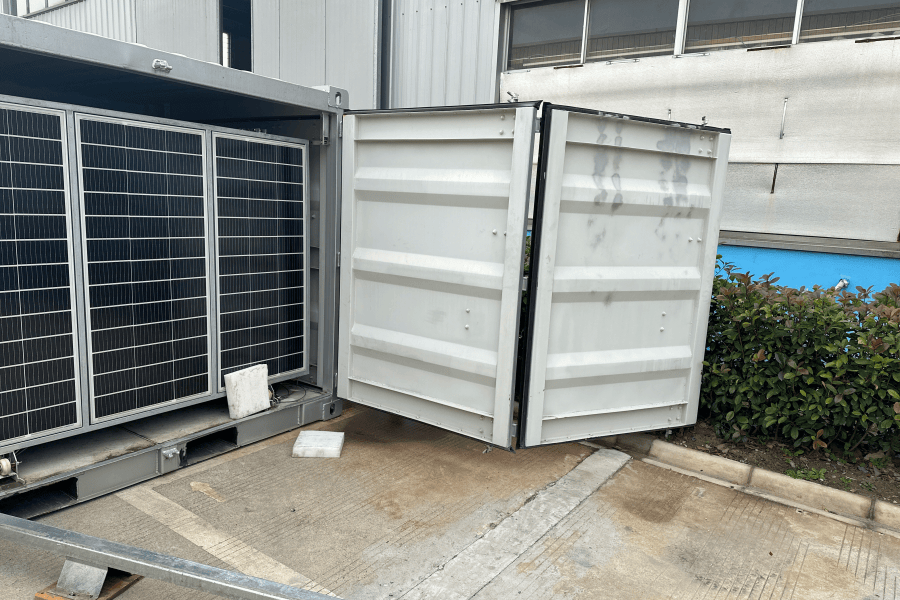
This is where the concept of the rapid-deployment, containerized lithium battery storage system changes the game. I need to be clear: we're not just talking about dropping a shipping container full of batteries onto a concrete pad. That's a recipe for problems.
The true solution is a pre-engineered, pre-integrated, and pre-tested power plant module. Think of it like this: instead of sourcing batteries, inverters, cooling systems, and fire suppression from ten different vendors and hoping they work together on your island, you get one single unit. This unit is assembled and put through its paces in a controlled factory environment, long before it ever sees a dock. At Highjoule, for instance, every container system undergoes full-load testing and gets its safety certifications, like UL 9540 and IEC 62619, signed off before it leaves our facility. This cuts deployment time from 18+ months to as little as 90 days on-site.
The value is in the integration and the foresight. All the critical components C the battery racks, the thermal management system, the power conversion system (PCS), and the control brain C are designed to work in harmony from day one.
What's Inside That Makes the Difference?
- Built-in Climate Control: Lithium batteries are sensitive to temperature. A proper system doesn't just have an air conditioner; it has a precision thermal management system that keeps every cell within its ideal operating range, whether it's 45C in the sun or -10C in a North Atlantic winter. This is non-negotiable for lifespan.
- Safety as a Core Design Principle: It's about layered protection. This starts with cell-level fusing, includes compartmentalization to isolate potential issues, and is topped with advanced gas detection and fire suppression systems that are integrated, not added as an afterthought.
- Grid-Forming Intelligence: For true island microgrids, the inverter needs to be able to "form" the grid, creating stable voltage and frequency from scratch, not just follow the lead of a diesel generator. Modern container solutions often have this capability baked in.
A Case in Point: Lessons from the North Atlantic
Let me share a scenario that's fresh in my mind. We recently deployed a system for a small fishing community on a remote island. Their challenge was classic: a aging diesel generator, rising fuel costs eating into profits, and a new small wind farm that was often curtailed (wasted) because there was no storage.
The solution was a 2 MWh containerized BESS. It was shipped complete. Honestly, the hardest part was the barge logistics to get it to the island. Once on the prepared pad, it was a matter of connecting the AC and DC cabling, linking it to the wind farm controller and the existing diesel genset, and commissioning. Within a week, the system was operational.
The outcome? The diesel generator now runs less than 30% of the time, used mainly as a back-up. The wind power is fully utilized, reducing fuel costs by over 60% in the first year. The Levelized Cost of Energy (LCOE) for the community plummeted. But just as importantly, the lights C and the critical refrigeration for the fishing catch C stay on consistently.

Key Specs Decoded: C-Rate, Thermal Runaway, and LCOE Made Simple
When you're evaluating these systems, you'll hear technical terms. Let's break down three crucial ones in plain English.
C-Rate: Think of this as the "athletic ability" of the battery. A 1C rate means the battery can fully discharge its stored energy in one hour. A 0.5C rate means it takes two hours. For island microgrids, you often need a mix C a high C-rate (like 1C or more) to handle sudden, large loads (like a big motor starting) and provide stability, and a steady, lower C-rate for daily energy shifting. The right balance affects cost and performance.
Thermal Runaway Prevention: This is the worst-case safety scenario C a cell overheating and causing a chain reaction. A well-designed container fights this with:
- Advanced Battery Management System (BMS) that monitors each cell's voltage and temperature.
- Coolant systems that actively remove heat.
- Physical barriers and venting to isolate any event and direct gases away safely.
LCOE (Levelized Cost of Energy): This is the ultimate scorecard. It's the total lifetime cost of your energy system (installation, fuel, maintenance, etc.) divided by the total energy it produces. Diesel has a high LCOE due to fuel costs. Solar/wind alone has a low "fuel" cost but can be intermittent. Adding storage optimizes the LCOE of your entire microgrid. You use more cheap, renewable energy and less expensive diesel, bringing your overall cost per kWh down over 15-20 years. That's the real financial win.
Making It Work for You: The Deployment Checklist
Based on what I've seen work, here's a pragmatic checklist for any island community or developer considering this path:
- Site Prep is 80% of the Speed: Have a level, reinforced concrete pad ready. Plan the cable routes to your generation and distribution points. This seems basic, but it's the most common delay.
- Certifications are Your Safety Net: Insist on systems certified to UL 9540 (standard for energy storage systems) and IEC 62619 (safety for large format batteries). This isn't just paperwork; it's proof of rigorous third-party testing.
- Ask About "Black Start" Capability: Can the system restart the microgrid from a total blackout? This is critical for resilience.
- Service & Support Model: How will the system be maintained? Look for providers, like Highjoule, who offer remote monitoring and have local or regional service partnerships. You shouldn't need to fly in a specialist for every software update.
The goal is energy independence that's practical, safe, and financially smart. The technology is here, and it's proven. The right rapid-deployment container isn't a product; it's a turning point for a community's future. What's the first energy challenge you'd solve if you had a resilient, flexible power source in place by the end of the year?
Tags: Energy Storage Container UL Standard BESS LCOE Rapid Deployment Remote Island Microgrid
Author
James Zhang
20+ years agricultural energy storage engineer / Highjoule CTO