
Data Center Backup Power: The Critical Mobile BESS Maintenance Checklist
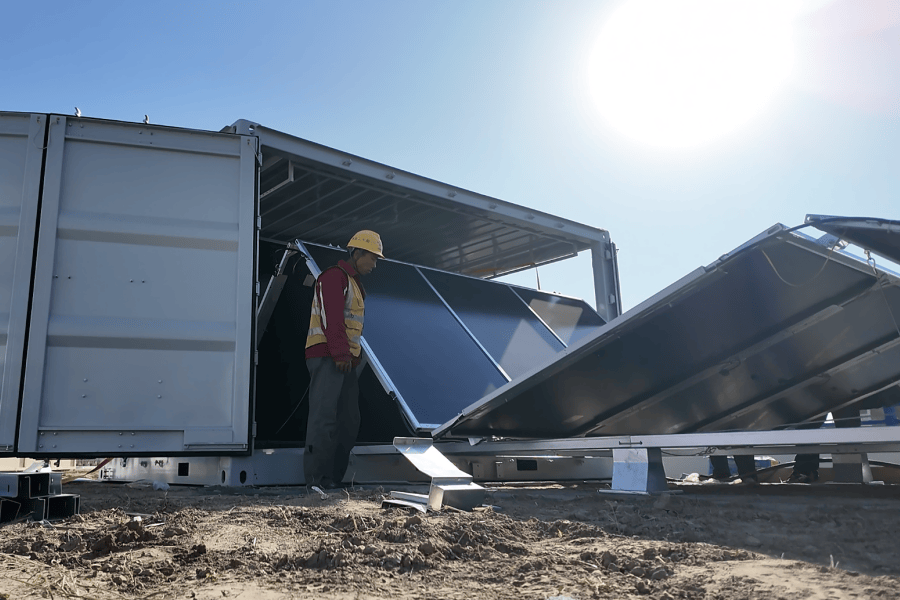
Table of Contents
- The Silent Risk in Your Backup Power Strategy
- Why a Simple Maintenance Checklist Isn't So Simple
- The Highjoule Framework: A Proactive Maintenance Checklist
- A Case in Point: The Frankfurt Logistics Hub
- Thinking Beyond the Checklist: The Real Cost of Downtime
The Silent Risk in Your Backup Power Strategy
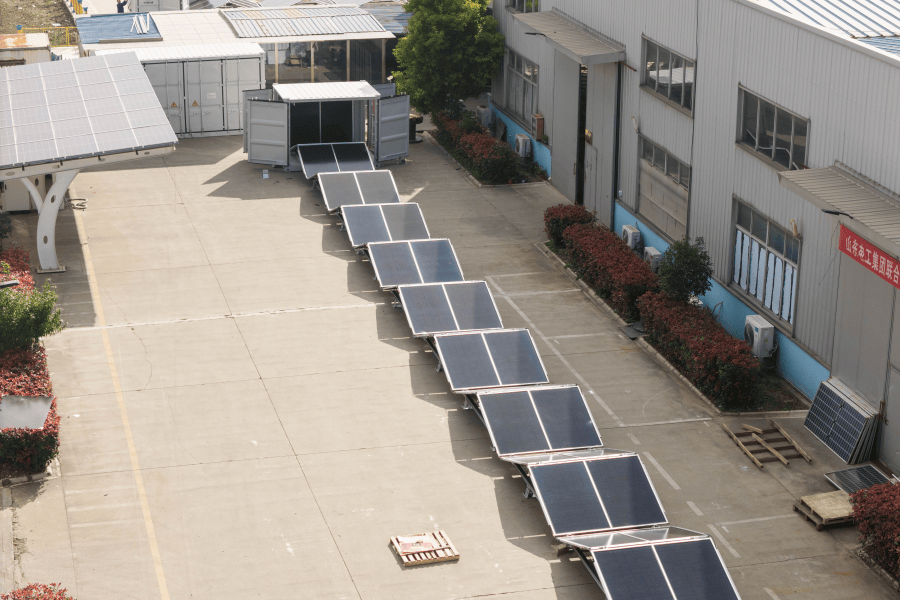
Let's be honest. When you invest in a rapid deployment mobile power container for your data center, you're buying peace of mind. It's the silent guardian sitting on your lot, promising to kick in the moment the grid stutters. But here's the uncomfortable truth I've seen firsthand on sites from California to Bavaria: that peace of mind is only as good as the maintenance routine behind it. We get so focused on the deployment speed and the headline capacity (the megawatt-hours) that we often treat the container as a "set-it-and-forget-it" asset. That, my friends, is where the real risk lives.
The industry is booming. According to the International Energy Agency (IEA), global grid infrastructure investment needs to double to over $600 billion annually by 2030 to meet our goals, and distributed storage like mobile BESS is a critical piece. But more units in the field, without rigorous upkeep, means a higher statistical probability of failure. And for a data center, "failure" isn't a metric; it's a headline, a massive SLA penalty, and a brutal hit to reputation.
Why a Simple Maintenance Checklist Isn't So Simple
You might think, "We have a checklist." And you probably do. But is it a generic one pulled from a manual, or is it a living document built for the specific punishing duty cycle of data center backup? There's a world of difference. The core pain points I consistently see boil down to three areas:
- Thermal Management Drift: This is the big one. A mobile container is a densely packed system. Over time, dust accumulates on fan filters, sensor calibrations can drift, and coolant levels may change. Even a slight reduction in cooling efficiency can stress the battery cells, accelerating degradation. You might not notice it for months, but you're silently eroding your capacity and, more critically, increasing a thermal runaway risk. Honestly, most generic checklists just say "check cooling system." Ours needs to specify how and to what tolerance.
- Hidden DC/AC Component Wear: Everyone looks at the battery racks. But the power conversion system (PCS) and the medium-voltage switchgear inside that container are electro-mechanical beasts with moving parts, capacitors, and contactors. They undergo immense thermal cycling. A checklist that doesn't include torque checks on AC busbars, infrared scanning for hot spots, or firmware updates for the PCS is missing major failure points.
- Compliance as a Moving Target: Standards like UL 9540 for ESS safety or IEEE 1547 for grid interconnection aren't static. Local fire codes (especially in dense EU urban areas) evolve. Your maintenance protocol must ensure ongoing compliance, not just initial certification. A missed update here isn't just a technical issue; it's a legal and insurance liability.

The Highjoule Framework: A Proactive Maintenance Checklist
So, what does a robust Maintenance Checklist for a Rapid Deployment Mobile Power Container for Data Center Backup Power look like? At Highjoule, based on two decades of field deployment, we structure it around three pillars: Safety First, Performance Integrity, and Operational Readiness. It's not a random list; it's a system.
Pillar 1: Safety & Compliance (Non-Negotiable)
- Physical & Environmental: Inspect container integrity (seals, corrosion, door gaskets). Verify clear access for emergency services. Check for pest intrusion (a real issue I've seen!).
- Fire Suppression System: Full functional test of smoke/heat detectors and agent pressure/weight verification. Confirm no obstructions in nozzle zones.
- Electrical Safety: Grounding resistance measurement (< 5 ohms). Verification of all safety interlock circuits. Torque audit on critical DC and AC connections (using calibrated tools).
- Gas Detection: Calibration check of hydrogen and VOC sensors within the battery compartment.
Pillar 2: Performance & Health (The Diagnostic Core)
- Thermal System: Measure air intake/outlet |T against baseline. Clean or replace all air filters. Check coolant levels and pump operation. Perform an IR thermography scan on all power electronics and cell terminals under load.
- Battery Management System (BMS): Review event logs for any voltage/temperature alarms. Verify cell voltage balance (max-min differential). Check and record total DC energy throughput.
- Power Conversion System (PCS): Perform a full-load capability test (if site permits). Update firmware to latest stable version. Listen for unusual audible noise from transformers or inductors.
- Capacity Verification: Conduct a periodic (e.g., annual) partial discharge test to validate actual available capacity vs. nameplate. This is key for knowing your true runtime.
Pillar 3: Operational Readiness (The "Test Like You Fight" Principle)
- Control System: Test communication link with data center SCADA/BMS. Verify automatic transfer switch (ATS) sequencing with a simulated grid loss event.
- Fuel & Ancillary: If hybrid, check diesel generator start-up and run for 30 mins under load. Top up fluids.
- Documentation: Update all logs in the central asset management system. Note any deviations or "watch items" for next cycle.
A Case in Point: The Frankfurt Logistics Hub
Let me give you a real example. We have a client, a major cloud provider with a critical logistics hub outside Frankfurt. They have two of our mobile 2MW/4MWh containers for backup. Their initial checklist was, well, basic. During a routine service we insisted on, our IR scan revealed a slightly elevated temperature on one DC busbar connection in Container B. The visual inspection was fine; no discoloration. But the thermal camera told a different story.
We torqued it to spec and found it had loosened by about 15%. It was a 30-minute fix. If left unchecked, that connection would have degraded, increased resistance, created more heat, and potentially led to a catastrophic failure during a prolonged backup event. The cost? A minor service call. The avoided cost? A multi-million euro data hall outage and likely a container fire. This is what a proactive, detailed checklist paired with expert execution buys you: it catches the invisible.
Thinking Beyond the Checklist: The Real Cost of Downtime
Finally, let's talk about the business case, the Levelized Cost of Storage (LCOS). A rigorous maintenance program isn't an expense; it's a capital preservation tool. By preserving battery health, you extend the asset's life, directly improving your LCOS. You prevent the single biggest cost driver: unplanned downtime. For a data center, the Ponemon Institute puts the average cost of a downtime event at nearly $9,000 per minute. That makes every item on that checklist arguably the most valuable insurance policy you have.
The goal isn't to have a binder that ticks boxes. The goal is to have a living process, often supported by a partner like Highjoule with local field engineers who speak the language of both UL standards and your operations team, that ensures your mobile power asset is always in a state of "yes." When that grid event happens - and it will - the only thing you should hear is the seamless hum of your systems staying online. Isn't that what you paid for?
What's the one maintenance item you think is most often overlooked in your operation?
Tags: UL Standard BESS LCOE Data Center Backup Power Thermal Management US Market Europe Market IEC Standard Mobile Power Container Maintenance Checklist
Author
James Zhang
20+ years agricultural energy storage engineer / Highjoule CTO