
Military Base Off-Grid Power: The Critical Maintenance Checklist for Rapid Solar Generator Deployment
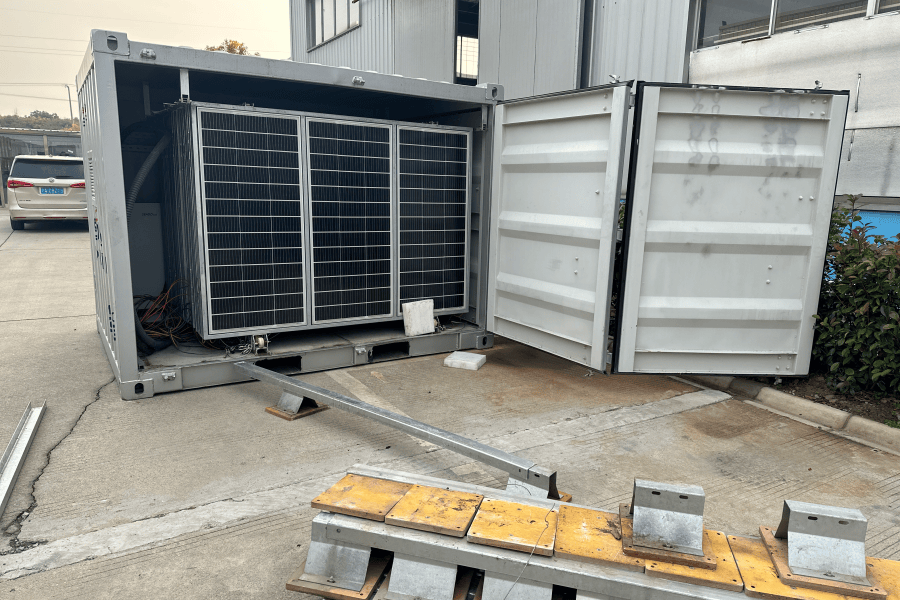
Beyond the Deployment: Why Your Military Base's Off-Grid Solar System Needs a Battle-Ready Maintenance Plan
Hey there. Let's have a virtual coffee chat. Over my two decades in this field, from the deserts of the Middle East to remote bases in Alaska, I've seen a pattern that keeps me up at night. A military unit invests significant capital and effort into rapidly deploying a state-of-the-art off-grid solar generator system. The technology is brilliant, the deployment is swift?- but then, often, the crucial follow-up plan is?- underwhelming. It's treated like a "set it and forget it" appliance, not the mission-critical power asset it is. Honestly, I've seen this firsthand on site: a minor issue left unchecked can cascade into a full system failure when you need it most.
What We'll Cover
- The Silent Threat to Your Energy Security
- A Checklist That Goes Beyond the Basics
- A Real-World Case: Learning from the Field
- How to Make This Checklist Stick for Your Operations
The Silent Threat to Your Energy Security
Here's the core problem many face: the operational mindset for a rapid deployment is, understandably, focused on the "go-live" date. The checklist ends at "system energized." But in the renewable and storage world, that's where the real work of ensuring longevity and reliability begins. A battery energy storage system (BESS) in a harsh, off-grid environment is a living system. Its electrolytes, thermal management, and power electronics are in a constant state of interaction with its environment.
Let me agitate this a bit. What happens without a rigorous, scheduled Maintenance Checklist for Rapid Deployment Off-grid Solar Generator for Military Bases?
- Hidden Thermal Runaway Risks: Dust accumulation on vents or a failing coolant pump fan might not trigger an immediate alarm. But over weeks, it increases internal temperature. Consistently high temps accelerate battery degradation and, in worst-case scenarios, can create conditions that compromise safety. This isn't theory; it's physics.
- Stealthy Capacity Fade: You think you have 1000 kWh in reserve, but due to unbalanced cells or improper charging cycles (often from lack of calibration), you only have 700 kWh. You discover this not during a routine drill, but during an actual black start event. The National Renewable Energy Laboratory (NREL) has extensive data showing how maintenance practices directly impact battery lifespan and usable capacity.
- Costs That Creep Up: The Levelized Cost of Energy (LCOE) C the true measure of your system's economic value C goes haywire. A poorly maintained system might need a full battery replacement years earlier than its 10-15 year design life. That's a massive, unplanned CapEx hit, defeating the purpose of your solar investment.
A Checklist That Goes Beyond the Basics
So, what should be on this golden checklist? It's more than just "check for warning lights." It's a proactive, predictive, and prescriptive document. Here's what I insist on, based on UL 9540 and IEEE 2030.3 standards, but translated from engineer-speak to field-speak.
1. The Weekly "Eyes-On & Ears-On" Patrol
This is non-negotiable, even for automated systems. The checklist item shouldn't just say "Inspect BESS container." It must be specific:
- Thermal & Audio: Walk the perimeter. Listen for unusual humming or fan vibrations from thermal management units. Feel (carefully) for hot spots on external vents. Is the ambient temperature within the shelter's spec?
- Physical Integrity: Check for corrosion on connectors, especially in coastal or high-salinity environments. Verify no pest intrusion (rodents love chewing on cables). Ensure all safety signage and clearance zones are unobstructed.

2. The Monthly Deep Dive Data Audit
This is where you move from physical to digital. Your system's Battery Management System (BMS) holds the truth.
- Cell Voltage & Temperature Deviation: Don't just look for alarms. Export the data. Look for trends. Are Cell #47 in Rack 3 and Cell #12 in Rack 5 consistently 15mV lower than their peers? That's an early warning. A spread beyond 50mV is a red flag requiring immediate action.
- State of Health (SOH) & C-Rate Tracking: SOH isn't a fixed number. Track its monthly decline. A sudden dip is a problem. Also, review the historical C-rate (the speed of charge/discharge). Were there unexpected, high-power surges? This stresses the chemistry. Your checklist must mandate logging these metrics.
3. The Quarterly Performance & Safety System Verification
This simulates stress conditions to verify everything works as intended.
- Full Function Test of Emergency Shutdown (ESD): Physically trigger the ESD from multiple points. Verify the system isolates, vents (if applicable), and communicates the fault.
- Grid-Forming Capability Check (for islanded microgrids): If your system "makes" the grid for the base, command a simulated transition from grid-tied to off-grid. Does the frequency and voltage hold stable? This checks the inverters' core software and hardware response.
- Thermal Management Load Test: On a cool day, can your HVAC or liquid cooling system achieve and maintain the setpoint during a simulated high-power discharge? This proves capacity.
A Real-World Case: Learning from the Field
Let me share a sanitized example from a project we supported in a Northern European region with extreme temperature swings. The client, a forward-operating location, had a 2 MWh/1 MW off-grid solar + BESS system. Their initial checklist was?- basic.
The Challenge: They reported a 5% faster-than-expected capacity fade in the first year. The system wasn't "failing," but it was aging prematurely.
The Deep Dive: Our team reviewed their BMS logs (the monthly data audit they were skipping). We found a pattern: during the coldest winter nights, the system was drawing from the batteries while also trying to heat the container to keep the cells above 0C. This parasitic load was significant and unaccounted for in their cycling strategy. They were essentially using battery energy to keep the batteries warm, a vicious cycle.
The Solution: We didn't replace a single cell. We revised their Maintenance Checklist for Rapid Deployment Off-grid Solar Generator for Military Bases to include a winter-mode operational procedure. This included pre-heating the container using excess solar before sunset and adjusting the minimum state-of-charge threshold in winter. The capacity fade rate normalized. The insight? Maintenance isn't just about fixing what's broken; it's about analyzing data to prevent sub-optimal operation. This is the level of insight we bake into our Highjoule Technologies support protocols, because a checklist is only as good as the intelligence behind its items.
How to Make This Checklist Stick for Your Operations
A PDF checklist in a drawer is useless. It needs to be a living, integrated part of your Standard Operating Procedures (SOPs). Here's my frank advice:
- Digitize & Integrate: Use a CMMS (Computerized Maintenance Management System). Each checklist item should generate a work order, require photo documentation, and log data directly from the BMS. This creates an immutable history for audits and troubleshooting.
- Train to the "Why": Don't just train personnel to check a box. Explain why checking cell voltage deviation matters for safety. Explain how thermal management impacts LCOE. When people understand the purpose, compliance soars.
- Partner for Expertise: Most military engineering corps are incredibly capable, but BESS technology evolves fast. Partner with your vendor not just for warranty, but for knowledge transfer. At Highjoule, for instance, our service packages include annual "health check" visits where we don't just execute the checklist with your team, we review the year's data together, looking for optimization opportunities - turning maintenance from a cost center into a value-creation exercise.
So, look at your current plan. Does your checklist stop at deployment, or does it equip your team to own the system's health for its entire life? Getting this right isn't just about maintenance; it's about ensuring that rapid deployment translates into enduring, mission-ready power. What's the one checklist item you think is most often overlooked in your experience?
Tags: UL Standard BESS Off-grid Power Military Energy Security Solar Generator Maintenance
Author
James Zhang
20+ years agricultural energy storage engineer / Highjoule CTO