
Manufacturing Standards for 215kWh Hybrid Solar-Diesel Backup: Why They Matter for Data Centers
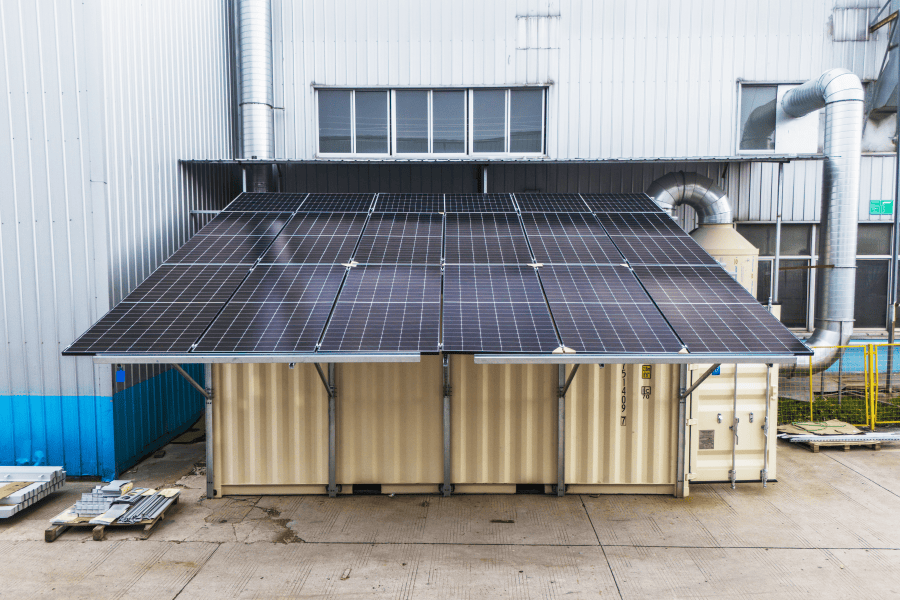
Table of Contents
- The Quiet Problem with "Just Any" Backup Power
- When "Cost-Cutting" Bites: The Real Price of Non-Standard Gear
- The Solution is in the Build: Manufacturing Standards as Your Insurance Policy
- Beyond the Checklist: What UL 9540 & IEC 62443 Really Mean On-Site
- A Case in Point: The 215kWh Cabinet in Action
- Your Next Steps: Questions to Ask Your Provider
The Quiet Problem with "Just Any" Backup Power
Let's be honest. When you're specifying backup power for a data center, the big numbers get all the attention: runtime, power output, diesel generator size. The Manufacturing Standards for a 215kWh Cabinet Hybrid Solar-Diesel System? That can feel like fine print. Until it isn't. I've been on sites where a "minor" thermal event in a poorly assembled battery cabinet turned a planned 2-hour switchover into a 48-hour crisis. The problem wasn't the concept; it was the build quality. In the rush to integrate renewables and cut diesel dependence, I've seen too many projects treat the storage cabinet as a commodity box, not the mission-critical engineering asset it is.
When "Cost-Cutting" Bites: The Real Price of Non-Standard Gear
The aggravation starts subtly. Maybe the battery management system (BMS) from one vendor doesn't quite talk seamlessly with the hybrid inverter from another. It causes a 500ms lag in response during grid failure testing. Annoying, but you work around it. Then, you see uneven wear on cells within the same module after just 18 months. Your expected 10-year lifespan? Honestly, it's now a question mark. The biggest aggravation, the one that keeps facility managers up at night, is the unknown safety risk. A report by the National Renewable Energy Lab (NREL) highlighted that inconsistent manufacturing and integration practices are a leading contributor to performance and safety incidents in early-stage BESS deployments.
This isn't just about losing a few servers. We're talking about the potential for a thermal runaway event within a facility that houses your company's digital backbone. The financial risk moves from operational expense to existential crisis in minutes. Insurance premiums skyrocket, or coverage is denied outright if the system isn't built to the recognized local standards - UL in North America, IEC in Europe.

The Solution is in the Build: Manufacturing Standards as Your Insurance Policy
This is where a relentless focus on Manufacturing Standards for the 215kWh Cabinet Hybrid Solar-Diesel System changes the game. It's the difference between buying components and investing in a system. For a cabinet of this size destined for data center backup, the standard isn't a single document; it's a symphony of protocols ensuring every piece, from the cell to the cooling duct, is designed, tested, and assembled to perform under duress.
At Highjoule, we view these standards not as hurdles, but as the foundational blueprint. It dictates everything from the gauge of the busbar (critical for managing that high C-rate discharge during a sudden outage) to the specific spacing and materials used for thermal management. A well-manufactured cabinet doesn't just have a cooling system; its entire layout is designed for optimal airflow from the ground up, which is something I always check firsthand on site. This directly impacts your Levelized Cost of Storage (LCOS) C a poorly cooled battery degrades faster, forcing a much earlier capital replacement.
Beyond the Checklist: What UL 9540 & IEC 62443 Really Mean On-Site
Let's get specific. For the US market, UL 9540 is the safety standard for energy storage systems. It doesn't just test the battery cells; it evaluates the entire assembled unit - cabinet, BMS, thermal management, safety disconnects - as a single product. A unit with this certification has been through rigorous fault condition testing (think short circuits, overcharging) in a lab so you don't experience it live. For the hybrid controller managing the dance between solar, battery, and diesel genset, IEEE 1547 compliance is key for grid interconnection stability, even in islanded backup mode.
In the EU, the IEC 62443 series around cybersecurity becomes crucial. Your backup power system is a networked device. A poorly secured system is a backdoor into your data center's operational technology network. Manufacturing to this standard means security is baked into the hardware and software layers of the cabinet's controls from day one.
A Case in Point: The 215kWh Cabinet in Action
Let me give you a real-world example from a project we completed in Frankfurt. The client, a colocation provider, needed to enhance their backup power for a Tier-3 data hall while adding on-site solar. The challenge was space: the backup yard was cramped. They needed a system that was incredibly dense with energy but also unquestionably safe to sit near other critical infrastructure.
The solution centered on a 215kWh, containerized hybrid system. The pivotal factor wasn't the capacity; it was our manufacturing protocol. Because the cabinet was pre-assembled and tested as a complete UL 9540-recognized unit in our factory, onsite commissioning was cut by 60%. More importantly, the local fire authority and their insurer reviewed the unit's certification and construction documentation - the detailed manufacturing standard traceability - and approved the installation without lengthy delays. That cabinet's integrated, sensor-driven thermal management system (which maintains a 2C cell temperature differential) gave them the confidence to place it in that tight space. Two years on, the system has seamlessly handled multiple grid sags, and their diesel consumption for testing has dropped by over 70% because the solar+battery handles most of the periodic load tests.

Your Next Steps: Questions to Ask Your Provider
So, when you're evaluating a 215kWh Cabinet Hybrid Solar-Diesel System for Data Center Backup Power, move the conversation beyond spec sheets. Ask your provider:
- "Can you show me the specific UL or IEC certification report for this exact cabinet model as an assembled system?"
- "How is your thermal management design validated within the manufacturing standard testing?" (Listen for details on cell-to-cell temperature uniformity).
- "What is your traceability process? If a cell fails in five years, can you trace its entire manufacturing and test history within this cabinet?"
- "For the hybrid controller, how do you ensure compliance with IEEE 1547 for anti-islanding and frequency response, even when disconnected from the main grid?"
The right partner won't just answer these questions; they'll appreciate you asking them. Because they know, just as I do from two decades on site, that the true reliability of your backup power isn't declared on day one. It's manufactured into it, standard by meticulous standard.
What's the one standard you've found most critical in your own backup power evaluations?
Tags: UL Standard BESS Data Center Backup Manufacturing Standards Hybrid Power System IEEE
Author
James Zhang
20+ years agricultural energy storage engineer / Highjoule CTO