
High-Voltage DC ESS Container Installation for Rural Electrification: A Field-Proven Blueprint
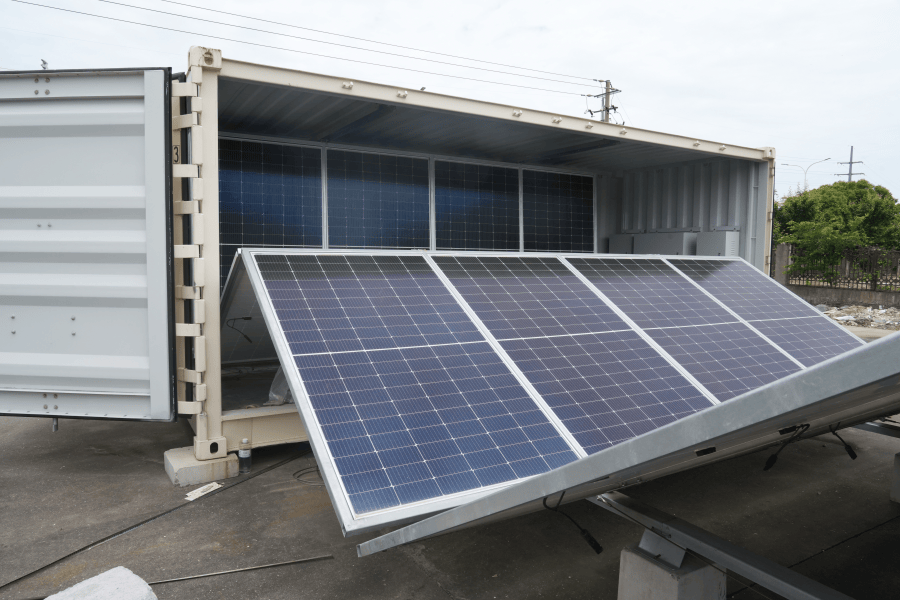
Table of Contents
- The Real Pain Point: It's Not the Hardware, It's the "How"
- The Staggering Cost of On-Site Complexity
- A Better Way: Learning from the Field, Standardizing for the World
- The Step-by-Step Blueprint: From Shipment to Synchronization
- Why This "Philippine-Proven" Method Matters for Your US or European Project
- Beyond the Installation: The Long-Term Game is LCOE
The Real Pain Point: It's Not the Hardware, It's the "How"
Honestly, after two decades on sites from Texas to Thailand, I can tell you the biggest hurdle for commercial and industrial BESS projects isn't usually technology selection anymore. The market has good cells, capable inverters, and smart software. The real friction, the silent budget-killer, lies in the field installation and commissioning process. I've seen this firsthand: crews waiting for specialized electricians, unexpected civil work for foundation mismatches, and weeks lost in debugging communication because wiring wasn't as per a foolproof plan. This "on-site variability" is what blows schedules and erodes your project's financial returns. It turns a predictable CAPEX into a guessing game.
The Staggering Cost of On-Site Complexity
Let's talk numbers. The National Renewable Energy Laboratory (NREL) has highlighted that balance-of-system (BOS) and soft costs can constitute up to 50% of the total installed cost of a storage system. A significant chunk of that is direct labor and the overhead of prolonged site works. Every extra day of crane rental, specialized technician time, and project management overhead directly hits your bottom line. In remote or challenging locations - be it an off-grid industrial site in Nevada or a rural microgrid in Eastern Europe - these costs and delays multiply. The risk isn't just financial; it's safety. Ad-hoc field modifications are the enemy of a UL 9540 or IEC 62933-compliant system. Your certified, factory-tested system's integrity shouldn't be left to improvisation in the dust and wind.
The Case of the "Simple" German Microgrid
I recall a project in Northern Germany, a containerized ESS for a agricultural cooperative's microgrid. The container itself was top-notch. But the installation guide? A 200-page generic manual. The local crew, while skilled, spent days interpreting it, leading to a minor but critical error in the DC string grounding sequence. It caused a fault that took a week to diagnose. That week of lost energy arbitrage and technician fly-in costs negated the projected savings for an entire quarter. The lesson was painful: precision hardware demands precision installation protocols.

A Better Way: Learning from the Field, Standardizing for the World
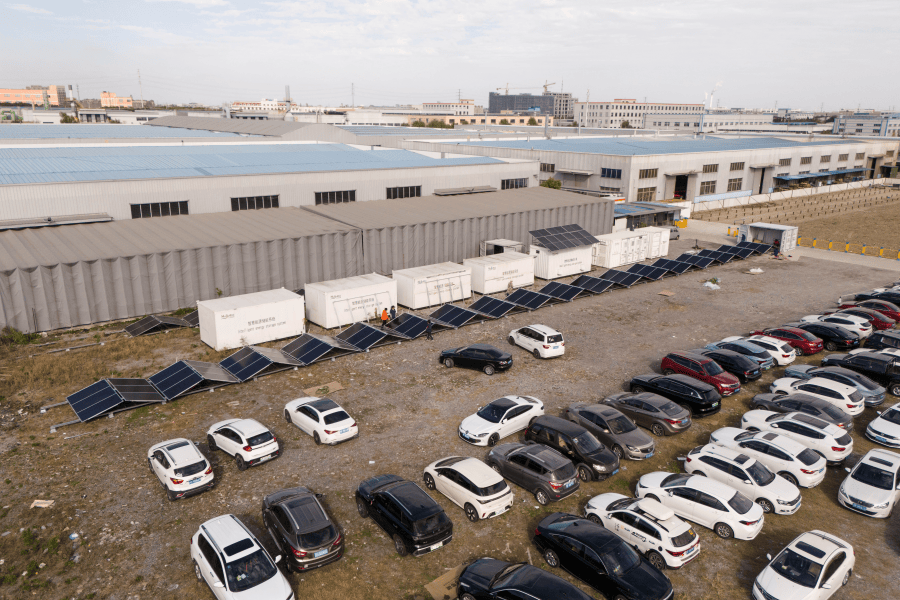
This is where our experience in projects like the Step-by-step Installation of High-voltage DC Industrial ESS Container for Rural Electrification in Philippines becomes invaluable. You might think, "That's a developing market project." Exactly. In such environments, you have zero margin for error. You have limited local skilled labor, harsh logistics, and a critical need for reliability. Success there forced us to perfect a hyper-standardized, pre-validated installation methodology that translates perfectly to solve the soft-cost challenges in sophisticated markets.
At Highjoule, we took these lessons and baked them into what we call our "Plug-and-Power" deployment model. It's not just a container; it's a replicable process. The goal is to transform BESS deployment from a construction project into a predictable, rapid assembly operation.
The Step-by-Step Blueprint: From Shipment to Synchronization
So, what does this field-hardened process look like? It's a locked sequence, where each step is pre-defined and pre-tooled.
- Step 1: Pre-Check & Foundation Audit (Before Shipment): We don't just send you a CAD drawing. We provide a virtual site audit checklist. Using lessons from Philippine rocky terrains, our team verifies your foundation specs, cable trench routes, and grid connection point down to the millimeter against our container's pre-fitted interfaces. This happens before manufacturing is complete.
- Step 2: Arrival & Positioning (Day 1): The container arrives not as a black box, but with color-coded, region-specific (UL or IEC) external connection panels. Lifting points are standardized. I've seen crews in California position and anchor our 2 MWh container in under 6 hours because there was no guesswork.
- Step 3: The "One-Panel" DC Hookup (Day 2): This is the key. Our high-voltage DC systems use a single, isolated, and clearly labeled DC busbar panel. Unlike complex string wiring, the field work is reduced to connecting pre-labeled, pre-length DC cables from the battery racks (internally pre-installed and tested) to this panel. It minimizes on-site HV DC work - a major safety and time advantage.
- Step 4: Grid & Control Integration (Day 3): AC connections, transformer hookup, and SCADA/communication links use plug-and-play connectors where possible. The system controller comes pre-loaded with base parameters tailored to your grid code (IEEE 1547 for the US, etc.). Commissioning is about verification, not programming from scratch.
Why This "Philippine-Proven" Method Matters for Your US or European Project
You get a system that is inherently safer and more reliable because its assembly is repeatable and verifiable. For you, the project developer or asset owner, this means:
- Predictable Timelines: A 4 MWh system can be mechanically and electrically installed in days, not weeks.
- Lower Labor Risk & Cost: Reduces dependency on scarce, premium-priced BESS specialists for routine hookup.
- Uncompromised Standards Compliance: The factory-built and tested UL/IEC compliance isn't broken by field work. The installation manual is a visual, step-by-step field guide, not an engineering thesis.
Expert Insight: Thermal Management & C-rate in a Standardized Box
Let's get technical for a second, but keep it simple. A key to longevity and performance is thermal management and controlled C-rate (charge/discharge speed). In a bespoke site build, cooling ductwork and sensor placement can vary. In our containerized, standardized approach, the thermal system (liquid or air) is an integrated, pre-balanced unit. We know exactly how much airflow each rack gets. This allows us to safely and consistently support the designed C-rate (say, 1C) without hot spots that degrade cells. You get the performance on the spec sheet, year after year, because the operating environment is factory-optimized and field-installation doesn't alter it.
Beyond the Installation: The Long-Term Game is LCOE
Ultimately, every decision points to Levelized Cost of Energy Storage (LCOE). A rapid, right-first-time installation slashes upfront capital. But more importantly, a correctly installed system - with perfect thermal management, balanced strings, and intact safety systems - operates more efficiently and lasts longer. It maximizes cycles and minimizes downtime. That's what truly drives down LCOE over the 15-year life of the asset.
Our service model extends this philosophy. Post-deployment, our remote monitoring and standardized spare parts kits mean maintenance is predictable, not reactive. It's the operational mirror of the standardized installation.
So, the next time you evaluate a BESS provider, look beyond the battery datasheet. Ask them, "Walk me through your field installation procedure. How do you ensure what was tested in the factory is what I get on my site?" The answer will tell you everything about their real-world experience and your project's ultimate risk. What's the one site logistics challenge you've faced that a more standardized approach could have solved?
Tags: UL Standard BESS LCOE Rural Electrification Containerized Energy Storage High-voltage DC Project Deployment
Author
James Zhang
20+ years agricultural energy storage engineer / Highjoule CTO