
Telecom Off-Grid Power: Why Manufacturing Standards Are Your Critical Path to Success
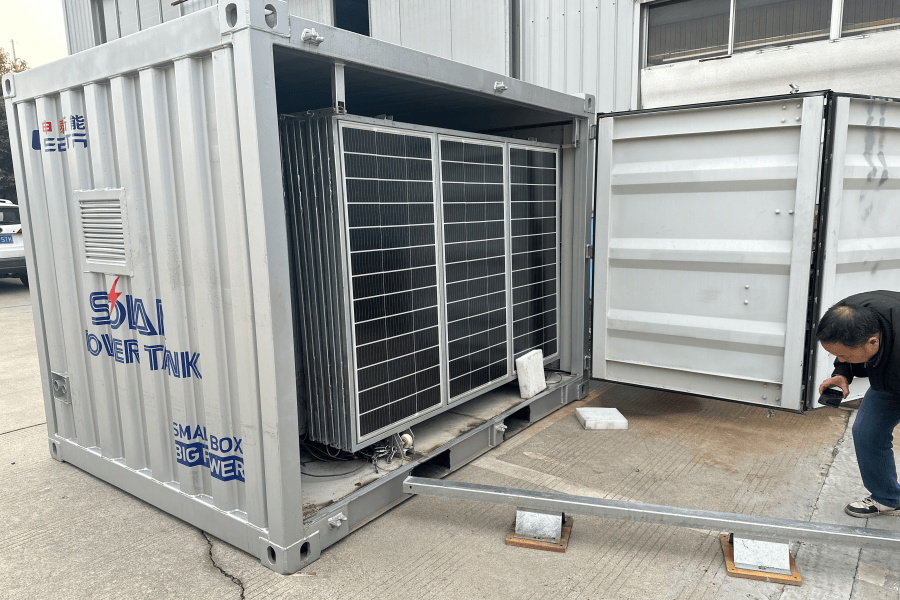
Beyond the Spec Sheet: What Really Makes an Off-Grid Telecom BESS Reliable
Hey there. Grab a coffee. If you're reading this, you're probably looking at powering a remote telecom site, maybe in the hills of California or across rural Germany. And you've likely seen a dozen datasheets for "215kWh cabinet" systems. They all promise uptime, safety, and a great return. Honestly, after two decades on sites from Texas to Tanzania, I can tell you the difference between a project that hums along for a decade and one that becomes a costly headache isn't just the kWh rating on the label. It's what's baked into the product long before it ships: the manufacturing standards.
Quick Navigation
- The Real Cost of a "Bargain" BESS
- Standards: More Than a Compliance Checkbox
- Decoding the Standards for Your 215kWh Cabinet
- A Tale of Two Containers: A Story from the Field
- The Silent Win: How Rigorous Standards Improve Your LCOE
- Your Next Step: The Right Questions to Ask
The Real Cost of a "Bargain" BESS
Let's talk about the elephant in the room. The pressure to cut CapEx is immense. I've sat in meetings where the decision came down to two bids, and the cheaper one won, hands down. The logic seems sound on paper. But here's the agitating truth: for off-grid telecom, your battery isn't just a component; it's your lifeline. A failure isn't an inconvenience; it's a network outage, revenue loss, and potentially a safety incident.
The International Energy Agency (IEA) highlights the critical role of energy storage in digital infrastructure, especially in areas with unreliable grids. But they also note that quality and safety variances pose a significant risk to adoption. When a cabinet built to vague internal specs fails at 2 AM in a snowstorm, the real costs emerge: emergency service calls, potential fines for non-compliance with local fire codes, and reputational damage that far outweighs the initial "savings." I've seen this firsthand C a site in Nevada where poor thermal management in a non-certified cabinet led to premature cell degradation. The system was delivering only 70% of its rated capacity within 18 months. The "bargain" turned into a total system replacement.
Standards: More Than a Compliance Checkbox
So, what do we mean by Manufacturing Standards for a 215kWh Cabinet Off-grid Solar Generator? It's not just a certificate to hang on the wall. It's a comprehensive, audited blueprint for how every single part of that system is designed, sourced, assembled, and tested. For our markets C the US and EU C this primarily means adherence to a family of standards from UL and IEC.
Think of it as the DNA of reliability. It dictates the quality of the steel in the enclosure, the torque on every busbar connection, the software logic in the Battery Management System (BMS), and the fire suppression material used. At Highjoule, we don't view UL 9540 (the standard for energy storage systems) or IEC 62619 (safety for industrial batteries) as finish lines. They are the foundational baseline we start from. Our engineering philosophy is that rigorous manufacturing standards are what allow us to deliver the field-proven resilience our clients in the telecom sector depend on.
Decoding the Standards for Your 215kWh Cabinet
Let's break down a few key areas where these standards translate to real-world performance for your telecom site:
- Safety First (UL 9540A & IEC 62619): This is non-negotiable. These standards mandate rigorous testing for thermal runaway propagation. In plain English: if one battery cell fails and overheats, the system is designed to prevent it from cascading and taking the whole cabinet down. For an unattended, remote site, this is your primary defense against a catastrophic fire.
- Thermal Management: This is a huge one. A standard isn't just about having fans or a chiller. It's about the design precision C the placement of sensors, the airflow dynamics, the redundancy in cooling loops. Proper thermal management, governed by these standards, is the single biggest factor in maximizing battery cycle life. It ensures your 215kWh cabinet delivers 215kWh consistently, summer and winter, not just on the day it's commissioned.
- Grid-Forming Capability (IEEE 1547-2018): For off-grid systems, the inverter's ability to create a stable "grid" from scratch is crucial. Adherence to relevant sections of IEEE 1547 ensures your solar generator can reliably start and power the sensitive telecom load without flickers or surges that can damage equipment.

A Tale of Two Containers: A Story from the Field
Let me share a recent project in Northern Germany. A telecom operator needed to power a new edge computing site in a forested area with no grid connection. They evaluated two 215kWh cabinet solutions. One was a generic integrator's product, the other was a Highjoule system built to our certified manufacturing standards.
The challenge? A tight space, strict local fire regulations (Feuerwehr requirements), and a need for 99.9% uptime. The generic cabinet claimed compliance but couldn't provide the detailed third-party test reports for cell-level propagation. Our system came with full UL 9540A documentation. More importantly, during a particularly harsh winter, the BMS in the generic system struggled with cell balancing in the cold, leading to a reduced runtime alarm. Our cabinet's BMS, with its algorithms developed and tested as part of the standard, proactively adjusted charging parameters based on cell-level voltage and temperature data, maintaining full capacity. The client's site stayed online. The choice became clear, and they've since standardized on our approach for their roll-out.
The Silent Win: How Rigorous Standards Improve Your LCOE
Everyone talks about Levelized Cost of Energy (LCOE). For an off-grid telecom site, it's the ultimate metric. Here's the expert insight: superior manufacturing standards directly lower your LCOE, but it's often a silent, background process.
How? By extending system life. A cabinet built with inferior cells, poor thermal design, and a weak BMS might see 20% capacity degradation in 5 years. A standards-built system might see only 10%. That means you're getting more usable energy over a longer period from the same initial asset. It reduces the frequency of augmentation or replacement. Secondly, it minimizes operational surprises. Fewer faults, fewer truck rolls to remote locations, lower maintenance costs. That reliability is baked into the LCOE from day one. When we at Highjoule optimize a system, we're not just playing with C-rates and chemistry; we're engineering every weld and wire to ensure the lowest possible cost over the 15-year life of the asset.
Your Next Step: The Right Questions to Ask
So, when you're evaluating suppliers for your off-grid telecom power, move beyond the basic specs. Ask them:
- "Can you show me the third-party certification reports (UL 9540, IEC 62619) specifically for this 215kWh cabinet model?"
- "How is your thermal management system validated and tested as part of your manufacturing quality control?"
- "What is the expected cycle life and capacity warranty based on, and can you share the underlying test data aligned with IEC standards?"
- "Do you have local deployment and service support in my region that understands these standards for permitting and maintenance?"
The right partner won't hesitate with these answers. Their manufacturing standards won't be a secret; they'll be their proudest blueprint. What's the one reliability risk you can't afford on your next remote site deployment?
Tags: UL Standard BESS Thermal Management Off-grid Power Renewable Energy IEC Standard Telecom Infrastructure
Author
James Zhang
20+ years agricultural energy storage engineer / Highjoule CTO