
ROI Analysis of Black Start Capable Energy Storage for EV Charging Stations
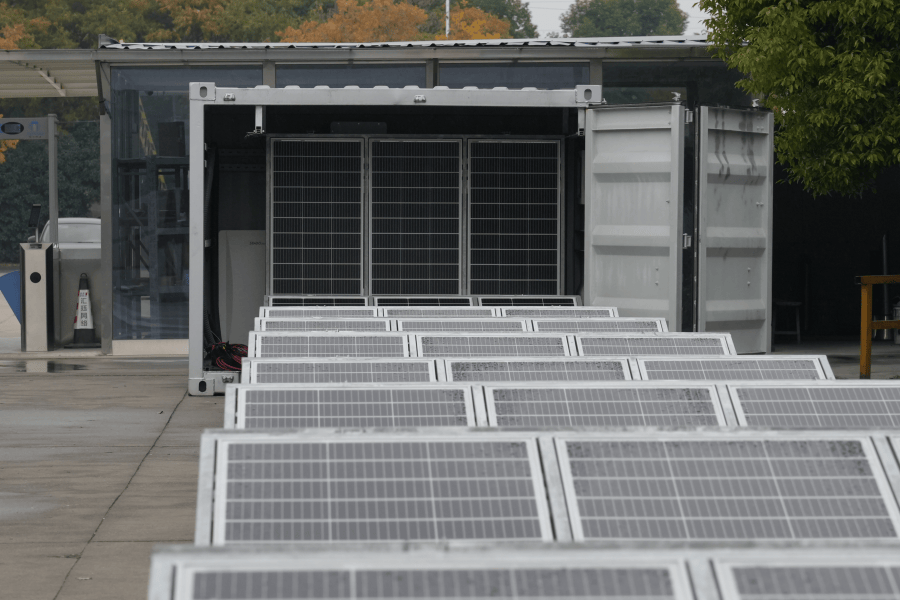
Table of Contents
- The Silent Revenue Killer at Your EV Station
- Beyond the Spreadsheet: The True Cost of Downtime
- The Black Start Advantage: More Than Just Backup
- Crunching the Real Numbers: An ROI Framework
- A Case from California: From Vulnerability to Asset
- The Devil's in the Details: Tech That Makes or Breaks ROI
- Making the Investment Work for You
The Silent Revenue Killer at Your EV Station
Let's be honest. When you're planning an EV charging hub, the conversation is all about charger speed, location, and upfront cost. The grid? It's treated like a constant, a reliable tap you just turn on. But after 20-plus years deploying storage from Texas to Bavaria, I've seen this firsthand: that assumption is the single biggest risk to your long-term profitability. A public safety power shutoff (PSPS) in California, a winter storm in Texas, or even routine maintenance can turn your high-traffic, revenue-generating asset into a concrete slab with some expensive metal posts for hours, or days.
The problem isn't just losing a few charging sessions. It's the compounded impact. According to the National Renewable Energy Lab (NREL), the average duration of a power interruption in the U.S. is about 7 hours. Now, multiply that by 10 DC fast chargers at 50-90% utilization. You're looking at thousands in lost revenue per outage event. And that's before you consider the reputational hit - a driver who finds your station dark is unlikely to return.
Beyond the Spreadsheet: The True Cost of Downtime
So we agree downtime is bad. But traditional backup solutions, like diesel generators, often create their own ROI headache. They're noisy, emit on-site, require fuel logistics, and have a slow response time. More importantly, they're a pure cost center - they only make money by preventing loss. This is where the mental model needs to shift. What if your backup power could also make you money every single day, grid-up or grid-down?
That's the agitation point. You're stuck between the rising frequency of grid disruptions (IEA data shows a 70% increase in major outages in advanced economies over the last decade) and backup solutions with a negative ROI profile. The business case feels weak until you expand the scope.
The Black Start Advantage: More Than Just Backup
This is where a Black Start Capable Energy Storage Container changes the game. "Black start" isn't just a fancy term. It means the system can boot itself up from a completely dead state - no grid, no external power - and then energize your charging station island. It's the difference between having a spare tire and having an all-wheel-drive system that also saves you fuel.
The ROI analysis, therefore, isn't just about outage mitigation. It's a multi-revenue stream model:
- Resiliency Revenue: Preventing loss during outages (your baseline calculation).
- Arbitrage Revenue: Charging the container when electricity is cheap (overnight), and using it to supplement power during peak daytime rates when chargers are busy, slashing your demand charges. This is daily, incremental income.
- Grid Services Revenue (Future-Proofing): In many markets, you can contract with the utility to provide frequency regulation or voltage support. The grid pays you.
Suddenly, the container isn't a cost. It's a grid-connected asset that happens to provide bulletproof resilience.
Crunching the Real Numbers: An ROI Framework
Let's get practical. A proper ROI analysis for a black-start BESS at an EV station looks at three buckets:
| Cost Bucket | Revenue/Opportunity Bucket |
|---|---|
| 1. System CapEx (Container, PCS, Batteries) | A. Avoided Outage Loss (Sessions Rate Outage Freq.) |
| 2. Installation & Commissioning (incl. UL/IEC compliance) | B. Daily Energy Arbitrage & Demand Charge Reduction |
| 3. O&M; (Long-term health monitoring) | C. Potential Grid Services Income |
| 4. Software & Controls (The "brain") | D. Brand Premium for "Always-On" Reliability |
Honestly, most models only look at Cost vs. Bucket A. That's a narrow view. At Highjoule, when we run these for clients, we model the system's Levelized Cost of Energy (LCOE) - the total lifetime cost per kWh it delivers - against the blended value of the energy it provides (resilience + arbitrage). That's when the payback period often shrinks from "questionable" to under 5 years.

A Case from California: From Vulnerability to Asset
I remember a project in Northern California - a fleet depot with 15 dual-port DC fast chargers. Their core issue was PSPS events, but their utility bills were also brutal. They viewed a storage system as a necessary evil for resilience. We deployed a UL 9540-certified container system with black-start capability.
The "aha" moment came six months in. Not during an outage, but on a regular hot summer day. The system automatically discharged during the 4-9 pm peak period, cutting their demand charge by over 40% that month. It had already paid for its operational costs through arbitrage. When the fall PSPS events came, the black-start function worked autonomously, keeping the depot operational for 48+ hours. The ROI calculation was fundamentally rewritten; the system paid for itself in under 4 years through combined value streams.
The Devil's in the Details: Tech That Makes or Breaks ROI
This isn't magic. The ROI hinges on the engineering. Let me break down two critical pieces in plain English:
1. C-rate and Thermal Management: The C-rate is basically how fast you can charge or discharge the battery. For EV charging, you need a high discharge C-rate to meet the sudden power demand of multiple cars. But pumping out that much power generates heat. If the thermal management (the cooling system) is poor, the battery degrades fast, killing your ROI. Our containers use a liquid-cooled system - like a high-performance car's engine cooling - to maintain optimal temperature, ensuring the battery lasts for the 10+ years the financial model predicts.
2. The Black Start Sequence: This isn't just a big "ON" switch. The system must self-check, energize the power conversion system, establish a stable voltage and frequency "island," and then safely close the breaker to the charging loads. It has to be bulletproof and fully automated. We design and test these sequences to the point of boredom because on-site, in a storm, boredom equals reliability.
Making the Investment Work for You
The question isn't really "Can I afford a black-start capable storage system?" It's "Can I afford the ongoing cost of not having one, both in lost revenue and missed opportunities?" The technology is proven, the standards (UL, IEC, IEEE) are clear, and the financial models are robust when you look at the full picture.
My advice? Start the conversation with a focus on total lifetime value, not just upfront cost. Ask your provider to model all four revenue buckets, demand a deep dive on their thermal management design, and insist on witnessing a black-start test protocol. That's how you move from seeing a container as an expense to recognizing it as the core revenue-protecting, revenue-generating asset of your modern EV charging business.
What's the one grid challenge in your region that keeps you up at night when you think about your charging infrastructure?
Tags: Energy Storage Container BESS Black Start ROI Analysis EV Charging
Author
James Zhang
20+ years agricultural energy storage engineer / Highjoule CTO