
Optimizing a 215kWh Cabinet Energy Storage Container for Remote Island Microgrids
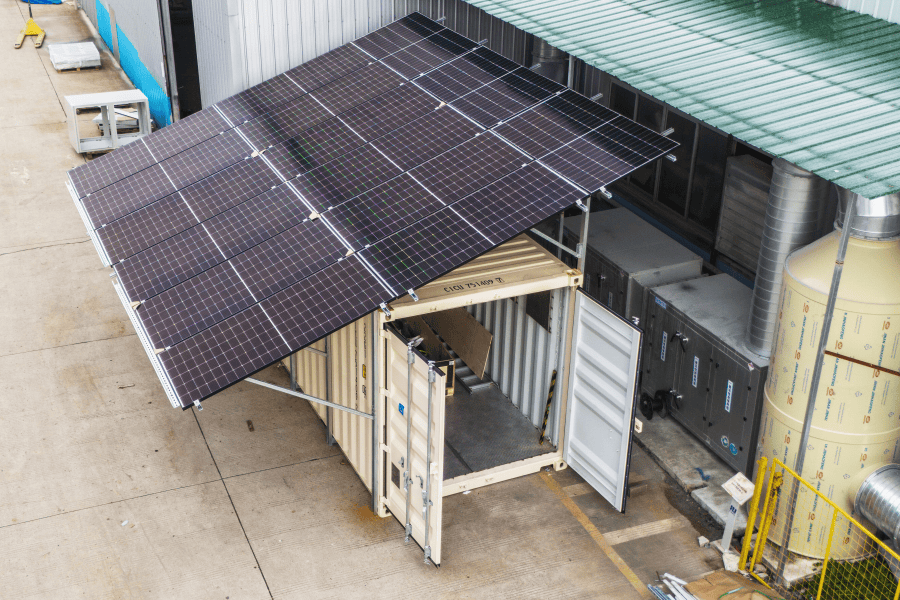
Table of Contents
- The Island Challenge: More Than Just a Power Problem
- Why Standard Grid Solutions Fail on Remote Islands
- The Optimized 215kWh Cabinet: Your Island's Power Anchor
- Pulling the Right Levers: Key Optimization Points for Your 215kWh Container
- A Real Island Story: From Theory to Practice
- Making the Right Choice for Your Island Community
The Island Challenge: More Than Just a Power Problem
Let's be honest. When you're managing power for a remote island community or an off-grid industrial site, your challenges go far beyond just keeping the lights on. You're not just an operator; you're the guardian of reliability for a hospital, a school, a fishery, or a whole tourism economy. I've seen this firsthand on site, from the Scottish Isles to communities in the Caribbean. The core pain point isn't a lack of desire for renewables - it's the brutal economics and operational complexity of integrating them into a fragile, isolated grid. Every kilowatt-hour from that diesel generator is bleeding money, and the noise and fumes? They're a constant reminder of the problem.
Why Standard Grid Solutions Fail on Remote Islands
Here's where the agitation really starts. You look at mainland solutions - big, sprawling battery farms - and think, "Can we scale that down?" Often, the answer is a painful "not really." A standard battery system designed for a California grid-support application is built for a stable, temperate environment with easy maintenance access. Drop it on a wind-swept, salt-sprayed island with limited technical staff, and the weaknesses show up fast.
The International Renewable Energy Agency (IRENA) has highlighted that islands often pay 2-3 times more for electricity than mainland counterparts, primarily due to diesel dependence. The real cost isn't just fuel; it's the logistics, the storage, the generator maintenance, and the sheer risk of a shipment delay leaving you in the dark. A poorly suited battery system adds to this burden, not relieves it. It might have the right capacity on paper (215kWh sounds good!), but if its thermal management can't handle 95F with 90% humidity, or its communication protocols can't seamlessly talk to your existing solar inverters and diesel gensets, it becomes a very expensive, silent cabinet.
The Optimized 215kWh Cabinet: Your Island's Power Anchor
This is where a truly optimized 215kWh cabinet-type energy storage container becomes the game-changer. It's not a scaled-down grid battery; it's a purpose-built power anchor for microgrids. Think of it as the intelligent, shock-absorbing core of your island's energy system. At Highjoule, when we talk optimization for remote sites, we're talking about engineering every component - from the cell chemistry to the cabinet latch - for one environment: yours.
The goal is to maximize your Levelized Cost of Energy (LCOE) - a fancy term for the total lifetime cost of each unit of energy you produce. Honestly, it's the only metric that matters for your budget. A lower LCOE means you displace more diesel, faster, and free up capital for the community. Optimization is the path to that lower number.

Pulling the Right Levers: Key Optimization Points for Your 215kWh Container
So, how do we optimize? It comes down to a few critical, non-negotiable levers you must pull.
1. Safety & Compliance as the Foundation (Not an Option)
In the U.S. and Europe, this starts and ends with standards like UL 9540 for the system and UL 1973 for the batteries. For us, this isn't a checkbox. It's the DNA of our container design. An optimized container for a remote island must have passive fire suppression, seismic bracing for transport and installation, and cell-level fusing. Why? Because when the nearest fire department is a boat or helicopter away, the system must be its own first responder. I've witnessed audits where this was the sole deciding factor.
2. Thermal Management: The Heart of Longevity
This is where many off-the-shelf units fail. A high C-rate (the speed at which you charge/discharge the battery) is great for shaving grid peaks, but on an island, it generates intense heat. Couple that with a tropical climate, and you're cooking your cells. An optimized system uses an independent, redundant cooling loop, often with an IP65 or higher rating to keep out salt and sand. We design for a wider ambient temperature range (-30C to 50C) because, on site, weather extremes are the norm. This directly protects your cycle life, which directly protects your LCOE.
3. Grid-Forming Inverter Technology
This is the secret sauce for true energy independence. Most batteries are "grid-following"; they need a stable grid signal to operate. But what if your diesel genset trips? A grid-forming inverter inside your 215kWh container can create its own stable voltage and frequency, acting as the leader of the microgrid. It allows for instantaneous "black start" and seamless integration of solar and wind, even if they're variable. This turns your storage from a backup device into the primary grid controller.
4. Communications & Control: Speaking the Local Language
Your new container needs to speak fluent "island." It must integrate with legacy diesel controllers, modern solar inverters (SMA, Schneider, etc.), and your chosen SCADA system using standard protocols like Modbus TCP, SunSpec, or DNP3. The software should allow you to set simple, goal-based modes: "Maximize Solar Self-Consumption," "Diesel Fuel Saver," or "Critical Load Backup." The interface shouldn't require a PhD to operate.
| Optimization Focus | Standard Grid BESS | Island-Optimized 215kWh Container |
|---|---|---|
| Environmental Rating | Indoor or mild climate | NEMA 3R / IP55 minimum, corrosion-resistant |
| Thermal System | Basic air cooling | Redundant liquid cooling, wide temp range |
| Grid Interaction | Grid-following (needs stable grid) | Grid-forming (can create its own grid) |
| Compliance Focus | UL 9540, IEC 62619 | UL 9540A (fire hazard), plus seismic, marine transport |
| Control Philosophy | Grid services (FR, PFC) | Microgrid stability, diesel offset, black start |
A Real Island Story: From Theory to Practice
Let me give you a concrete example from a project we completed in the Pacific Northwest, serving a small island community in Washington State. Their challenge was classic: expensive, noisy diesel, a desire to integrate existing solar, and frequent winter storms causing outages.
The solution centered on a single, Highjoule 215kWh container, but here's the optimized part: We pre-configured the entire system - battery, grid-forming inverter, step-up transformer, and microgrid controller - in a single, fortified cabinet at our facility. It was shipped as a single "power block." This reduced on-site commissioning from weeks to three days, a critical factor with limited weather windows. The system was programmed with a "Storm Mode" that, upon a grid failure signal, would instantly black start, pick up the critical load circuit (community center, water pump), and then allow the local solar to seamlessly reconnect. The result? Diesel runtime has been cut by over 70%, and the community has enjoyed uninterruptible power through multiple storms. The LCOE of their hybrid system is now firmly below the cost of diesel-only generation.

Making the Right Choice for Your Island Community
Optimizing a 215kWh container isn't about adding more bells and whistles. It's about ruthless focus on what matters for your reliability, your crew's skills, and your bottom line. It's asking the hard questions during procurement: "Is this UL 9540A tested?" "Can it perform a black start at 90% depth of discharge?" "What's the expected cycle life under my specific charge/discharge profile?"
The right partner won't just sell you a box. They'll help you model your LCOE, understand the local codes, and provide remote monitoring support so that expert eyes are on your system from thousands of miles away. That's how you turn a capital investment into a generation of resilient, clean, and affordable power. What's the first diesel-dependent load you'd like to silence for good?
Tags: Energy Storage Container UL Standard BESS LCOE Europe US Market Renewable Energy Microgrid
Author
James Zhang
20+ years agricultural energy storage engineer / Highjoule CTO